



Ylang ylang smells rich, sweet and floral, with a creamy softness, a fruity lift and a faint spicy edge. The scent comes from the yellow flowers of the Cananga odorata tree. A 2015 research review names linalool as the main component of the oil’s oxygenated fraction and says it is responsible for the floral smell of ylang ylang. On your skin, a single drop in a blend reads warm, creamy and quietly exotic.
Smell ylang ylang once and you will know it again anywhere. Sweet, creamy, floral, and a little wild.
You searched for what ylang ylang smells like because the name turns up on perfume, serum and body care labels, and the word alone tells you nothing. This guide gives you a plain description of the scent, the molecules behind it, where the flower grows, what the grades on a bottle of ylang ylang essential oil mean, and how you wear the ylang ylang scent so it sits softly on your skin.
Every fact here links to a source you are able to open yourself: a peer-reviewed research review on PubMed Central, PubChem’s odor records for each key molecule, and a dermatology page for the patch test.
What Does Ylang Ylang Smell Like?

Lift a drop of ylang ylang to your nose and you meet sweetness first, a creamy floral with an almost custard-like richness. A fruity brightness follows, then a faint spice and a warm, slightly woody depth that stays on a scent strip after the first rush fades. If you love jasmine or gardenia, you will hear an echo of both in it.
The research agrees with your nose. The 2015 review of Cananga odorata on PubMed Central reports that ylang ylang oil has been described to possess a medium to strong initial aroma, fresh, floral and slightly fruity, yet delicate. That mix of strength and delicacy is the puzzle you notice the first time you smell it.
Chemistry explains the mix you smell. The same review names linalool as the main component of the oil’s oxygenated fraction, at 28 percent, and says it is responsible for the floral smell of ylang ylang. It also lists linalool, p-cresyl methyl ether, methyl benzoate, benzyl acetate and geranyl acetate among the strongly odoriferous molecules in the Extra grade. Look each molecule up in PubChem’s odor records and the notes read like a description of ylang ylang itself.
The molecules behind the scent, in PubChem’s words
- Linalool: a floral, spicy, wood odor
- Benzyl acetate: sweet floral fresh, reminiscent of jasmine and gardenia
- 4-Methylanisole, also called p-cresyl methyl ether: a pungent odor suggestive of ylang ylang
- Methyl benzoate: a fruity odor, also similar to cananga
Does ylang ylang smell nice? Judge it in a blend, not from the bottle. Straight from the bottle, ylang ylang hits your nose hard and heady. One drop in a carrier oil, warmed on your wrist, opens into something softer and creamier, and that is the version worth judging.
Where Ylang Ylang Comes From
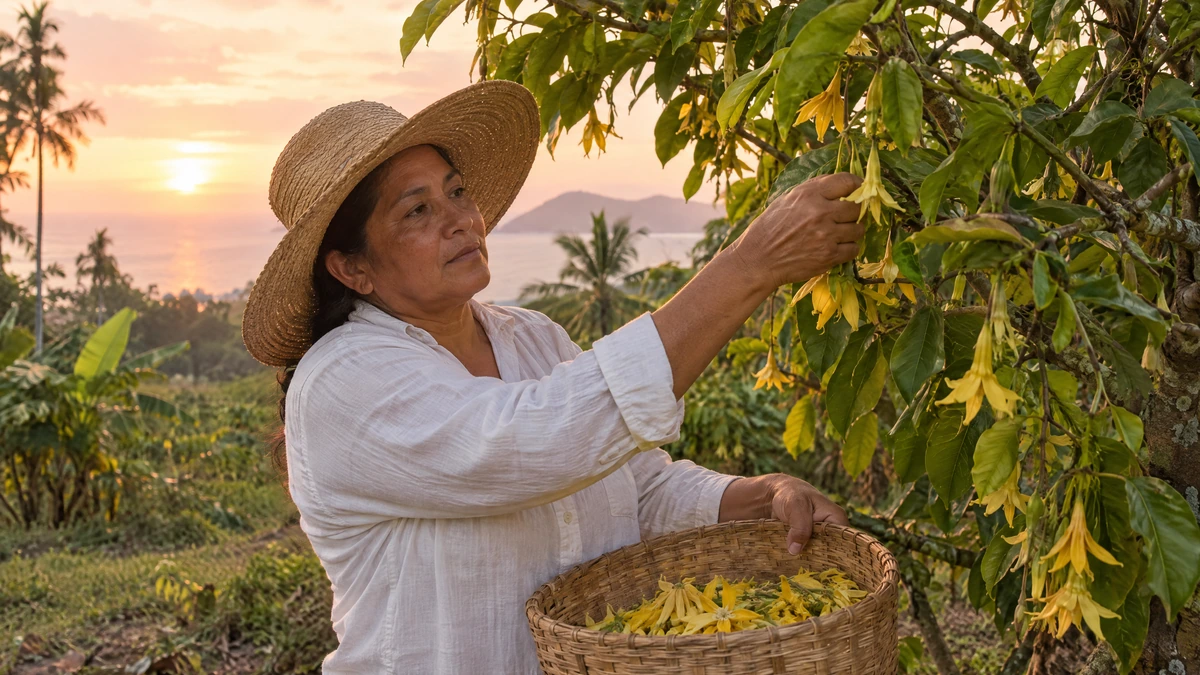
Ylang ylang comes from Cananga odorata, a member of the Annonaceae family, which you might know as the custard apple family. The review describes it as a fast growing tree found natively in tropical Asia, including the Philippines, Malaysia and Indonesia. Its flowers carry six twisted, pointed petals that turn from green when young to yellow and yellowish brown when mature, which is the color you want to picture when you smell the oil.
Today the main supply comes from islands in the Western Indian Ocean. The review names the Union of Comoros, Madagascar and Mayotte as the current main producers of ylang ylang essential oil. Producers draw the oil from the flowers through water or water and steam distillation, so every drop you smell began as a bloom on a Cananga odorata tree.
The name carries its own story, and it answers a question you might have typed into Google. Wikipedia’s entry on the tree explains that ylang-ylang is the Spanish spelling of the Tagalog name for the tree, ilang-ilang. In English, it is also called perfume tree, Macassar oil tree, or fragrant cananga.
The flower also plays a part in daily life where it grows. In the Philippines, people string ylang ylang flowers together with sampaguita blossoms into necklaces that women wear and that adorn religious images. In Indonesia, people spread the flowers on the beds of newlywed couples. Keep those images in mind the next time you open a bottle, because you are smelling a flower people wear and scatter for celebrations.
Ylang Ylang Essential Oil Grades: Extra, First, Second and Third
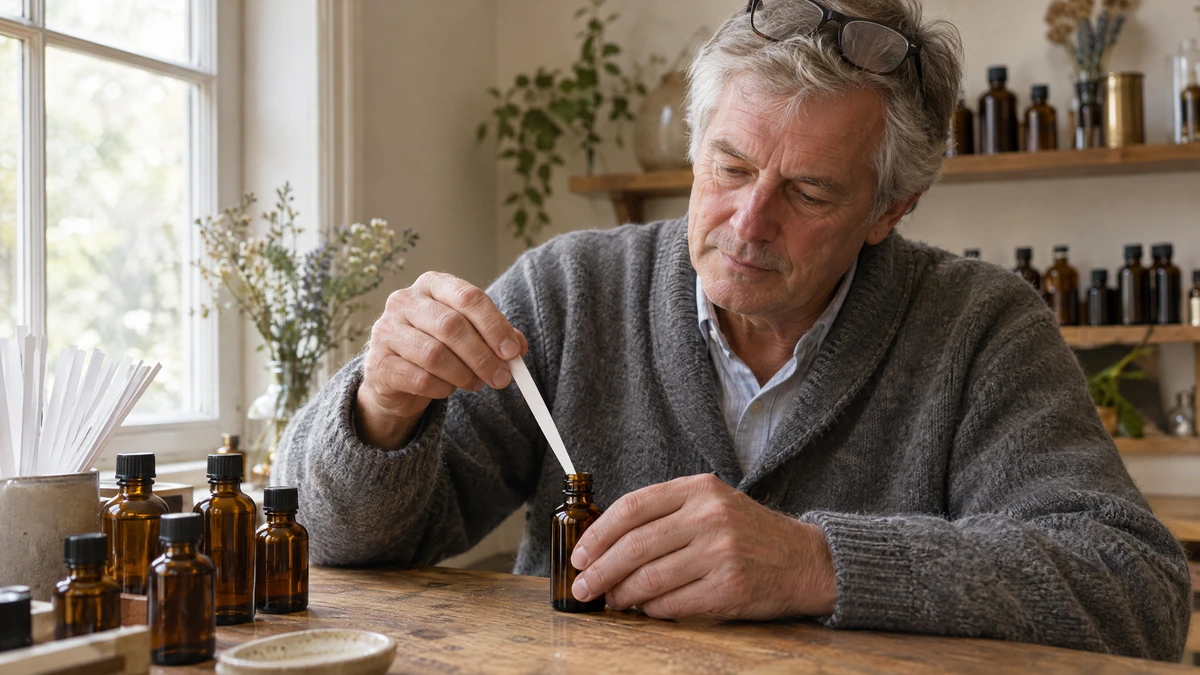
Shop for ylang ylang essential oil and you will see grades on the label. The review explains that four grades of ylang ylang oil are commercially available, Extra, First, Second and Third, and that each contains a different chemical composition that determines the quality and uses of the oil. The grades depend on fractionation by distillation time, so each one captures a different stretch of the same run.
The review recommends the Extra quality for the production of high-grade perfumes, because the Extra grade is rich in the strongly odoriferous molecules that give ylang ylang its fragrance. The other grades contain increasing amounts of sesquiterpene hydrocarbons, such as beta-caryophyllene and germacrene D, which are less volatile. Smell two grades side by side and judge that shift with your own nose.
The four grades and how the review says each gets used
- Extra: recommended for high-grade perfumes
- First: used in cosmetics
- Second: used in cosmetics
- Third: used for scenting soaps
The grade is not the whole story, so let your nose decide. The review notes that the chemical composition of ylang ylang essential oil also varies with the stage of flower maturity and with the geographical area where the trees grow. Two bottles with the same grade on the label might smell different to you, which is why your nose matters more than the label.
Here is how you use that knowledge when you shop. If you want the sweet, airy top of the flower for a personal perfume, look for Extra. If you plan to scent a soap, the review notes that Third grade goes to exactly that use. Either way, smell before you commit when you have the chance.
How to Wear Ylang Ylang Scent
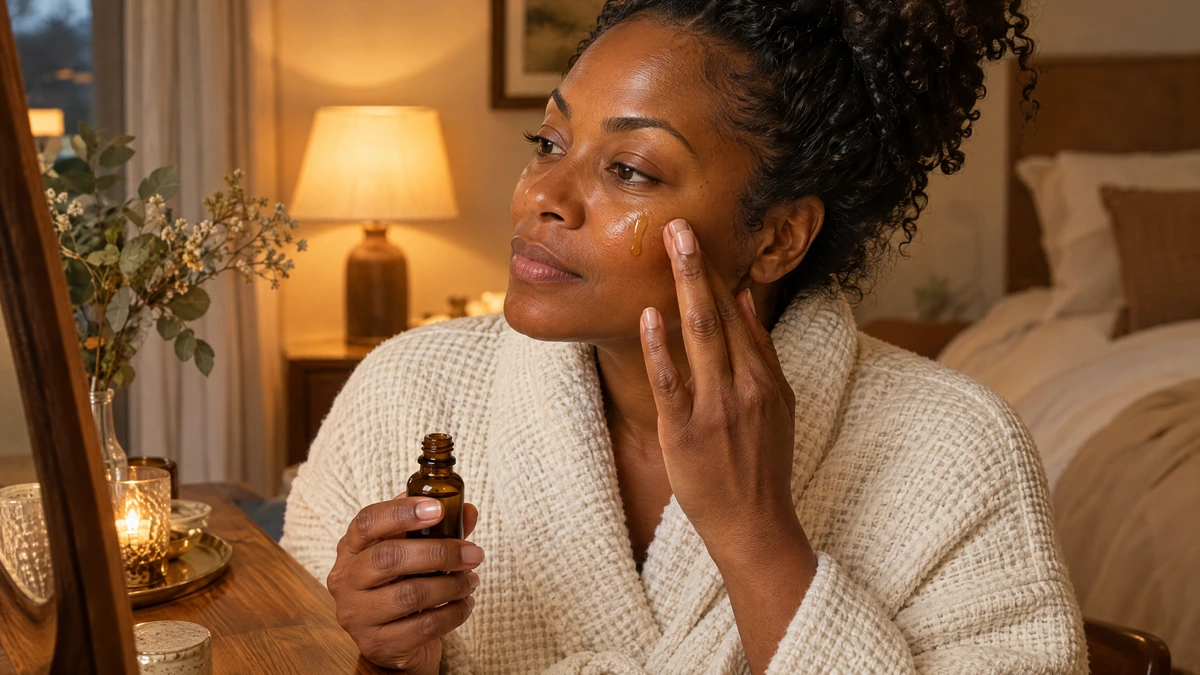
Wear ylang ylang inside a blend rather than on its own. On its own it reads loud. Paired with vanilla, citrus and soft woods, it settles into a warm, creamy flower that stays close to your skin. Vanilla rounds out its creaminess, citrus lifts its sweetness, and woods give it somewhere to rest.
That is how we use it in the Golden Veil Botanical Face Serum. Its fragrance notes are Ylang Ylang, Passionfruit, Amyris and Vanilla. Its ingredients include Ylang Ylang Essential Oil, Sweet Orange Essential Oil, Vanilla Oleoresin and Amyris Essential Oil, in a base of Jojoba Oil, Meadowfoam Seed Oil and Virgin Passionfruit Seed Oil. The serum costs $48, and the ritual asks you to press two or three drops into clean, slightly damp skin morning and night.
Curious about the notes around it? Our guide to what vanilla smells like covers the warm side of the serum, and our post on meadowfoam seed oil explains the base it sits in. If you love bright white florals, read about the neroli scent and champaca essential oil, two flowers that share ylang ylang’s sunny warmth.
Blending your own? Always dilute ylang ylang essential oil in a carrier oil before it touches your skin, and use our essential oil dilution chart to set your drop count. Our guide to carrier oils for essential oils helps you pick the base, and wearing essential oils as perfume walks you through building a personal blend. If a label leaves you unsure what you are holding, our guide to fragrance oil vs essential oil explains the difference.
Test any new blend before you wear it widely. The American Academy of Dermatology advises you to apply the product to a test spot twice daily for seven to 10 days, on a quarter-sized spot such as the underside of your arm or the bend of your elbow. Once you are happy with it, our tips on how to make perfume last longer give you more ways to keep the flower close.
I read the 2015 ylang ylang review on PubMed Central and the PubChem odor records for its key molecules before writing this, so you are able to check every description in this guide yourself.
My honest opinion: most people who say they dislike ylang ylang smelled it straight from the bottle. Meet it once at a single drop, warmed with vanilla and citrus on your skin, and you might change your mind about it.
Ylang Ylang Scent: Your Questions Answered
Does ylang ylang smell nice?
That depends on your nose and the dose. In a blend, ylang ylang smells sweet, creamy and floral with a fruity edge. Straight from the bottle it smells intense and heady, so try it diluted on a scent strip or your wrist before you decide.
What is the English name for the ilang ilang flower?
In English the flower is commonly known as ylang ylang, which is the Spanish spelling of the Tagalog name for the tree, ilang-ilang. In English, it is also called perfume tree, Macassar oil tree, or fragrant cananga, and its botanical name is Cananga odorata, so look for any of those names on your label.
What does ylang ylang essential oil smell like?
It smells sweet, creamy and floral, with fruity and lightly spicy notes underneath. Linalool is the main component of its oxygenated fraction and is responsible for its floral smell, according to the 2015 review. PubChem describes the odor of linalool as similar to that of bergamot oil and French lavender, so you might notice a family resemblance.
What are the Extra, First, Second and Third grades of ylang ylang?
They are fractions of the same distillation, separated by distillation time. Extra is recommended for high-grade perfumes, First and Second grades are used in cosmetics, and Third grade oil is used for scenting soaps, so choose your grade by what you plan to make.
Where does ylang ylang essential oil come from?
It comes from the flowers of the Cananga odorata tree, native to tropical Asia. The Union of Comoros, Madagascar and Mayotte are the current main producers, and distillers draw the oil from the flowers with water or water and steam distillation before it reaches your bottle.
What scents pair well with ylang ylang?
Vanilla, citrus and soft woods all flatter it on your skin. Golden Veil Botanical Face Serum pairs ylang ylang with passionfruit, amyris and vanilla, so borrow that same pairing for any blend you make at home.
A flower worth leaning in for
Press two or three drops of Golden Veil into slightly damp skin tonight and notice the ylang ylang settle into vanilla.
Like this article? Add Piton Noir Botanicals as a preferred source, and you are more likely to see our articles in Google’s Top Stories.