
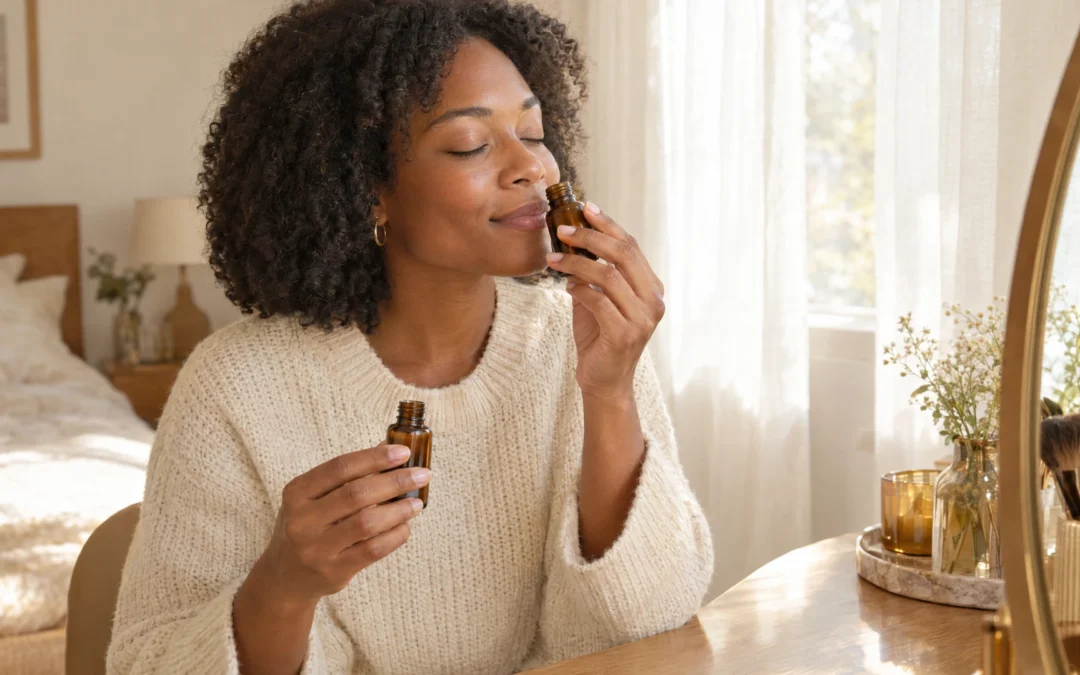
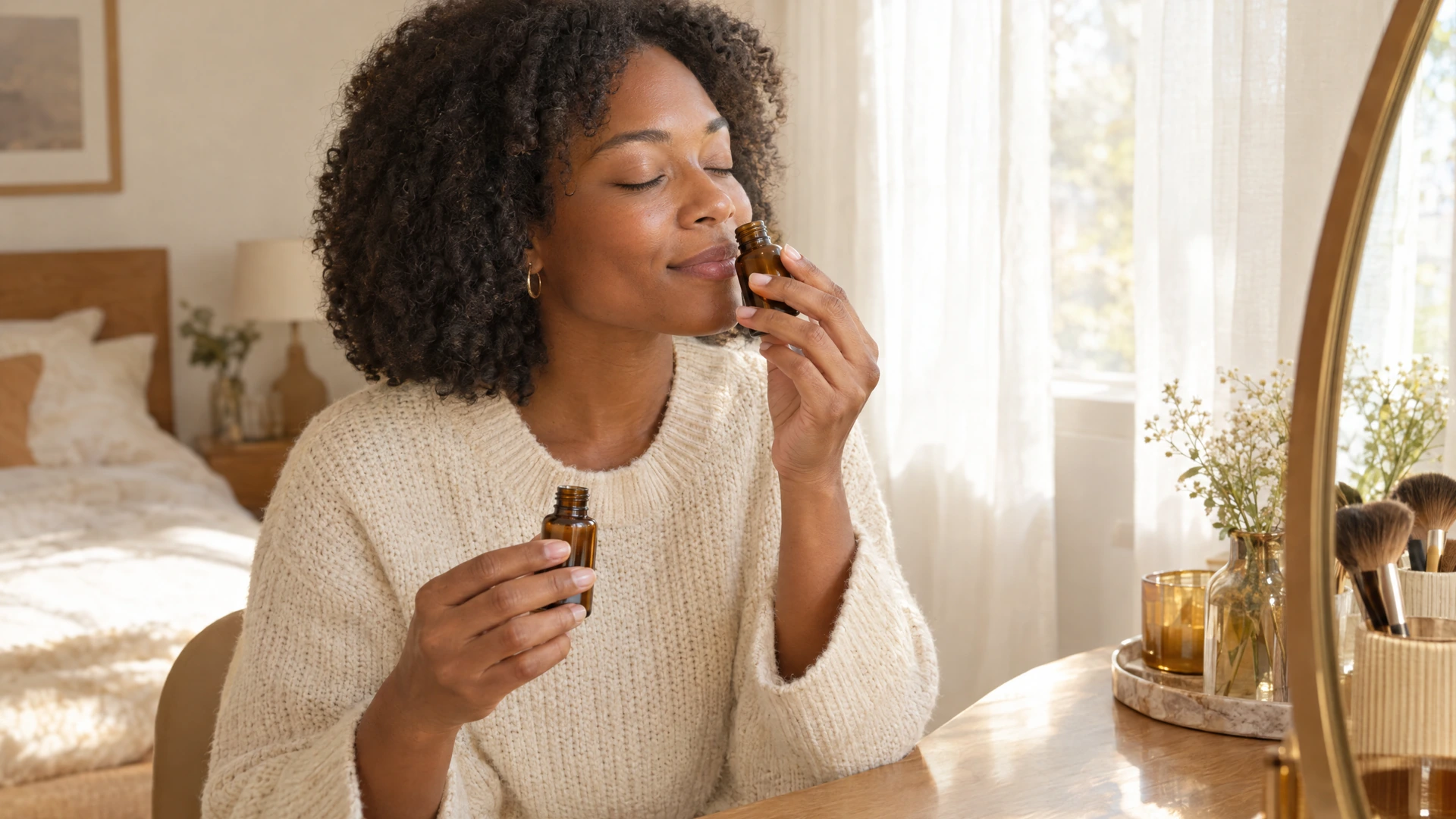

The difference between fragrance oil and essential oil is where the scent comes from: an essential oil is distilled or pressed from one plant, while a fragrance oil is composed from many natural and synthetic aroma materials. Neither one is automatically gentler on your skin. The formula, the dilution and the safety standards behind the bottle matter far more than the label.
One came out of a plant. The other was written like a piece of music. Most days your nose will not tell you which is which.
You have seen the argument online. Essential oils are pure and good, fragrance oils are cheap and suspect, and anyone who uses the second kind is cutting corners. It sounds tidy. It also misreads how scent works, how safety rules work, and how the blends you love are built.
This guide settles the fragrance oil vs essential oil question for you in plain language: what each one is, what goes into it, how safety standards cover both, and why we blend with both in every Piton Noir ritual. No sides taken, only the facts behind the bottle.
Fragrance Oil vs Essential Oil: The Short Difference

An essential oil comes from one plant. Steam distillation draws it from leaves, petals, wood or resin, and cold pressing squeezes it from citrus peel. When you open a bottle of lavender oil, you smell lavender and nothing else, because the oil is that plant’s own aromatic material, concentrated into a few drops.
A fragrance oil is composed. A perfumer builds it from many materials at once, often including essential oils, absolutes and aroma molecules made in a lab, then balances them until they smell like a place, a flower or a memory. When you smell clean linen or sea air in a candle, you are smelling a fragrance oil, because no plant grows that smell for anyone to press.
Fragrance oils and essential oils at a glance
- Source: an essential oil comes from one plant, a fragrance oil from many materials
- Scent range: essential oils stop at what plants make, fragrance oils reach linen, rain and amber
- Consistency: a fragrance oil smells the same batch to batch, an essential oil shifts with each harvest
- Price: rare flowers cost a fortune as raw oil, a composed version costs a fraction of that
- Safety: both carry limits, and both need dilution before they touch your skin
Neither one is the real scent while the other is the fake. They are two different tools, and the best blends on your shelf usually rely on both of them working together.
What Makes an Essential Oil an Essential Oil

Here is a fact that surprises most people. In the United States there is no legal definition of an essential oil. The FDA states that there is no regulatory definition for essential oils, and that the law holds ingredients from plants to the same rules as ingredients from any other source. A label that says pure essential oil tells you what the seller wants you to believe, not what a regulator has confirmed.
In practice, perfumers and formulators use the term for oils taken from a single plant by distillation or by pressing citrus peel. That process hands you a material with real character, and it also hands you every molecule the plant made, including the ones your skin does not love.
Natural does not mean gentle. Expressed bergamot oil is the classic example. The Tisserand Institute records that IFRA set the maximum for bergamot oil at 0.4 percent in leave-on products to prevent phototoxic reactions in sunlight. The molecules behind those reactions usually make up less than one percent of the oil, and even 0.1 percent is enough to matter on your skin.
I read the FDA’s guidance on fragrances and the Tisserand Institute’s notes on phototoxicity before writing this, and both lead you to the same place: where a scent comes from tells you far less than its formula and its dilution.
What Goes Into a Fragrance Oil

A fragrance oil is a recipe. The FDA describes fragrance formulas as complex mixtures of many different natural and synthetic chemical ingredients, and that is the honest picture for you. A good fragrance oil often contains essential oils inside it, balanced with aroma molecules that stretch, soften or anchor the scent.
Those molecules are why you get scents no plant gives you. Amber, as we explained in what amber smells like, is an accord a perfumer builds, not an oil you press from a tree. Clean linen, rain and driftwood work the same way. The same craft lets a perfumer echo rare materials, which is why a composed champaca or a creamy sandalwood note costs you a fraction of the raw oil.
You will rarely see a full fragrance formula on a label, and there is a plain reason. Under U.S. labeling rules, fragrance ingredients are allowed to appear as the single word Fragrance, because the law protects those formulas as a trade secret. That rule was not invented to hide anything from you. It protects every perfume house’s recipe, from the smallest studio to the largest brand.
If you want to see how a composed note compares with the raw material it echoes, our guide to champaca essential oil walks you through one of the most expensive flower oils on earth and why a composed version exists beside it.
Are Fragrance Oils Safe on Your Skin?

Under U.S. law, fragrance ingredients in cosmetics must meet the same safety requirement as every other cosmetic ingredient, and the company selling them is responsible for that safety. Above the law sits IFRA, whose IFRA Standards serve as the global benchmark for fragrance ingredient safety, with restrictions, specifications and outright prohibitions for specific materials. Those limits are part of what keeps your favorite scents wearable.
Those limits reach natural materials and lab-made ones alike, which is the point most comparisons miss for you. An essential oil is not exempt because it grew in a field, and a fragrance oil is not suspect because someone blended it in a studio. Both need the right dilution, and both suit some people better than others.
The FDA also notes that some components of fragrance formulas have the potential to cause allergic reactions in some people, even when those ingredients are safe for most. The same holds for essential oils. If your skin is reactive, patch test any new scented product on your inner forearm for a day, and stop using it if you notice redness or itching.
How we use both in our blends
- Amber Veil Luxury Body Oil ($36): bergamot, santal, cashmere and gilded amber fragrance oils on fractionated coconut, jojoba and meadowfoam
- Moonlight Descent Luxury Body Oil ($36): neroli, gardenia, white musk and teakwood fragrance oils with sandalwood essential oil
- Golden Veil Botanical Face Serum ($48): premium fragrance oils with ylang ylang, sweet orange and amyris essential oils and vanilla oleoresin
- Guiding Light Water Diffuser ($32): soft citrus, clean linen, tobacco leaf and warm wood fragrance oils for your diffuser
Whichever you choose, the scent never goes on your skin neat. In every Piton Noir body oil, the scent rides in a carrier oil base, so you get the fragrance at a wearable strength. If you blend at home, our essential oil dilution chart shows you how far to stretch each drop, and our guide to carrier oils for essential oils helps you pick the base. Those same rules matter in a diffuser, where short sessions keep your room pleasant rather than heavy.
My honest opinion after years of blending: the fragrance oil vs essential oil debate asks you the wrong question. Ask whether the scent is beautiful on your skin, whether the maker tells you what they use, and whether the blend respects safe limits. A bottle that answers yes to all three has earned its place on your shelf.
Fragrance Oil vs Essential Oil: Your Questions Answered
What is the difference between fragrance oil and essential oil?
An essential oil is distilled or pressed from a single plant and smells like that plant. A fragrance oil is composed from many materials, often including essential oils and lab-made aroma molecules, so it reaches scents like amber, linen and rain that no single plant gives you.
Are fragrance oils safe for your skin?
In cosmetics, fragrance ingredients must meet the same U.S. safety requirement as any other cosmetic ingredient, and IFRA Standards add limits on specific materials. Wear them diluted in a carrier, and patch test anything new if your skin is sensitive.
Is essential oil better than fragrance oil?
Not by default. Essential oils bring the character of one plant, and some, like expressed bergamot, carry strict limits of their own. Fragrance oils bring range and consistency. The better choice for you is the well-made, properly diluted blend you love wearing.
Do fragrance oils contain essential oils?
Often, yes. The composed fragrance in your favorite blend frequently pairs essential oils with aroma molecules, which is why the FDA describes fragrance formulas as mixtures of natural and synthetic ingredients. Read a brand’s ingredient list for the essential oils it names alongside the word fragrance.
Why does a label only say fragrance?
U.S. labeling rules allow fragrance ingredients to appear as the single word fragrance, because the formula is treated as a trade secret. If you want more detail, look for brands that name their fragrance notes and their essential oils, the way we list ours on every product page.
Is fragrance oil good for a diffuser?
Yes, when the oil is made for diffusing. Our Guiding Light diffuser oil asks you to fill the reservoir to the line and add five to eight drops, and we suggest you run it in short sessions while you are in the room rather than all day.
Both, blended with care
Smell what a balanced blend does on warm skin. Press three or four drops in straight after your shower tonight.
Like this article? Add Piton Noir Botanicals as a preferred source, and you are more likely to see our articles in Google’s Top Stories.