
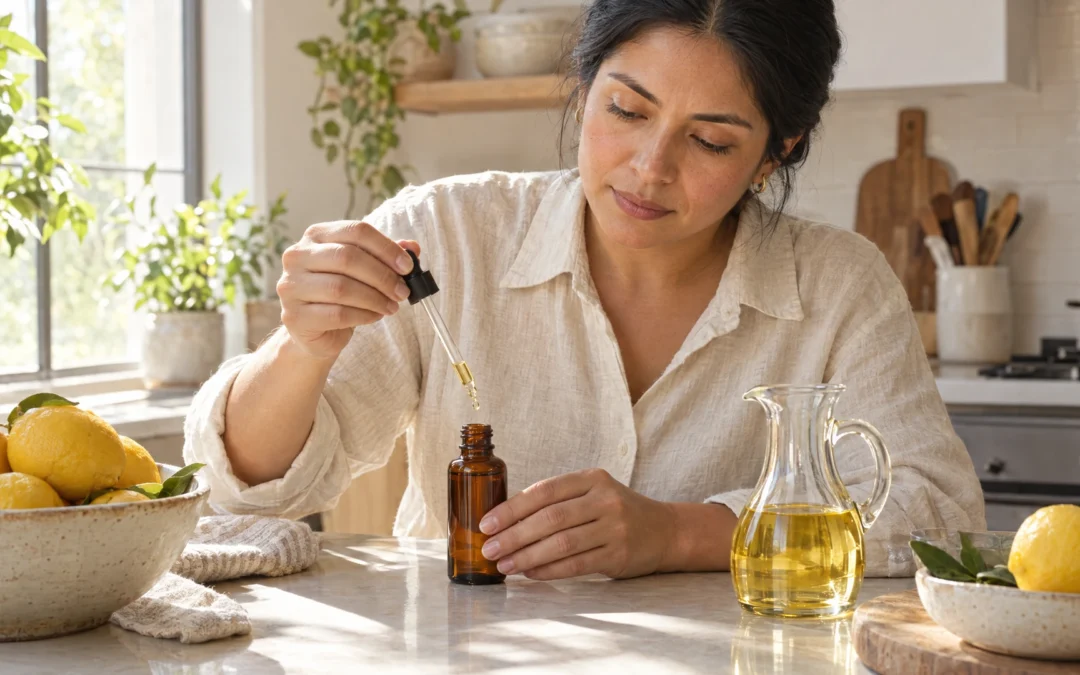
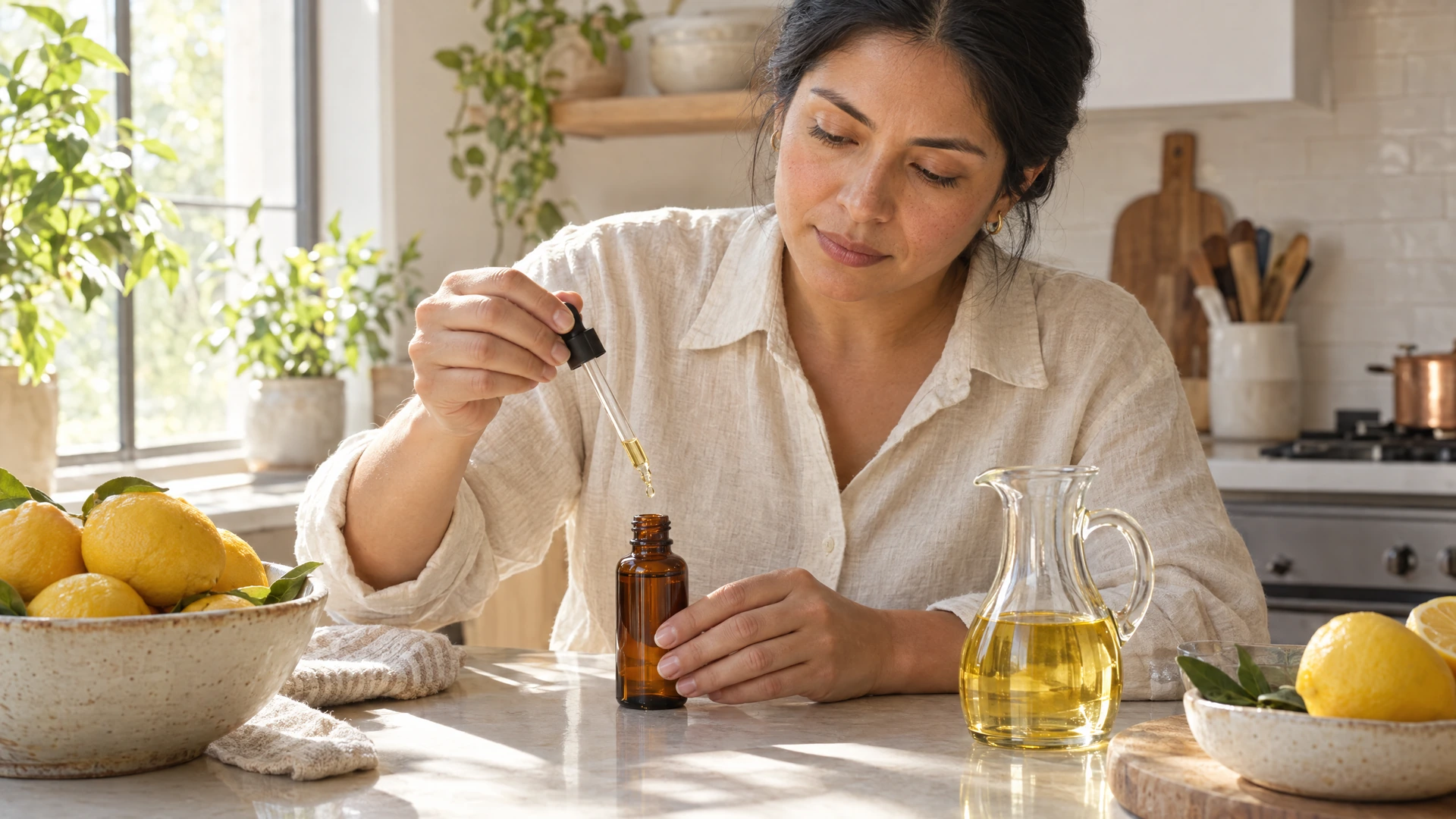

A carrier oil is a plain plant oil that dilutes an essential oil so you wear it safely on your skin, and the best carrier oil for essential oils depends on how fast you want it to sink in and how long you want the bottle to last. Jojoba and meadowfoam rank among the most stable plant oils you will find, fractionated coconut oil stays clear and scent-neutral, and sweet almond oil gives your body a richer glide.
The essential oil is the voice. The carrier oil is the room it sings in.
You bought a beautiful bottle of essential oil, and the label told you to dilute it before it touches your skin. Then nobody told you what to dilute it with. The shelf in front of you holds jojoba, sweet almond, coconut, argan and a dozen more, and every bottle promises to be the one you need.
This guide shows you what a carrier oil does, how the carrier oils for essential oils you see most often compare, and how you choose the right one for your face, your body and the scent you love. It ends with the simple method for blending at home, so your next bottle smells right and wears well on your skin.
What Is a Carrier Oil and Why Does Your Essential Oil Need One?

A carrier oil is a fixed oil pressed or extracted from the fatty part of a plant, usually the seed, nut or kernel. It does not evaporate the way an essential oil does, so it stays on your skin and carries the aromatic molecules with it. That is where the name comes from. The carrier holds the scent in place while you wear it.
Dilution is not a nice extra. The Tisserand Institute, one of the most respected voices in essential oil safety, puts it plainly in its safety guidelines: do not apply undiluted essential oils to your skin. The same page notes that the oil in a bottle is 50 to 100 times more concentrated than in the plant, and that undiluted use is the most common cause of skin reactions. A carrier oil gives you a way to wear that concentrated scent at a strength your skin welcomes.
A good carrier also changes how the blend feels on you. Some oils sink in within a minute and leave nothing behind. Others sit on the surface a little longer and leave your skin with a soft sheen. Neither is wrong. The right one depends on where you apply it and how you want your skin to feel afterward.
The Best Carrier Oils for Skin, Compared
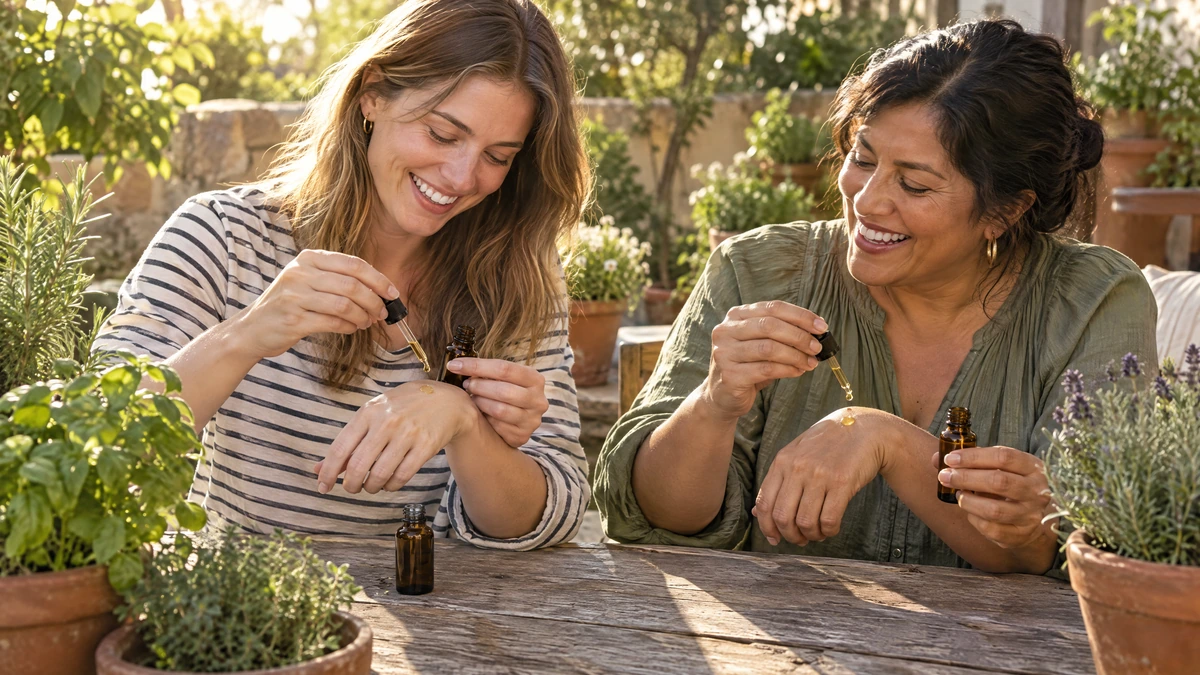
Every carrier oil gets its personality from its fatty acids. A 2017 review of plant oils in the International Journal of Molecular Sciences breaks several popular carriers down, and the differences explain what you feel on your skin. I read that review and the Tisserand Institute safety guidelines before writing this, and every number in this guide comes from a source linked on the page for you to check.
Six carrier oils worth knowing
- Jojoba: technically a liquid wax, rich in wax esters, with high oxidative stability. Light, nearly dry, and slow to turn
- Fractionated coconut oil: coconut oil with its heavier fats removed, so it stays clear, liquid and scent-neutral at room temperature
- Sweet almond oil: a classic emollient with a richer, more cushioned glide across your body
- Meadowfoam seed oil: one of the most stable plant oils known, made of over 98 percent long chain fatty acids
- Argan oil: about 80 percent monounsaturated fatty acids, with a smooth, satin feel
- Sunflower seed oil: an affordable everyday carrier, higher in linoleic acid than olive oil
The meadowfoam figure comes from the reference entry for white meadowfoam, which also calls the oil one of the most stable vegetable oils known. That stability is the reason you find it behind so many finished blends. It holds its character on your shelf long after more delicate seed oils have started to fade.
Whole coconut oil deserves a note of its own. The same journal review lists it at roughly 49 percent lauric acid, the fat that turns it solid in a cool room. That is why the fractionated version exists, and why you see it in so many blends. We explain the difference in our guide to fractionated coconut oil.
How to Choose a Carrier Oil for Your Skin and Your Scent
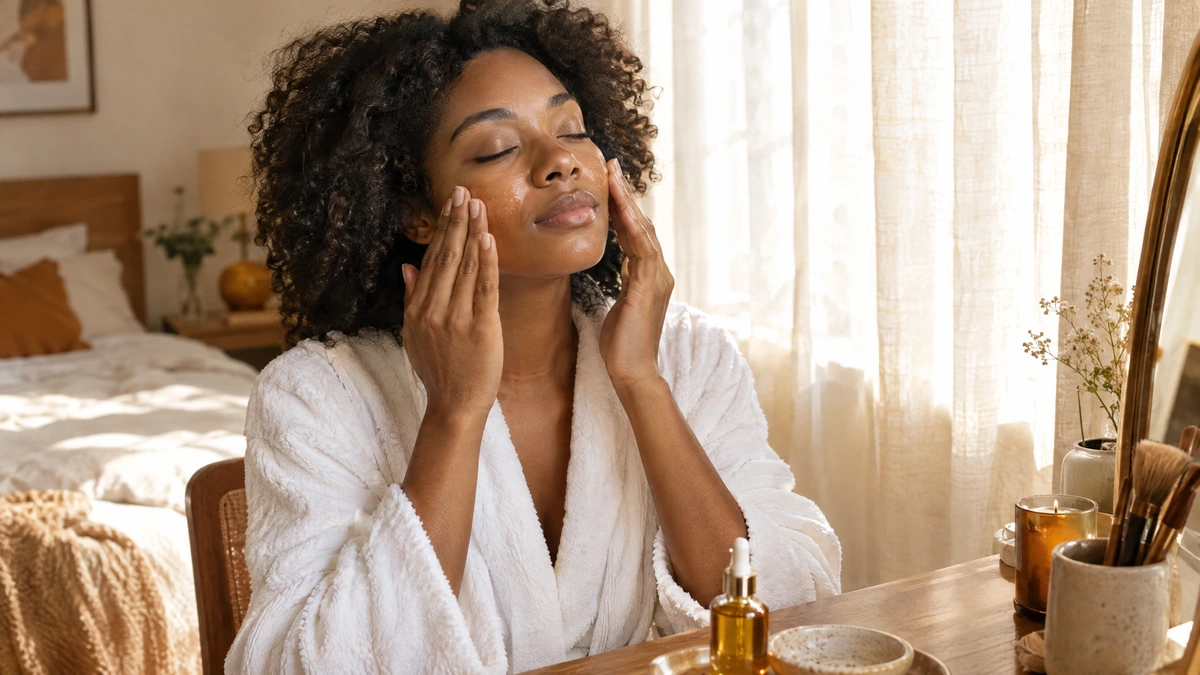
Start with where the blend is going. Your face wants a carrier that sinks in fast and stays out of the way, which is why jojoba shows up in so many facial blends. It mirrors the wax esters your skin already makes, a point we cover in depth in why jojoba acts like skin.
Your body is a bigger canvas and a more forgiving one. A slightly richer carrier glides further, so you use fewer drops to cover your shoulders and legs. Blends that mix two or three carriers give you the best of each: the glide of one, the stability of another, the light finish of a third.
Match the carrier to the job
- For your face: jojoba, meadowfoam, or a light blend of the two
- For your body after a shower: fractionated coconut oil, sweet almond, or a mix
- For an oil perfume on your pulse points: jojoba or fractionated coconut oil, both close to scent-neutral
- For a blend you plan to keep for months: favor stable carriers such as jojoba and meadowfoam
- For sensitive skin: patch test any new blend on your inner forearm first
Scent matters too. Unrefined oils carry their own aroma, and a nutty or earthy carrier will bend a delicate floral out of shape. If you want the essential oil to speak clearly, choose a carrier that smells of almost nothing. That is why we lean on jojoba and fractionated coconut oil when a fragrance has to read true, the same reason we recommend them for wearing essential oils as perfume.
Shelf life is the quiet deal breaker. Every carrier oil eventually oxidizes, and an oxidized carrier drags your essential oil down with it. Store your blends in amber glass, away from heat and light, and read our guide to how long botanical oils last before you mix a big batch.
How to Mix Essential Oils Into a Carrier Oil
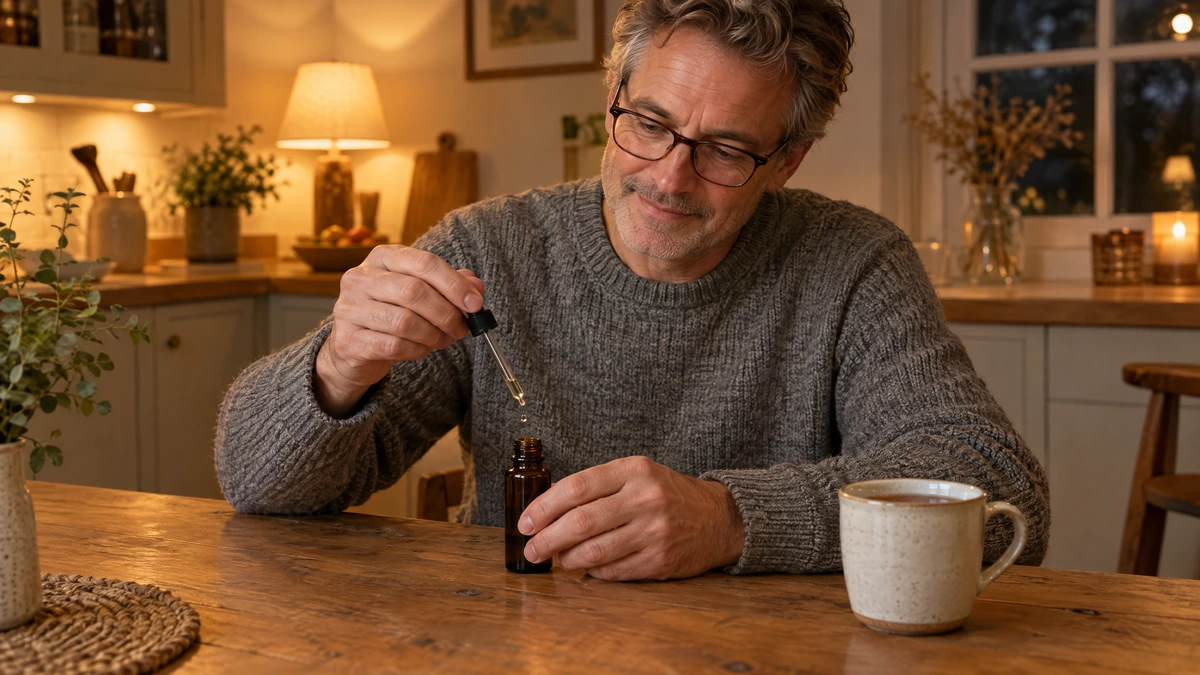
Blending at home takes you two minutes and a steady hand. Measure your carrier first, add your essential oil drop by drop, cap the bottle and roll it gently between your palms. Label it with the date so you know exactly when you made it.
Strength is where most people go wrong, so keep your numbers close. The Tisserand Institute’s general guide puts body oils and lotions at 1 to 3 percent essential oil, with 2 percent the most common choice, and facial products lower, at 0.2 to 1.5 percent. Their dilution chart works out the drops for you: 2 percent in a 30 ml (1 oz) bottle comes to about 18 drops of essential oil.
If you would rather skip the measuring, a finished body oil does the blending for you. Our Amber Veil Luxury Body Oil ($36) carries notes of bergamot, santal, cashmere and gilded amber on a base of fractionated coconut, jojoba and meadowfoam seed oils with vitamin E. Golden Veil Radiant Body Oil ($36) rests sweet orange, mahogany, driftwood and vanilla on jojoba and meadowfoam. Warm three or four drops between your palms and press them into your skin straight after a shower.
My honest opinion: the carrier is the part most people rush past, and it is the part that decides whether you reach for the bottle again. A beautiful essential oil in a heavy, scented carrier smells muddy on you and feels greasy by lunch. The same drops in a clean, light carrier smell like you meant them. Spend your first ten minutes choosing the carrier, and the scent takes care of itself.
Carrier Oils for Essential Oils: Your Questions Answered
What is the best carrier oil for essential oils?
For most of your blends, jojoba and fractionated coconut oil are the safest bets. Both stay close to scent-neutral, both sink in without a heavy film, and jojoba holds its quality for a long time. Choose sweet almond oil when you want a richer feel across your body.
Which carrier oil absorbs the fastest?
Light oils such as jojoba and fractionated coconut oil feel the fastest on your skin, while richer oils such as sweet almond and argan take a little longer to settle. Apply any of them to slightly damp skin and you spread the blend further with fewer drops.
Does a carrier oil change how an essential oil smells?
An unrefined carrier with its own aroma bends the scent you chose. A near-odorless carrier lets the essential oil read true, which is why blenders reach for jojoba and fractionated coconut oil whenever the fragrance matters to you.
Is fractionated coconut oil the same as coconut oil?
No. Whole coconut oil is roughly half lauric acid and turns solid in a cool room. Fractionated coconut oil has those heavier fats taken out, so it stays clear and liquid in your bathroom all year.
How long does a carrier oil last?
It depends on the oil you choose. Jojoba and meadowfoam sit among the most stable plant oils, while oils rich in delicate fatty acids turn sooner. Keep yours capped, in amber glass, away from heat, and smell it before every use.
Do you need to patch test a carrier oil blend?
Yes. Rub a little of the finished blend onto your inner forearm and watch how your skin responds before you use it more widely, especially on your face. NAHA, the National Association for Holistic Aromatherapy, recommends a skin patch test whenever you suspect sensitive skin.
Let the carrier do its work
Choose a blend built on a clean, stable base, press it into damp skin tonight, and notice how the scent wears tomorrow.
Like this article? Add Piton Noir Botanicals as a preferred source, and you are more likely to see our articles in Google’s Top Stories.