
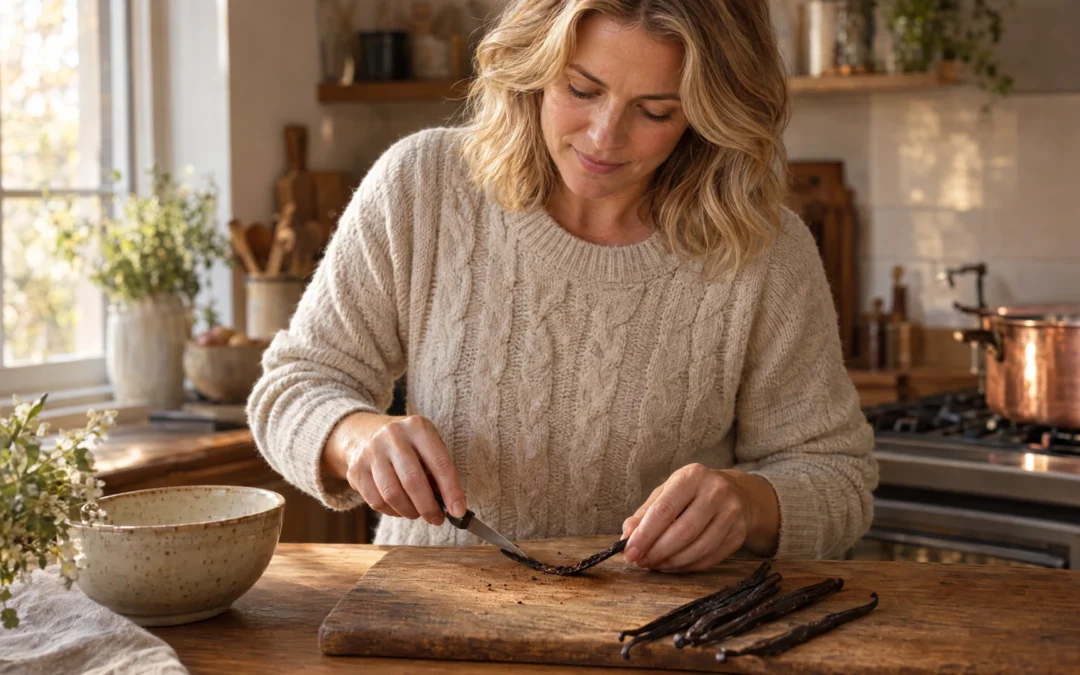
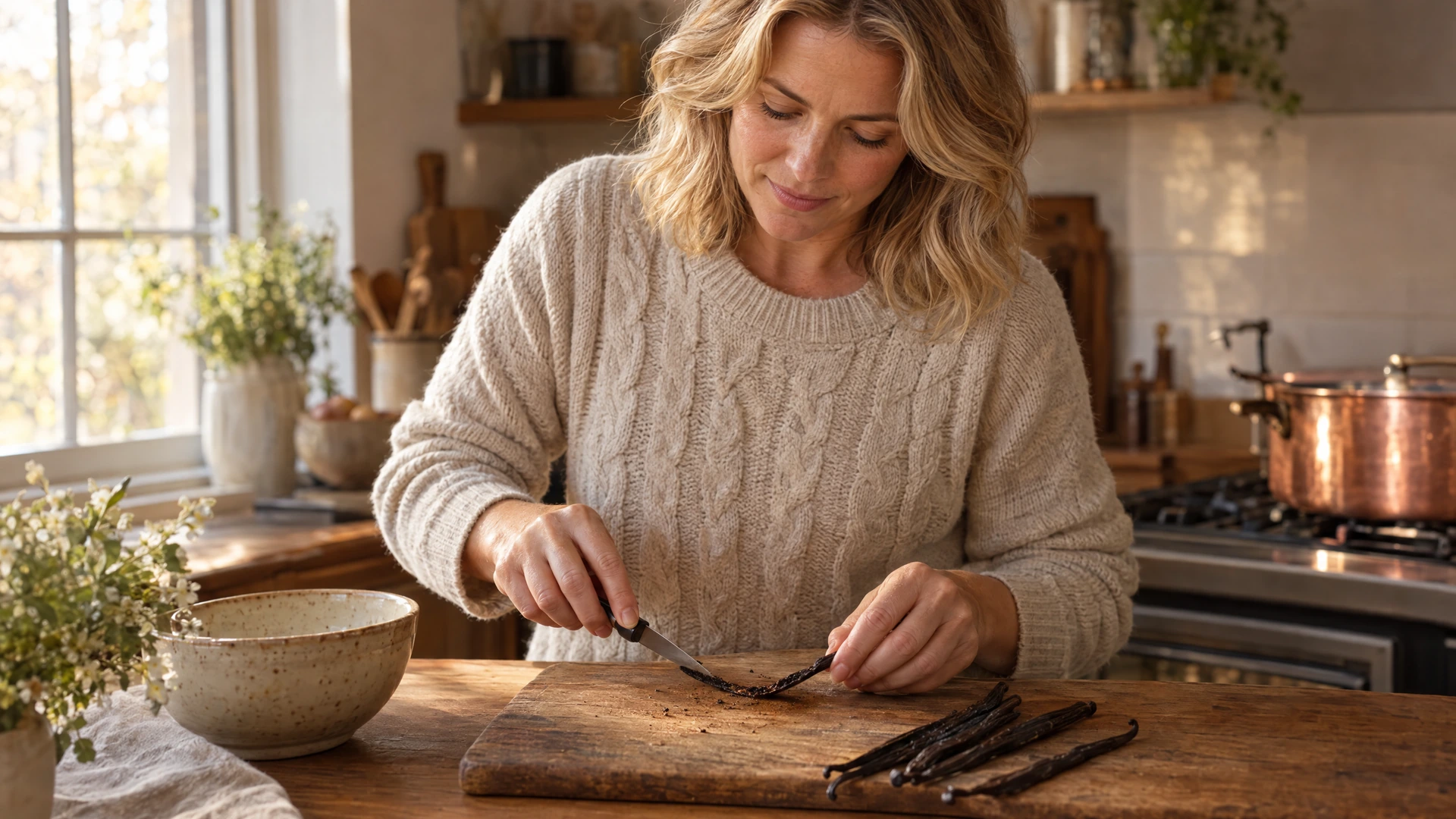

A real vanilla scent smells sweet, creamy and warm, with notes of caramel, honey, dried fruit and a dry edge of tree bark. Most of that sweetness comes from vanillin, the main component of vanilla extract, while the other compounds in the bean add the depth. Vanilla carries no gender, and the easiest way for you to smell like it is a vanilla body oil pressed into damp skin after your shower.
A vanilla pod earns its scent after the harvest. Heat, sweat and sun build the aroma you know.
You know the smell of vanilla before you ever think about it: a cookie tray, a warm kitchen, the inside of a candle jar. Yet a true vanilla scent smells far richer than the sugary note most of us picture. Smell a cured vanilla bean up close and you find caramel, dried fruit, a little smoke and something woody underneath the sweetness.
This guide walks you through what vanilla smells like, where the scent comes from, how real vanilla differs from vanillin and vanilla essence, and how to wear a vanilla perfume or body oil so it smells like you rather than like dessert. Every fact below traces back to a source, and you will find the links in each section.
What Does Vanilla Smell Like?
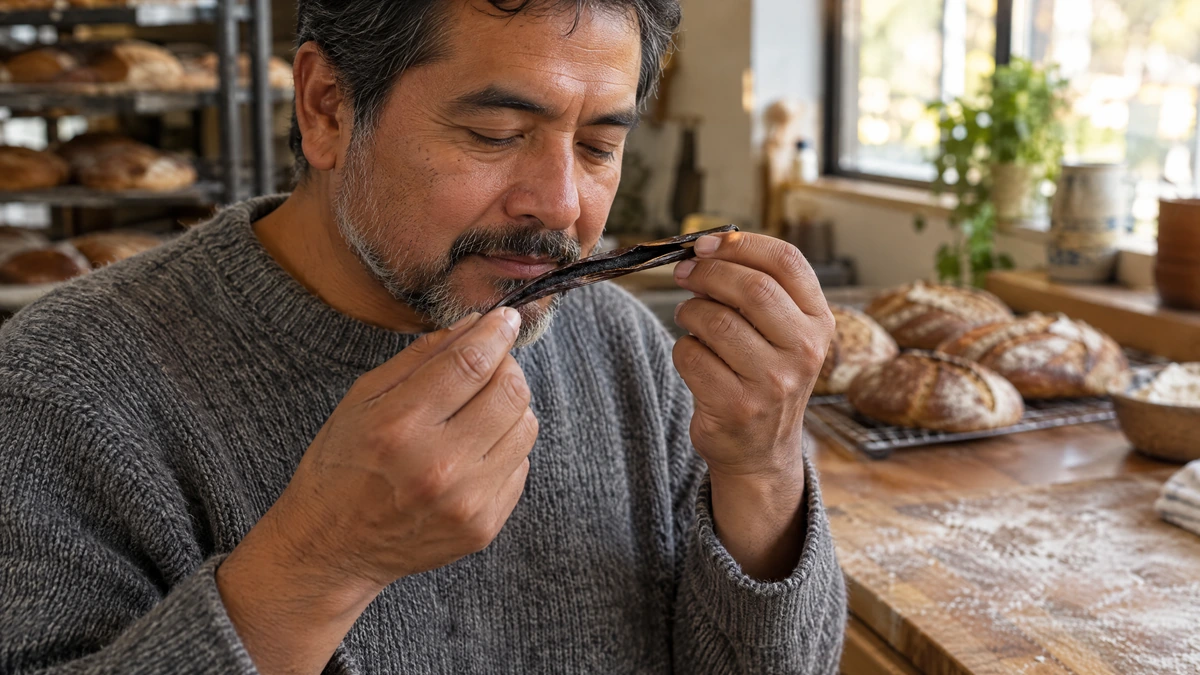
Vanilla smells sweet, creamy and warm, but the full picture holds more layers than you expect. In a 2025 study published in Foods, Influence of Traditional Vanilla Curing on Its Physicochemical Properties and Aromatic Profile, a consumer panel described cured Mexican vanilla with thirty-five aroma descriptors. The attributes that boosted their liking included caramel, dry fruit, fruity, honey, maltol, rancid, sweet, tree bark, vanilla and ashes.
The same paper cites a panel of 50 evaluators who identified gourmand, vanilla, milky and spicy notes. So when you smell a good vanilla, notice the order: a dark, slightly boozy sweetness first, then a soft milky warmth, then a dry woody finish that keeps the whole thing from tasting like frosting.
The sweetness itself has a name. Vanillin is the main component of vanilla extract, and PubChem’s record for vanillin, citing The Merck Index, describes a “pleasant aromatic vanilla odor.” A second reference on the same record calls it simply a “sweetish smell.” Vanillin gives you the instantly familiar part. The other compounds in the pod give you the depth.
Vanilla notes to smell for
- Caramel and honey, the first warm sweetness you notice
- Dried fruit, a darker, raisin-like edge
- Milky, creamy softness in the middle
- Spice, a faint warmth at the back of your nose
- Tree bark, the dry woody finish that keeps vanilla grown-up
Where Vanilla Scent Comes From
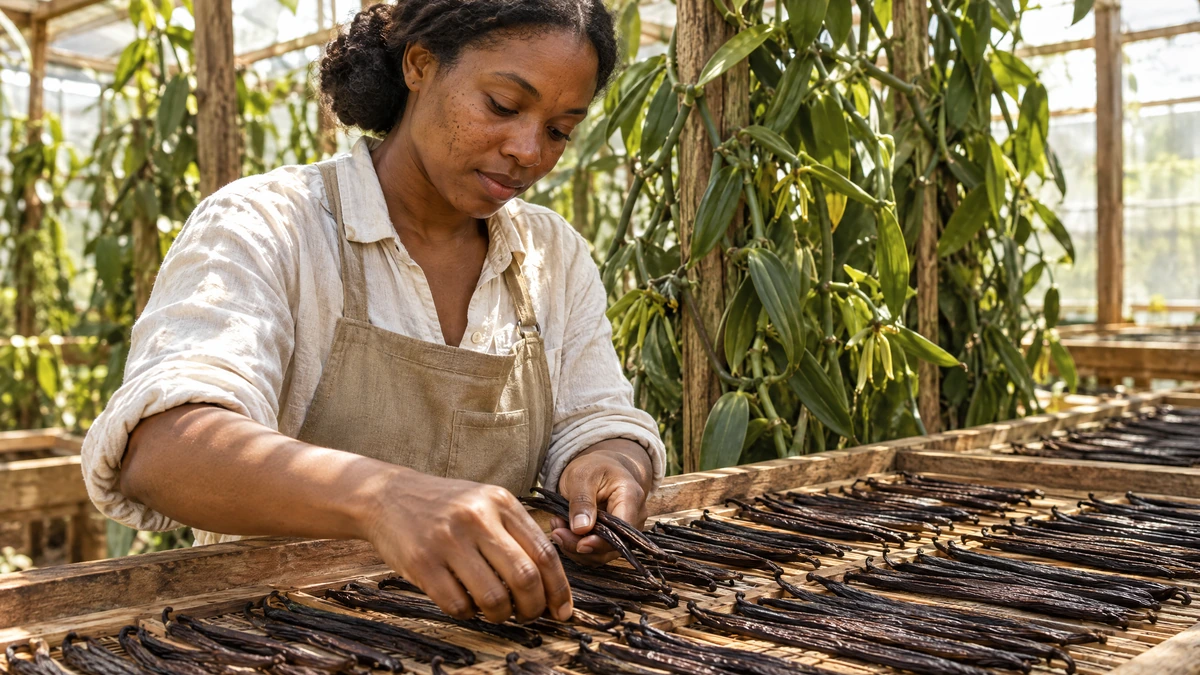
Vanilla comes from an orchid. The Foods study opens by describing Vanilla planifolia as “an orchid native to Mexico,” and it calls vanilla the second most expensive spice in the world because of its labor-intensive production and processing. The name tells you about the shape you hold in your hand: the word vanilla comes from the Spanish vainilla, meaning “little pod.”
The history runs deep, and it explains why you pay what you pay for real vanilla. The Totonac people of Mexico’s eastern coast were among the first people to domesticate vanilla, and they used it as a fragrance in temples. In 1841, Edmond Albius, a 12-year-old enslaved child on the French island of Réunion, discovered that the plant took hand-pollination, and hand-pollination allowed global cultivation of the orchid behind the vanilla in your pantry.
The scent you love takes shape after the harvest. According to the Foods paper, the pod must go through a curing process that favors the formation of the aromatic compounds behind its profile. That process generally comprises four stages: blanching, sweating, sun drying and conditioning. Picture warm pods laid out in the sun and boxed again, day after day, and you understand why you smell caramel and tree bark instead of green vegetation.
The yield keeps the price high for you, too. A 2026 review of vanillin production in Food Technology and Biotechnology, Sourcing Vanillin via Fermentative Biotechnology, reports that one kilogram of purified vanillin takes roughly 500 kilograms of vanilla pods, which means pollinating around 40,000 orchid flowers.
Real Vanilla, Vanillin and Vanilla Essence
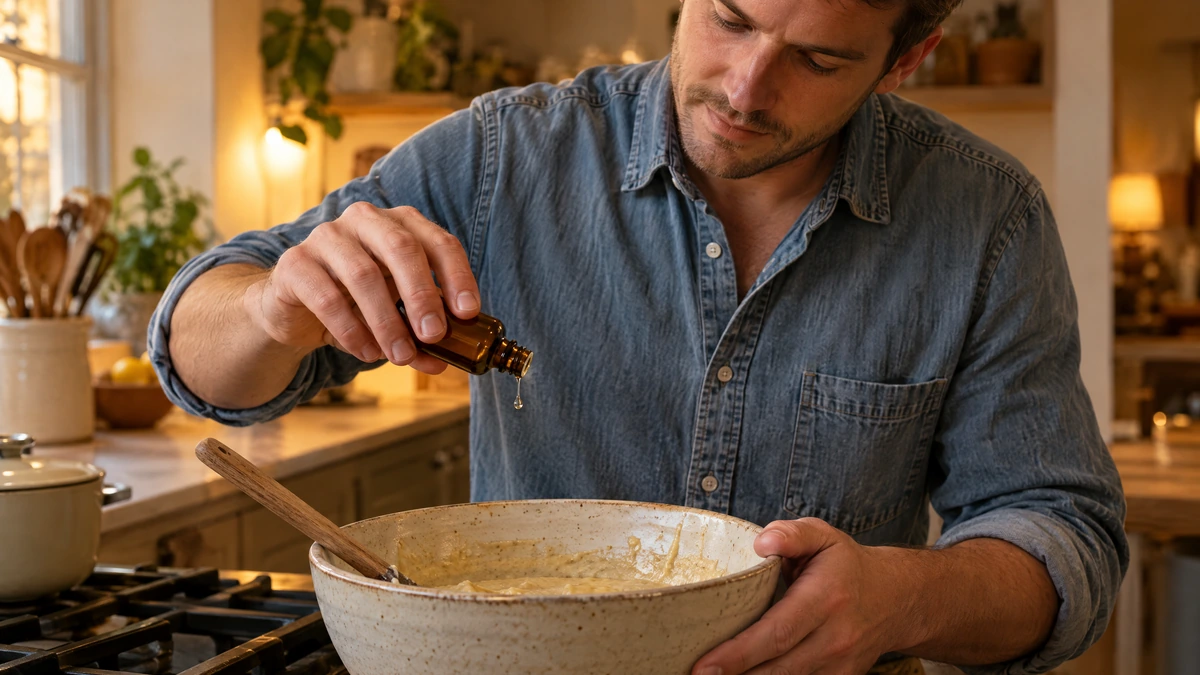
Most of the world’s vanillin never came near a pod, and that shapes what you smell every day. The same review states that around 80 percent of global vanillin comes from chemical synthesis, and that chemically made vanillin costs only 1 percent of the natural kind. Theodore Nicolas Gobley first isolated vanillin from vanilla pod extracts in 1858, and by 1875 synthetic vanillin went on sale in France and the United States.
Why does a vanilla bean smell different from a vanillin cookie? The review answers that directly: synthetic vanillin “does vary in flavour and smell” because it lacks the associated compounds of the bean, which create the full vanilla profile. So when you want caramel, dried fruit and wood, you look for a product that names the bean, the extract or the oleoresin, not only vanillin.
That brings you to vanilla essence. In the United States, vanilla extract has a legal definition. Under the FDA standard of identity for vanilla extract, the product must hold at least 35 percent ethyl alcohol by volume and at least one unit of vanilla constituent per gallon. A related federal definition sets one unit weight of vanilla beans at 13.35 ounces, for beans with no more than 25 percent moisture.
So what does vanilla essence smell like when you open the bottle? Expect a sharp lift of alcohol first, then the sweet, woody vanilla underneath once the alcohol flashes off. The same federal standard also names vanilla flavoring concentrated to a semisolid form called vanilla oleoresin, and you find vanilla oleoresin in our face serum.
Vanilla forms on a label
- Vanilla extract: vanilla in alcohol, at least 35 percent alcohol by volume
- Vanillin: the main component of vanilla extract, mostly made by chemical synthesis
- Vanilla oleoresin: a concentrated semisolid form of vanilla
- Vanilla bean fragrance oil: the vanilla in Golden Veil Radiant Body Oil
How to Wear a Vanilla Scent
Vanilla belongs to everyone, and perfume history backs you up. Guerlain’s Jicky, created in 1889, lists vanilla and tonka bean among its base notes and carries a unisex label. Research on smell points the same way. In a 2022 cross-cultural study of odor pleasantness, people from nine non-western communities ranked ten odors from most pleasant to most unpleasant. As ScienceAlert reported, the odor most often ranked most pleasant was vanillin, so you share your love of vanilla with people around the world.
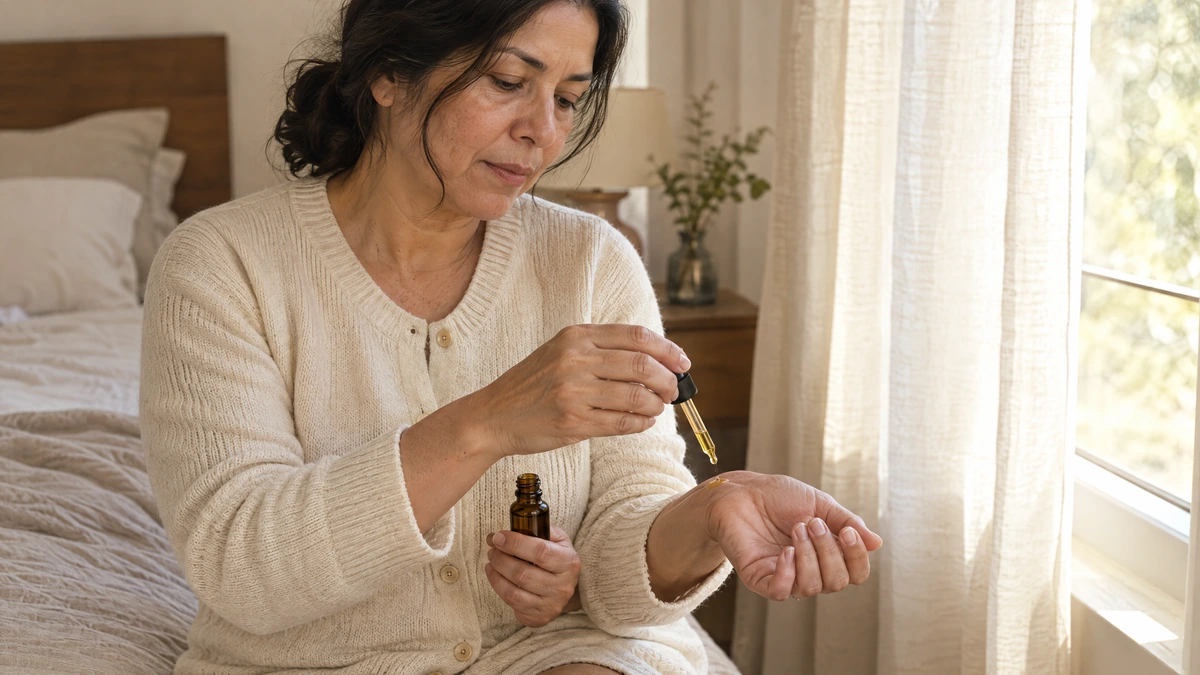
The easiest way for you to smell like vanilla is to wear it on your skin, not spray it into the air. Golden Veil Radiant Body Oil carries notes of sweet orange, mahogany, driftwood and vanilla. It blends jojoba and meadowfoam seed oil with vanilla bean fragrance oils and sweet orange essential oil, and it costs $36. The ritual is simple: warm three or four drops between your palms and press them into skin straight after a shower.
For your face, Golden Veil Botanical Face Serum pairs vanilla with ylang ylang, passionfruit and amyris. Its ingredient list includes jojoba, meadowfoam, virgin passionfruit seed oil, vitamin E and vanilla oleoresin, and it costs $48. Press two or three drops into clean, slightly damp skin, morning and night.
Want vanilla to read less sweet on you? Pair it with wood or citrus. A vanilla laid over sandalwood or amber smells drier and warmer, so read our guides to sandalwood scent and what amber smells like before you build a layered vanilla perfume. If you wear an alcohol perfume too, oil first, then perfume, and our guide on how to make perfume last longer covers the order step by step.
I read the FDA’s standard for vanilla extract and two vanilla research papers before writing this, so you get the real chemistry behind each claim instead of a guess.
My honest opinion: the best vanilla scent smells like the pod, not the cupcake. Look for a blend with some wood or citrus in it, wear it close to your skin, and you get warmth that smells grown-up instead of sugary.
Vanilla Scent: Your Questions Answered
Is vanilla a male scent?
No. Vanilla carries no gender. Jicky, which Wikipedia calls the oldest continuously produced perfume in the world, lists vanilla among its base notes and carries a unisex label. You decide how it reads: pair vanilla with wood and spice for a drier finish, or with flowers for a softer one.
What makes you smell like vanilla?
Wearing vanilla on your skin, in an oil or a perfume, makes you smell like vanilla. With a body oil, you press it into damp skin after a shower and wear the scent close to your skin.
What is the smell of vanilla essence?
Vanilla essence, or vanilla extract, smells of alcohol first and sweet vanilla underneath. FDA rules require at least 35 percent ethyl alcohol in vanilla extract, so you notice a sharp lift before the warm, woody sweetness comes through.
What does vanilla smell like in perfume?
In a classic perfume, vanilla sits in the base, under the brighter top notes. Shalimar, which Guerlain has produced continuously since 1925, lists vanilla and tonka beans as base notes. You notice vanilla most once the opening fades: a creamy, sweet warmth with hints of caramel and wood, the same notes consumer panels find in cured vanilla beans.
Is vanillin the same as vanilla?
Not quite. Vanillin is the main component of vanilla extract, but a cured bean holds many other compounds too. Synthetic vanillin smells sweet and familiar to you, while real vanilla adds caramel, dried fruit and woody depth.
What scents go well with vanilla?
Try citrus, woods or white flowers with your vanilla. Golden Veil Radiant Body Oil pairs it with sweet orange, mahogany and driftwood, and Golden Veil Botanical Face Serum pairs it with ylang ylang, passionfruit and amyris.
Vanilla, worn close
Step out of the shower tonight, press three or four drops of Golden Veil into damp skin, and smell how warm real vanilla reads on you.
Like this article? Add Piton Noir Botanicals as a preferred source, and you are more likely to see our articles in Google’s Top Stories.