



Neroli scent is the smell of bitter orange blossoms: sweet, honeyed and green, with a bright citrus lift and a faintly spicy edge. It is steam distilled from the flowers of the bitter orange tree, it costs more than most florals because so few flowers yield so little, and on your skin it reads as clean, luminous and quietly romantic.
Neroli smells like a garden in the hour after rain. Bright, soft and impossible to place until someone tells you the name.
You likely know neroli without knowing you know it. It sits inside classic colognes, it brightens white floral perfumes, and it is the note people describe as “clean but not soapy, floral but not sweet.” The neroli scent bridges two worlds, the sparkle of citrus and the softness of a flower, and that is why perfumers have reached for it for more than three centuries.
This guide tells you exactly what neroli smells like, where it comes from, how it differs from petitgrain and orange blossom, and how you wear it so it lasts past lunch. Every fact here traces to a source you are welcome to read for yourself.
What Does Neroli Smell Like?

Close your eyes and you get bright orange first, the sweet zest of fresh peel. Then the flower arrives: honeyed, green and softly bitter, with a faint metallic shimmer that keeps it from tipping into sugar. Wikipedia sums it up well, describing neroli as sweet, honeyed, and somewhat metallic with green and spicy facets. That last word, spicy, is the part you notice only after a few minutes on your skin.
Neroli sits between a top note and a heart note. The citrus sparkle opens a fragrance, and the floral body carries into the first hours. It reads lighter than jasmine, cleaner than gardenia and greener than rose, which is why you will find it in fragrances for every gender and every season.
How neroli reads next to other white florals
- Jasmine: rich, heady and warm, built for evenings
- Gardenia: creamy, lush and velvety
- Tuberose: dense, buttery and dramatic
- Orange blossom absolute: deeper, richer and sweeter
- Neroli: bright, green and honeyed, the freshest of the group
That freshness is the reason neroli shows up in so many clean, polished blends. It brightens heavier florals without making them sharp, and it gives soft woods and musks something luminous to lean against. If you love a fragrance described as “airy,” look at the notes and you will often find neroli doing that work for you.
Where the Neroli Scent Comes From

Neroli comes from the blossoms of the bitter orange tree, Citrus aurantium, not the sweet orange you eat. A 2011 study of Egyptian neroli oil states that neroli is obtained by hydrodistillation or steam distillation from the flowers of bitter orange, and Wikipedia notes that the blossoms are gathered, usually by hand, in late April to early May. You are smelling a few short weeks of spring, captured.
The world makes little of it. The same study, listed in the University of Messina research repository, reports that annual production in Tunisia and Morocco is about 1,500 kilograms, which represents more than 90 percent of the worldwide supply. For you, that means a true neroli oil is a scarce material, and its price reflects it, the same way rare flower oils like champaca cost what they do.
The study also found that the oil changes through the season, with linalool falling from March to April while linalyl acetate rises over the same weeks. Those are the same soft floral molecules that give bergamot its elegance, which is why the two notes sit so naturally together in a fragrance you wear.
The name carries its own history. Wikipedia credits Anne Marie Orsini, duchess of Bracciano and princess of Nerola, a town near Rome, with making the essence fashionable in the late 17th century, and the word “neroli” has described this oil ever since. You are wearing a scent named for a princess who scented her life with it.
I read the Messina study abstract and the Wikipedia entries on neroli and petitgrain before writing this, so every number in this guide is one you are able to check yourself.
Neroli, Petitgrain and Orange Blossom: One Tree, Three Scents
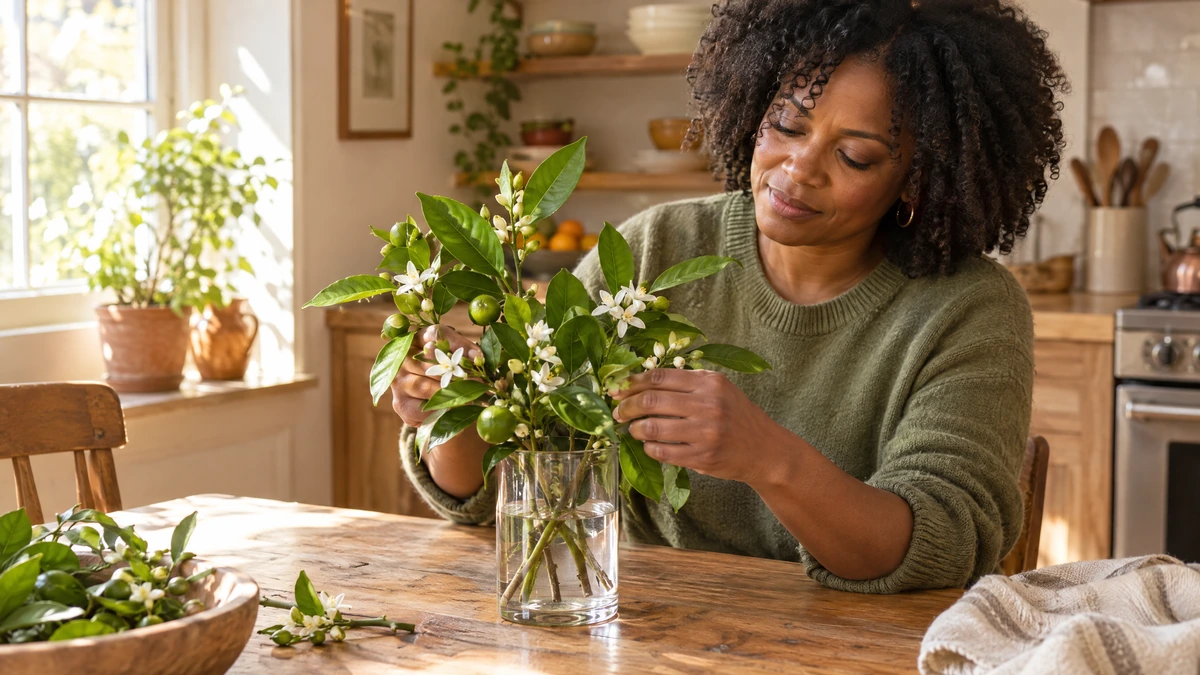
The bitter orange tree gives perfumers several materials, and knowing them keeps you from paying neroli prices for something else. The flowers give neroli. The leaves and twigs give petitgrain, which Wikipedia describes as extracted from the leaves and green twigs of the bitter orange tree, with a greenish, woody orange smell. The fruit rind, cold pressed, gives bitter orange oil.
The bitter orange tree, part by part
- Blossoms, steam distilled: neroli, bright, honeyed and green
- Blossoms, solvent extracted: orange blossom absolute, richer and sweeter
- Blossoms, also the source of orange blossom water: soft and delicate
- Leaves and green twigs: petitgrain, greener and woodier
- Fruit rind, cold pressed: bitter orange oil, sharp citrus
Wikipedia notes that orange blossom is extracted from the same blossom through enfleurage or solvent extraction, while neroli is steam distilled. The difference matters to your nose. Distillation gives neroli its lighter, greener character, and the solvent route gives a deeper, sweeter absolute that perfumers use for richer white floral blends.
A label that only says “orange blossom” might mean the absolute, the water or a fragrance accord, so read closely before you pay a premium. Petitgrain smells related, so check which part of the tree your label names. Nothing wrong with petitgrain for you, as long as you know which one you are buying.
How to Wear a Neroli Scent

On its own, neroli fades in an hour or two, because its bright citrus side leaves your skin quickly. The way to keep it is to give it something warmer to rest on. Soft musk, smooth woods and creamy florals hold the brightness in place, so the flower is still with you at dinner instead of gone by lunch.
That is how we built Moonlight Descent Luxury Body Oil. Its notes are neroli, gardenia, white musk and teakwood, and its blend includes premium fragrance oil along with sandalwood essential oil in a base of fractionated coconut oil and meadowfoam seed oil. The neroli opens bright, the gardenia softens it, and the musk and teakwood keep you smelling of it into the evening. It is $36.
The ritual for every body oil we make is the same: warm three or four drops between your palms and press them into your skin straight after a shower, while the air still holds the steam. Warm, damp skin carries a light floral further than dry skin does. If you prefer to build your own neroli blend, our guide to wearing botanical oil as perfume walks you through dilution, and neroli pairs beautifully with its citrus cousin, covered in what bergamot smells like.
My honest opinion: neroli is the most underrated note for people who think they do not like florals. It never feels heavy or sweet. Wear it over a soft musk on a warm evening and see whether you still believe florals are not for you.
Neroli Scent: Your Questions Answered
What does neroli smell like?
Neroli smells sweet, honeyed and green, with a bright citrus opening and a faint metallic, spicy edge. It is lighter and cleaner than jasmine or gardenia, so you will often hear it described as fresh, airy and luminous.
Is neroli the same as orange blossom?
They come from the same flowers but you get different materials. Neroli is steam distilled from bitter orange blossoms, while orange blossom absolute comes from solvent extraction or enfleurage and smells deeper and sweeter.
What is the difference between neroli and petitgrain?
Both come from the bitter orange tree. Neroli comes from the blossoms, and petitgrain comes from the leaves and green twigs, so petitgrain smells greener and woodier to you. Check the label to know which one you are buying.
Why is neroli oil so expensive?
The blossoms are picked by hand in a short spring window, and the world makes little of the oil. Annual production in Tunisia and Morocco is about 1,500 kilograms, more than 90 percent of the world supply, so you are paying for a scarce material.
Is neroli a masculine or feminine scent?
Both. Neroli opens many classic colognes and brightens plenty of floral perfumes, so wear it however you like. Over musk and woods it reads soft and polished, and over citrus it reads crisp and clean.
How do you make a neroli scent last longer?
Set it over warmer notes like white musk, teakwood or sandalwood, and apply it to damp skin after a shower. Your skin holds a light floral longer when it has a warm base and a little moisture underneath.
A bright flower, held in warmth
Press a neroli blend into warm skin tonight and notice how the flower is still there when the evening ends.
Like this article? Add Piton Noir Botanicals as a preferred source, and you are more likely to see our articles in Google’s Top Stories.