
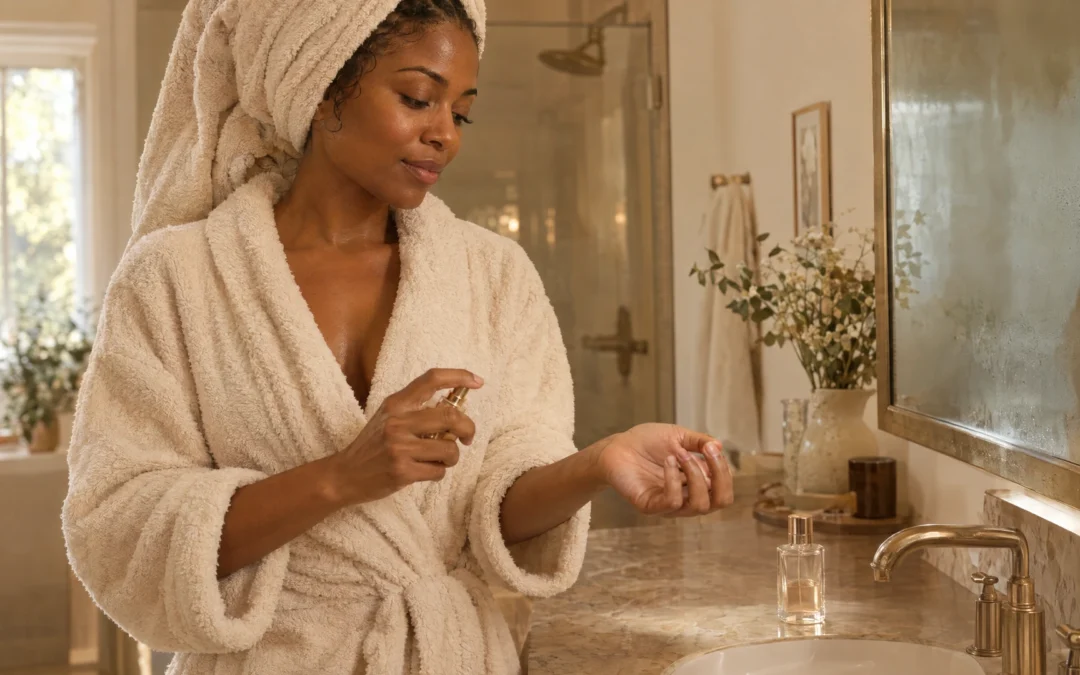
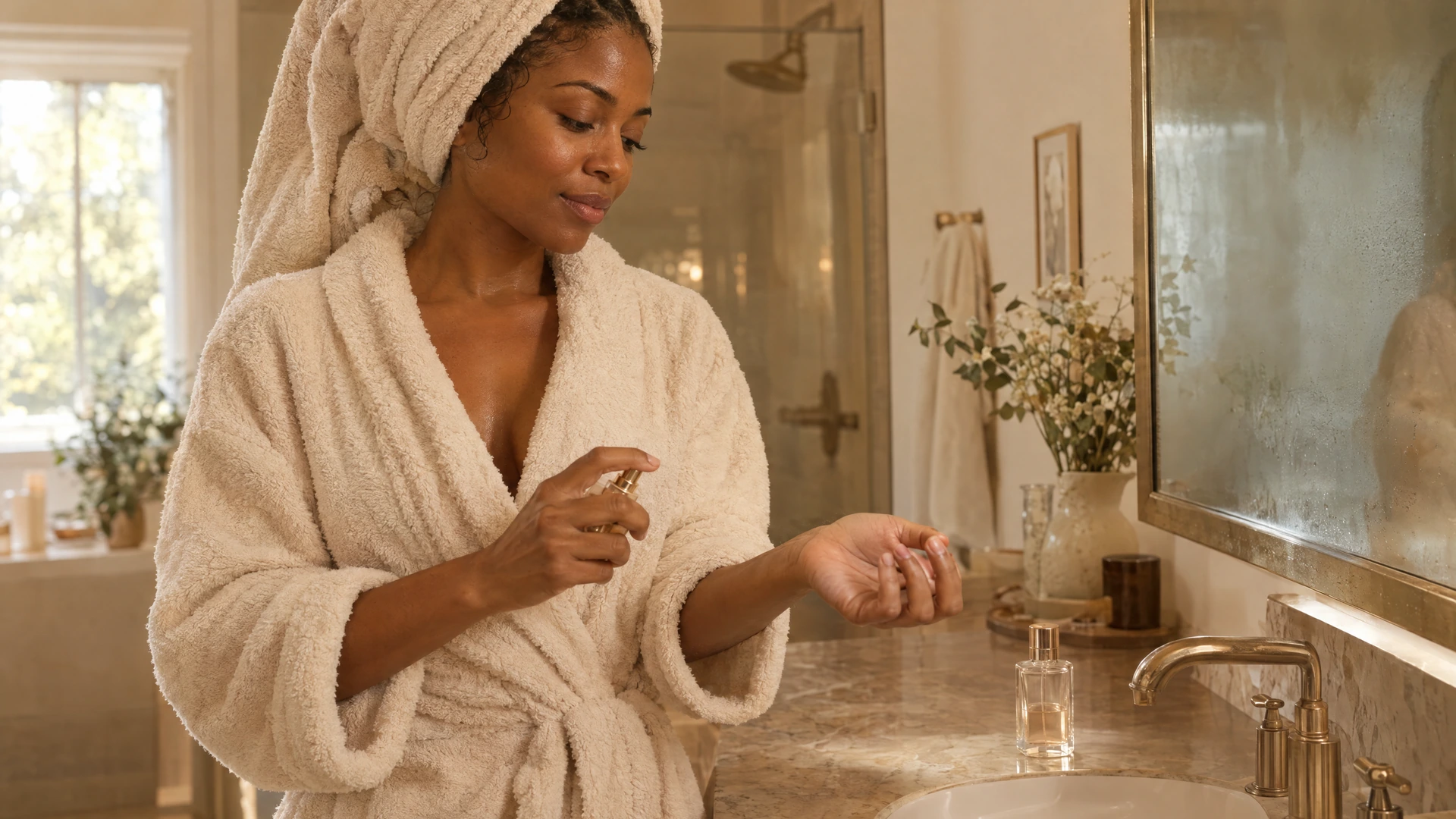

To make perfume last longer, choose a stronger concentration, apply it to warm, damp skin over an unscented or matching body oil, press it in instead of rubbing, and keep the bottle away from heat and light. Your fragrance fades because its lightest molecules evaporate first and some of the rest sinks into your skin, so everything you do is about slowing that down.
Your perfume is not broken. It is doing exactly what it was built to do, only faster than you want.
You spray at eight in the morning, and by lunch you lean into your own wrist and get almost nothing. Someone else wears the same bottle and leaves a soft trail behind them until evening. You start to wonder whether your skin is the problem, or whether you bought the wrong bottle in the first place.
This guide shows you how to make perfume last longer without buying a new one. You learn why fragrance fades, how strength changes wear time, where and how to apply it, and how to layer fragrance over a body oil so the warm base stays with you long after the bright opening is gone.
Why Your Perfume Fades: What Happens on Your Skin

Every perfume is built in layers, and each layer leaves your skin at its own speed. Wikipedia’s perfume entry, which follows the standard perfumery model, describes top notes as small, light molecules that evaporate quickly, and it notes that base notes are usually not perceived until 30 minutes after application. The citrus sparkle you love at the counter is designed to leave you first.
Your skin is not a passive shelf either. A study of fragrance on human skin by Kasting and Saiyasombati modelled both processes at once, with part of each ingredient evaporating into the air and part being absorbed into the skin. Their paper also found that ingredient interactions change how fast fragrance components evaporate, and a mixture with a musk fixative behaved differently from the same mixture without one.
That second finding matters to you. It means longevity lives in the formula as much as in your routine. A fragrance anchored in rich base notes such as musk, amber, vanilla or sandalwood gives you more to hold on to than one built almost entirely from citrus and light florals.
I read the Kasting paper and the standard perfumery references before writing this, and one honest point came through. The research on exactly how many extra hours hydrated skin buys you is thin, so be wary of anyone who quotes you a precise number.
Start With the Right Strength and Keep It Fresh
The single biggest lever you hold is concentration, the share of aromatic material in the bottle. The same perfume entry gives typical ranges, and the gap between them explains most of the difference you notice between two bottles that share a name.
Typical concentrations, from strongest to lightest
- Parfum or extrait: 15 to 30 percent aromatic compounds
- Eau de parfum: 15 to 20 percent
- Eau de toilette: 5 to 15 percent
- Eau de cologne: 2 to 3 percent
If your favourite comes as an eau de toilette and you want it to last into the evening, look for the eau de parfum version first. You get more of the slow base notes in every spray, and you reach for the bottle less often.
Then protect what you paid for. The same reference explains that fragrance compounds degrade when stored in the presence of heat, light and oxygen, and it recommends keeping bottles away from heat sources and out of the light. A perfume that has started to break down smells thinner and fades sooner on your skin, so the bathroom windowsill is the worst home for it. We explain the same principle for botanical oils in how long your oils last.
How to Make Perfume Last Longer: Apply It the Right Way
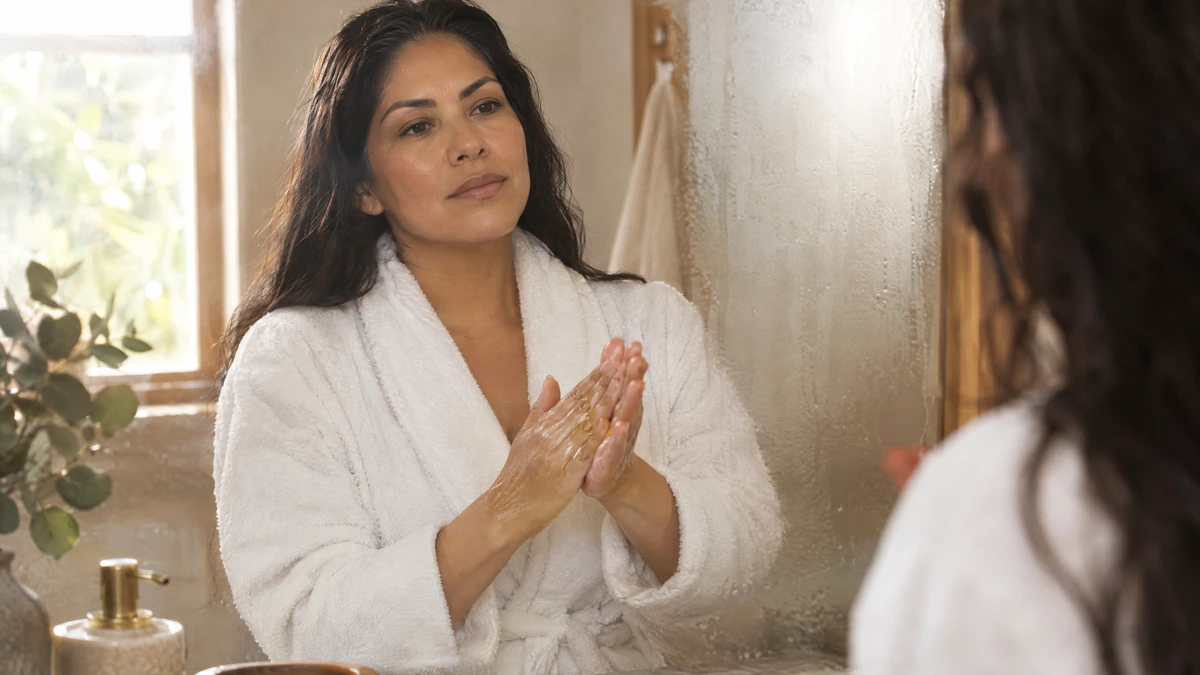
How you apply your fragrance shapes your whole day with it. The goal is simple: give your perfume a soft, slightly oily surface to cling to, put it where your warmth carries it, and stop scuffing away the top layer before it has done its work.
The routine that keeps your scent with you
- Apply right after a warm shower, while your skin is still slightly damp
- Press three or four drops of body oil into your skin first, then add your perfume on top
- Choose warm pulse points such as the inner wrists, the base of the throat and behind the knees
- Press, never rub. Rubbing your wrists together only hurries the light top notes away
- Mist the air and walk through it if you want a softer veil over your clothes and hair
The damp skin step comes straight from our own ritual. Every Piton Noir body oil reads: “Warm three or four drops between the palms and press into skin straight after a shower, while the air still holds the steam.” That habit leaves you with a smooth, lightly oiled surface, which is exactly the base you want under a perfume.
Keep it gentle with fabric and hair. Oil and alcohol both mark delicate fabric, so let your skin absorb the oil before you dress, and test any spray on a hidden seam first. Our guide to scenting clothes and linens without stains walks you through the safest methods.
How to Layer Fragrance Over a Body Oil
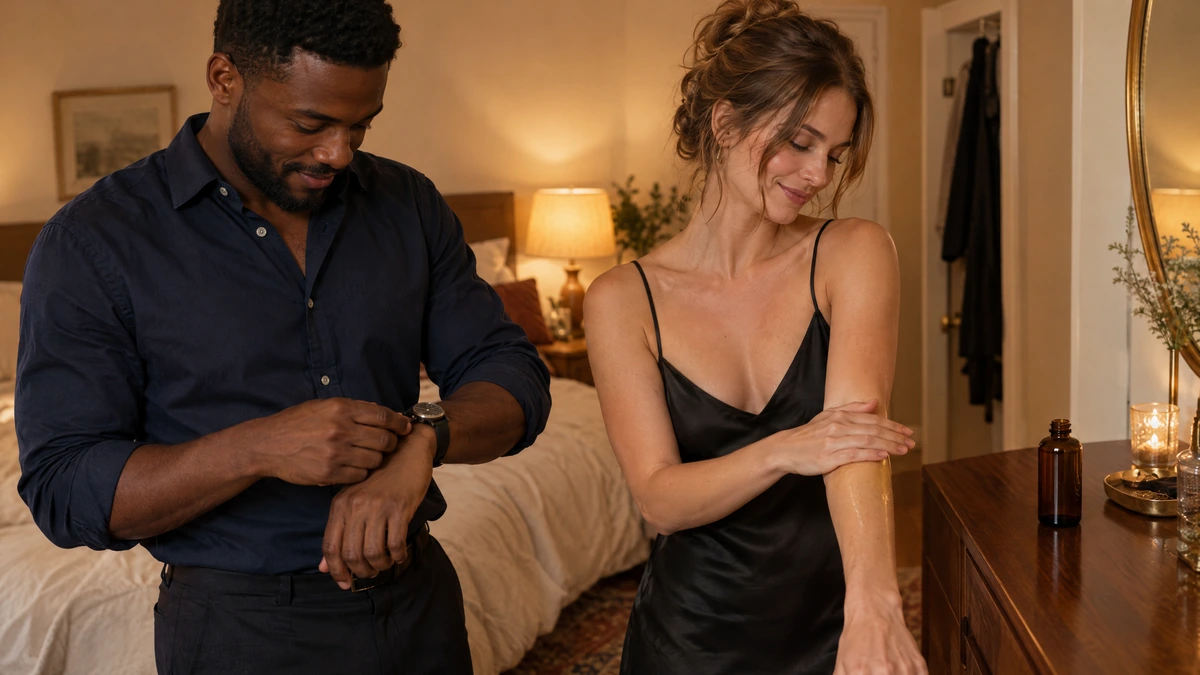
Learning how to layer fragrance is the most reliable way to make your perfume last longer, because you choose the base yourself instead of hoping the bottle provides one. You start with a scented body oil whose notes sit low and warm, then add a perfume that shares or complements those notes. The oil keeps a quiet base on your skin while the perfume adds lift and character.
Match by family, not by brand. A warm amber oil sits beautifully under a vanilla or woody perfume. A soft musk and teakwood oil gives a clean floral somewhere to land. A citrus and driftwood oil brightens a light cologne. Our guide to what amber smells like and our notes on why sandalwood lasts on your skin help you pick a base you will enjoy all day.
Three of our blends were built to be worn this way. Amber Veil Luxury Body Oil carries bergamot, santal, cashmere and gilded amber. Moonlight Descent Luxury Body Oil carries neroli, gardenia, white musk and teakwood. Golden Veil Radiant Body Oil carries sweet orange, mahogany, driftwood and vanilla. Each is $36, and each makes a calm base for the perfume you already own.
If you prefer to skip alcohol altogether, wear the oil as your fragrance on its own. We explain how in wearing botanical oil as perfume, including the dilution rule that keeps your skin comfortable.
My honest opinion after years of blending: most people blame their skin when the real issue is the bottle. A light, citrus-heavy fragrance will always leave you early. Give it a warm, oiled base to sit on, and you stop chasing it with the atomiser at three in the afternoon.
How to Make Perfume Last Longer: Your Questions Answered
Why does my perfume disappear so fast?
Your perfume opens with light top notes that are designed to evaporate quickly, and part of every fragrance also sinks into your skin. A light concentration, a citrus-heavy formula, dry skin or a bottle stored in heat and light all shorten the time you notice it.
Does applying perfume to moisturized skin really help?
It helps you in practice, because an oiled, slightly damp surface gives fragrance something to settle into instead of bare, dry skin. The research on exactly how many hours it adds is limited, so count it as one good habit among several rather than a promise.
Is it bad to rub perfume into your wrists?
Rubbing scuffs the thin layer you just applied and warms it, which hurries the light top notes away. Press your wrists together gently or simply let the fragrance settle on its own, and you keep the opening for longer.
What is the best way to layer fragrance?
Start with a scented body oil on damp skin, let it absorb for a minute, then apply your perfume over the same areas. Choose an oil whose base notes match or complement your perfume, such as amber under vanilla or musk under a clean floral.
Does eau de parfum last longer than eau de toilette?
Usually, yes. Eau de parfum typically carries 15 to 20 percent aromatic compounds against 5 to 15 percent for eau de toilette, so you get more of the slow base notes in every spray you wear.
Where should I store perfume so it lasts?
Keep your bottle somewhere cool and dark, away from windows, radiators and a steamy bathroom. Heat, light and oxygen all break fragrance compounds down, so a closed drawer or cupboard protects the scent you paid for.
Give your perfume a warm base
Press a few drops of body oil into damp skin tonight, add your favourite fragrance on top, and notice it again tomorrow morning.
Like this article? Add Piton Noir Botanicals as a preferred source, and you are more likely to see our articles in Google’s Top Stories.