
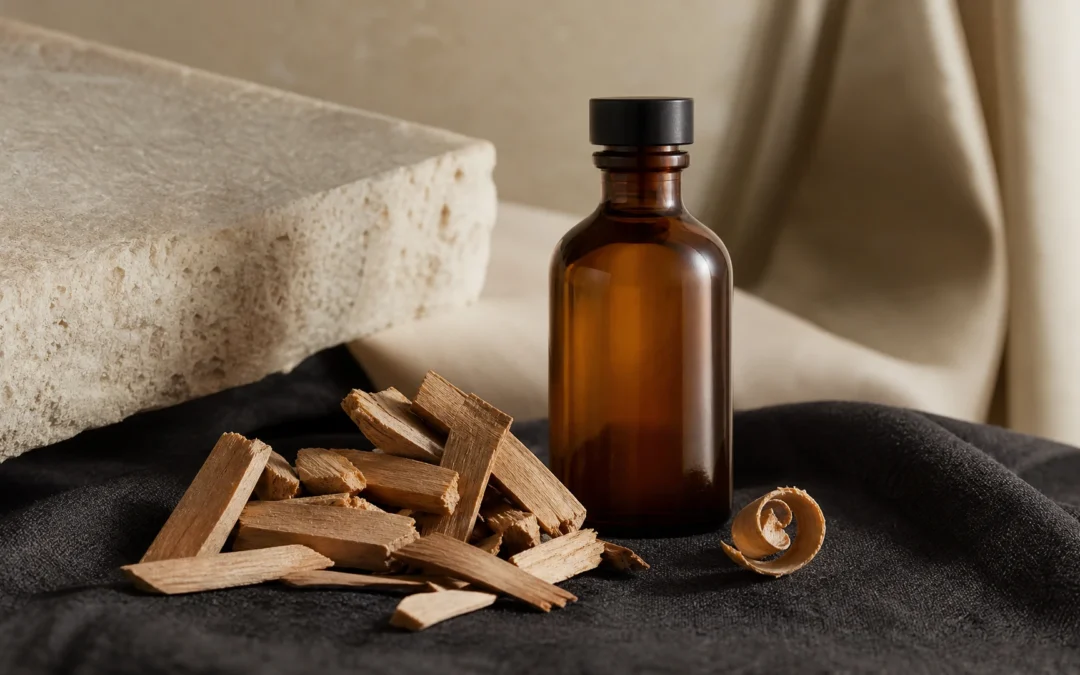
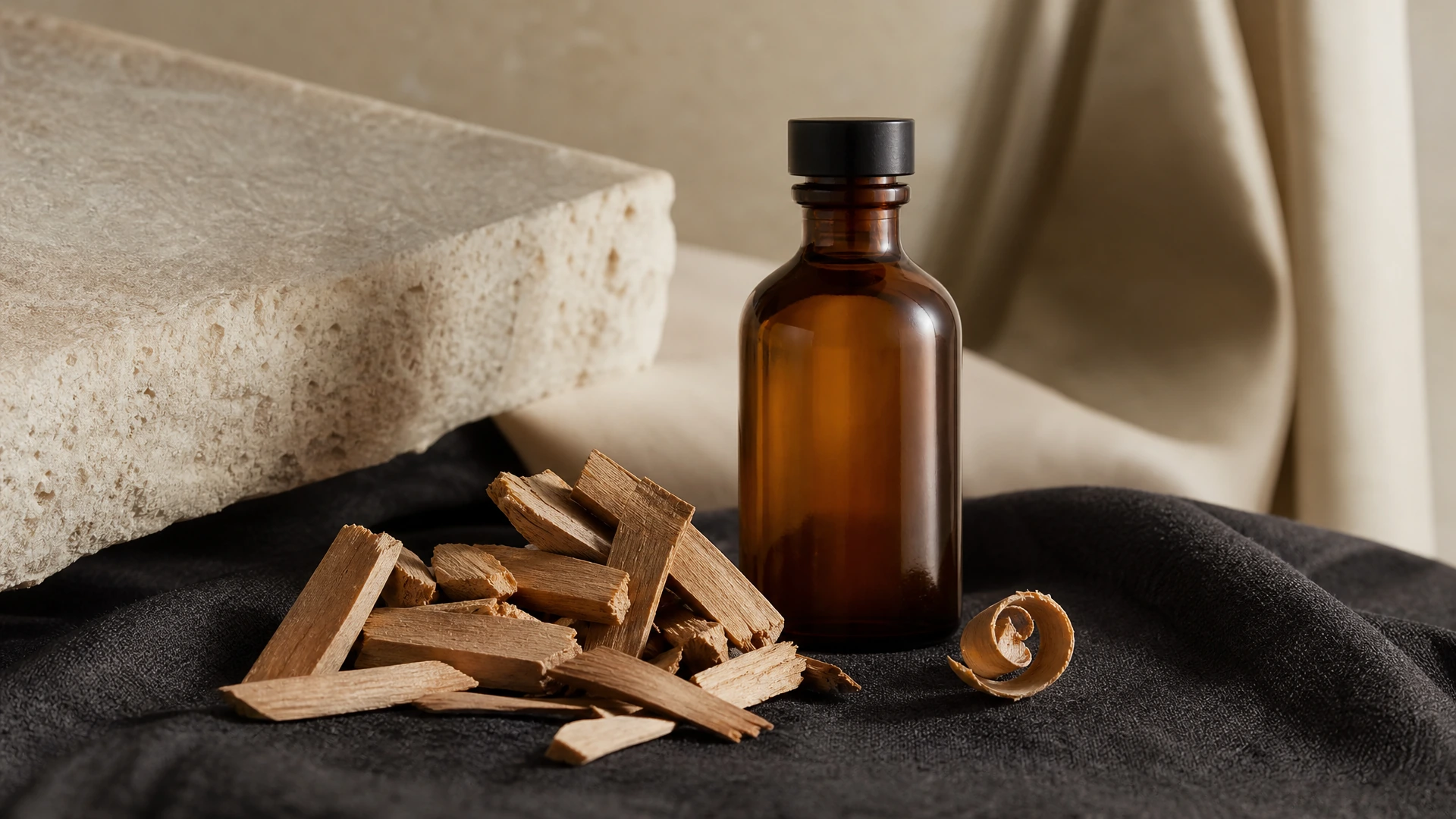

Sandalwood scent is soft, creamy wood with a milky warmth, and it comes from molecules called santalols packed into the heartwood of the tree. It sits low and warm on your skin, it lasts for hours as a base note, and because the genuine oil is scarce, perfumers often pair it with modern aroma molecules.
Sandalwood does not shout. It waits on your skin until someone leans in close.
You know the smell even if you have never put a name to it. It is the soft wood under a candle you loved, the warm base of a cologne that stayed on your scarf, the quiet note still there after everything bright has gone. Sandalwood scent is one of the most familiar smells in perfumery, and it is also one of the most misunderstood.
This guide tells you what sandalwood smells like, where that smell lives inside the tree, why real sandalwood oil is so hard to find, and how you choose a sandalwood fragrance that wears the way you want it to. No mystique, only the wood and the chemistry behind it.
What Does Sandalwood Smell Like?
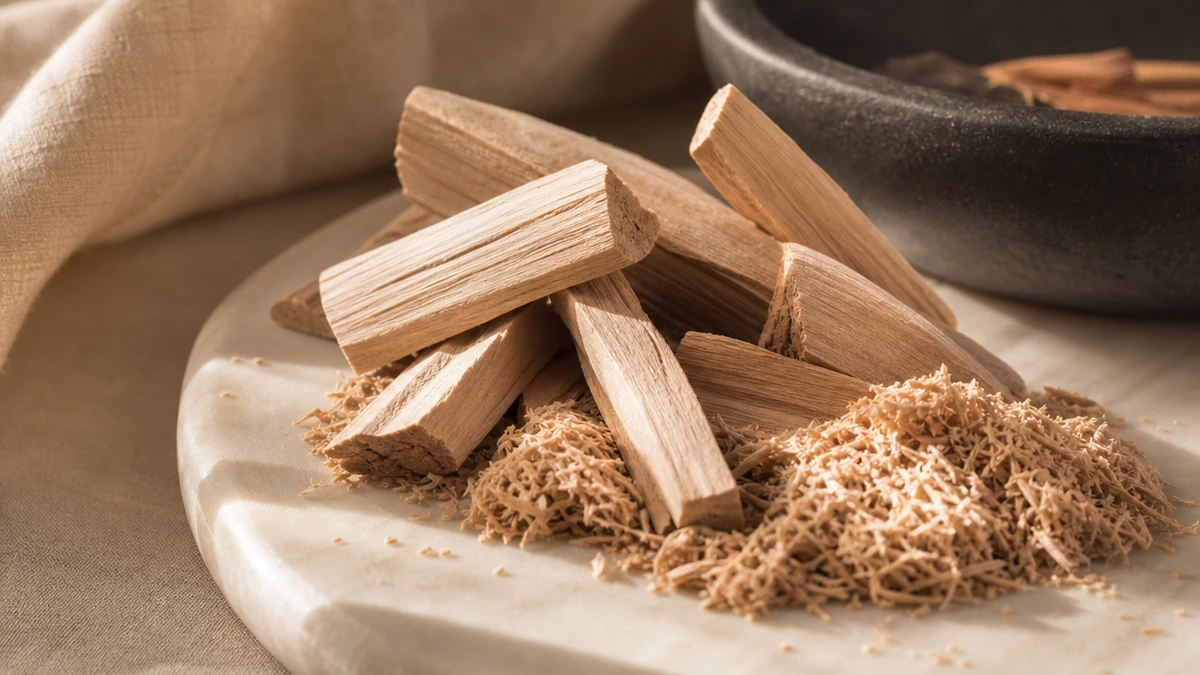
Close your eyes and you get creamy, smooth wood first. Not the sharp, green snap of cedar or the smoke of a campfire, but something rounder and softer, with a milky, almost buttery quality your nose reads as warmth. Behind that sits a faint sweetness and a gentle resinous depth that keeps unfolding the longer it rests on your skin.
Perfumers use sandalwood as a base note, the layer that arrives last and leaves last. On your wrist the opening is quiet, and the scent grows fuller over the first hour as your skin warms it. The drydown, the part still with you at the end of the day, is where sandalwood earns its reputation. It holds on, and it softens everything around it.
How sandalwood reads next to other woods
- Cedar: dry and sharp, like fresh pencil shavings
- Vetiver: earthy and rooty, like soil after rain
- Teakwood: smooth, dry and faintly smoky
- Oud: dark, dense and intense
- Sandalwood: creamy, milky and warm, the softest of the group
That softness is why sandalwood blends so well. It rounds off sharp citrus, it cushions florals, and it gives a heavier amber or vanilla base something smooth to rest on. If you have ever worn a fragrance that felt expensive without being loud, a sandalwood note was often doing that quiet work for you.
Where the Sandalwood Scent Comes From
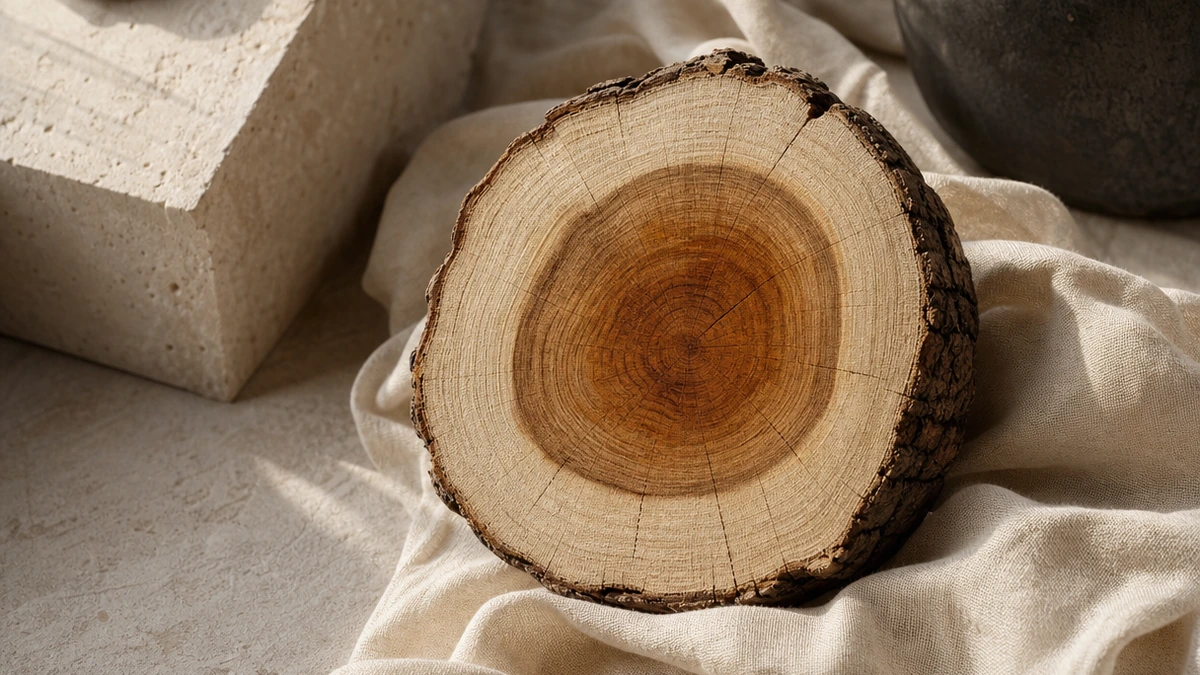
The smell does not come from the leaves, the flowers or the bark. Sandalwood oil is drawn from the mature heartwood, the dense core of the tree. When you smell a good sandalwood essential oil, you are smelling the inside of an old tree, concentrated.
Chemically, the stars are two molecules called alpha-santalol and beta-santalol. A 2013 study in PLoS One names the santalols the most important contributors to sandalwood oil fragrance, and it traces the oil to mature heartwood. For you, that single word, santalol, is the key to the whole category.
There is an international standard built around it. ISO 3518 calls for 41 to 54 percent alpha-santalol and 16 to 24 percent beta-santalol in genuine Santalum album oil. That standard matters to you, because a 2021 study in Molecules tested six commercial oils sold as sandalwood and found that none of them met the requirement for alpha-santalol.
I read both studies before writing this, and they point you to the same family of molecules, the santalols, as the heart of the smell you are paying for.
Indian Sandalwood, Australian Sandalwood, and Why Real Sandalwood Is Scarce
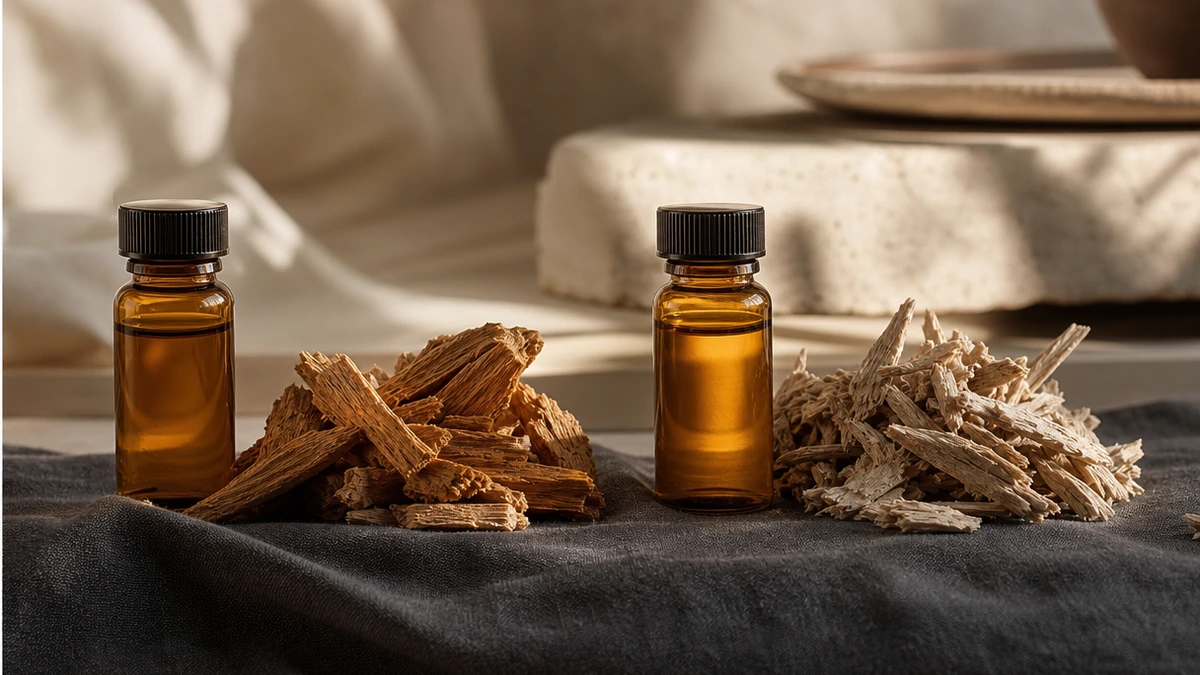
Two species lead the conversation you will find on labels. Santalum album, Indian sandalwood, is the classic and the reference point for the ISO standard. Santalum spicatum, Australian sandalwood, is an Australian species whose oil is sold as sandalwood too.
The difference that matters to your nose is chemistry. The 2021 comparison notes that oil from Santalum spicatum carries a lower content of alpha-santalol than the original Indian oil. Since santalols carry the signature smell, you get less of that deep, milky character from the same drop.
Real sandalwood is scarce, and the reason sits in the biology you read above. The scent lives in mature heartwood, so the wood you want only exists in older trees. The PLoS One study records that disease, grazing animals and unsustainable exploitation have led to the demise of many natural sandalwood populations, even as demand for the oil keeps rising.
That squeeze is why genuine sandalwood oil costs what it does, why so much of what you see sold cheaply under the name falls short, and why you should read any sandalwood label closely before you pay a premium for it. The same caution applies to rare flower oils, which we covered in why champaca costs what it does.
How to Choose and Wear a Sandalwood Fragrance
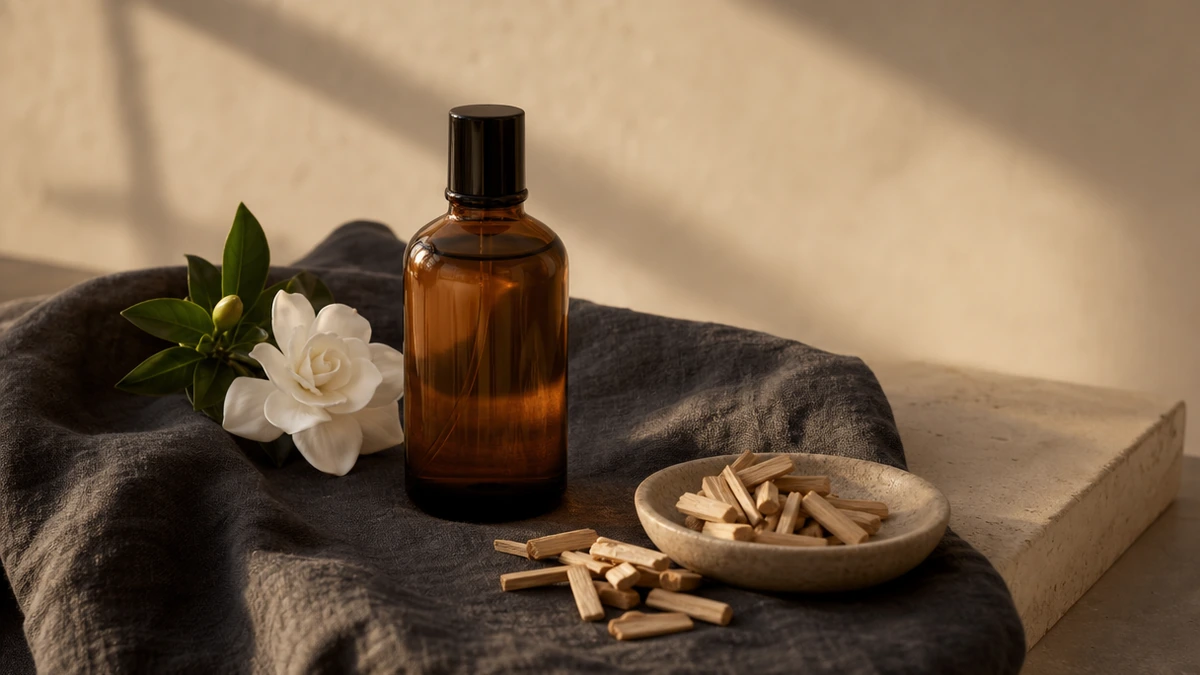
Modern perfumery has an honest answer to the shortage. Chemists have built aroma molecules that capture the creamy, woody character of sandalwood, and names like Javanol, Polysantol and Ebanol sit on the perfumer’s shelf. A synthetic sandalwood molecule is not a cheat. Perfumers blend them with natural oil too, and one published formula pairs Dartanol and Javanol with Mysore sandalwood oil, so you get the best of each.
Five ways to choose a sandalwood scent you will wear
- Smell it on your skin, not a paper card. A base note needs your warmth to open
- Wait an hour and judge the drydown, because that is where sandalwood lives
- Read what sits beside it. Citrus brightens it, florals soften it, amber and vanilla deepen it
- Read the ingredient list. Sandalwood essential oil and a santal fragrance note are different things
- Store it dark and cool once you own it, because heat and light flatten every oil
Two of our body oils show both approaches honestly. Moonlight Descent Luxury Body Oil carries sandalwood essential oil alongside premium fragrance oil, and its notes are neroli, gardenia, white musk and teakwood. Amber Veil Luxury Body Oil builds its santal note from fragrance oil and sets it with bergamot, cashmere and gilded amber. Both are $36, both are blended in Boston, and you wear both the same way.
The ritual for every one of our body oil blends reads: “Warm three or four drops between the palms and press into skin straight after a shower, while the air still holds the steam.” That suits sandalwood well, because freshly washed, warm skin is what coaxes a base note open. Keep the bottle out of the bathroom window afterwards, since how long your oils last depends on how you store them.
If you like sandalwood as the anchor of a masculine blend, our guide to wearing oil as cologne pairs it with vetiver and cedar. And if you want to see how sandalwood oil has carried other flowers for centuries, read how Kannauj perfumers distil champaca into a sandalwood attar.
My honest opinion after years of smelling raw materials: sandalwood is the scent people fall for without knowing its name. You do not need the rarest bottle on earth to enjoy it. You need a blend that respects the wood, a warm shower, and the patience to let it open on your skin.
Sandalwood Scent: Your Questions Answered
What does sandalwood smell like?
Creamy, soft wood with a milky sweetness and a warm finish. It is gentler than cedar and smoother than vetiver, and it grows fuller on your skin over the first hour as your warmth opens it.
Why does sandalwood smell so good on skin?
It is a base note, so it stays with you long after the brighter notes fade. The santalols that carry its signature smell unfold slowly as your skin warms them, which is why a sandalwood fragrance feels richer at dinner than it did at breakfast.
What is the difference between Indian and Australian sandalwood?
Indian sandalwood is Santalum album, the reference species for the international standard. Australian sandalwood is Santalum spicatum, and its oil carries less alpha-santalol, the main molecule behind the classic smell you are looking for.
Is synthetic sandalwood bad?
No. Aroma molecules like Javanol and Polysantol were built to capture the woody character of sandalwood, and perfumers blend them with natural oil. For you, the real question is whether the finished fragrance smells right on your skin, not whether every note came from a tree.
Why is real sandalwood oil so expensive?
The oil comes from mature heartwood, and many natural populations have declined through disease, grazing and unsustainable harvesting while demand keeps rising. You are paying for time and scarcity, so a cheap bottle labelled sandalwood deserves a closer look from you.
How long does a sandalwood scent last?
As a base note, it outlasts the bright notes around it and often stays with you into the evening. How long depends on the concentration, the carrier and your skin, so apply it to damp skin after a shower for the longest wear.
Let the wood open slowly
Choose a blend with a sandalwood heart, press it into warm skin tonight, and notice it again tomorrow morning.
Want more of this in your Google feed? Tap here and Google shows you our articles first.