
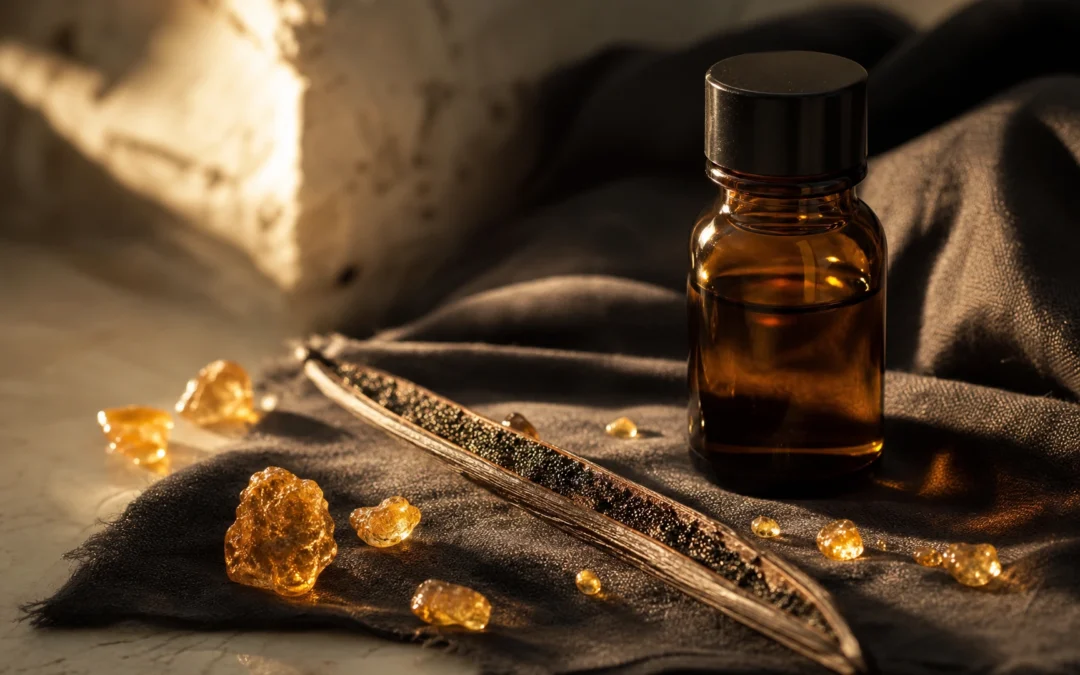
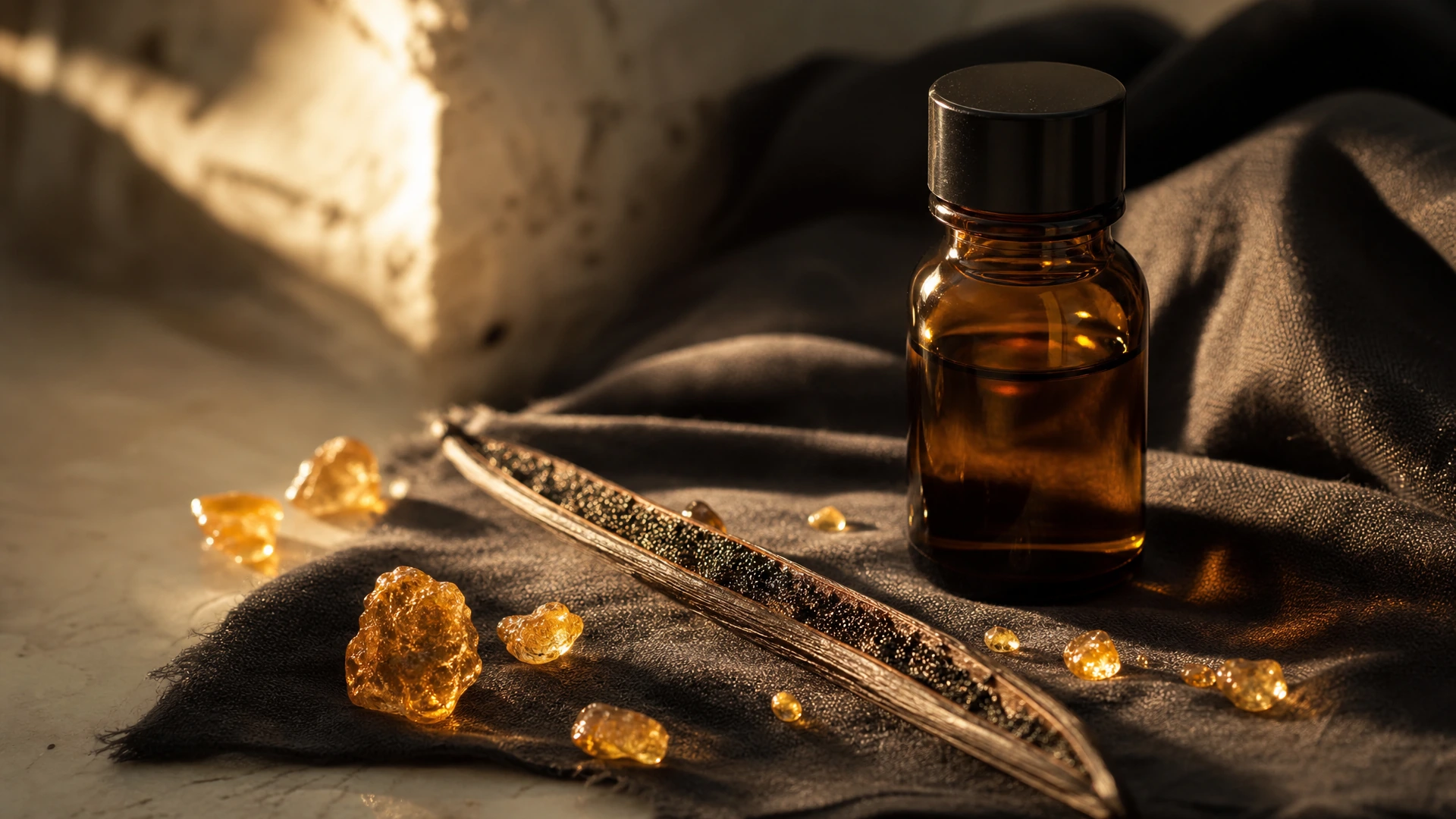

Amber smells warm, sweet and resinous, with a soft powdery finish and a faint skin-like warmth underneath. In perfume it is not fossil resin at all. It is an accord, most often labdanum, benzoin and vanilla, blended to smell the way you imagine amber should. That is why two amber scents you try rarely smell identical, and why the word on a label tells you the character of a bottle rather than its recipe.
The amber in your perfume never came out of the ground. It was built, note by note, to smell like warmth.
You have smelled amber many times without anyone telling you what it is. It is the golden base in the candle you light when the evenings draw in, the sweetness that stays on your scarf, the note that makes a perfume feel expensive once the bright top has gone. Ask people what it smells like and most reach for words like rich, warm or honeyed, and then they stop.
This guide gives you the real answer. You will learn what an amber fragrance is made of, why it has nothing to do with the gemstone in a jewellery box or the substance a whale produces, how it wears on your skin, and how to choose one you will reach for every evening.
What Does Amber Smell Like?
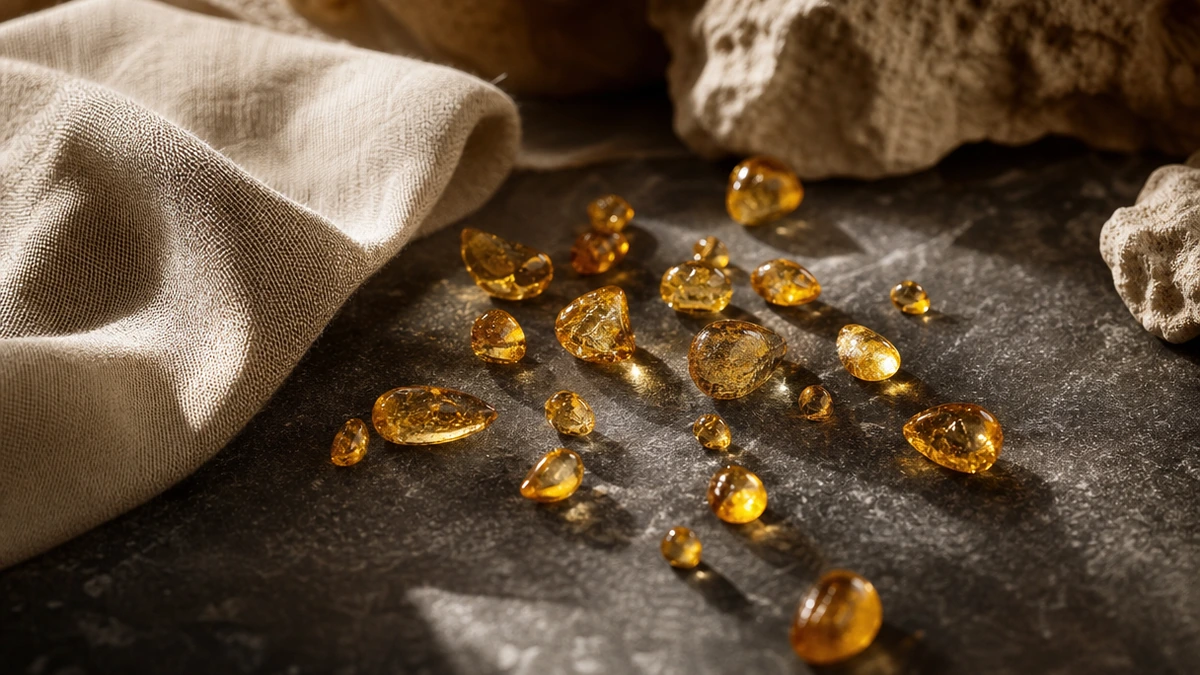
Start with the short answer. Amber smells warm first. Then sweet, the soft sweetness of vanilla rather than sugar. Underneath sits a resinous, slightly leathery depth, and at the edges a powdery finish that makes the whole scent feel smooth rather than sharp. The Perfume Society describes amber notes as warm, a little powdery and animalic, which is a fair summary of what your nose picks up.
That animalic edge surprises people. It is not a farmyard note. It is closer to the warmth of skin or a well-worn leather jacket, and it is the reason amber reads as intimate rather than sugary. Remove it and you are left with vanilla. Keep it and the sweetness gains weight and shadow.
The amber smell, note by note
- Warm: the first impression, like late sunlight held in a glass
- Sweet: a vanilla softness rather than candy or fruit
- Resinous: a sticky, balsamic depth from resins such as labdanum
- Powdery: a smooth, dry finish that rounds off the edges
- Animalic: a faint skin-like warmth that keeps it from turning sugary
Amber sits at the bottom of a fragrance, in the base notes. That placement matters to you, because the base is what is still there after the bright citrus and florals above it have faded. If you have ever noticed a perfume smelling warmer and richer at the end of the day than it did at breakfast, amber or something close to it was doing the work. Resinous base materials also hold up well in the bottle, which is part of why deep base notes outlast bright citrus on your shelf.
What Goes Into an Amber Accord
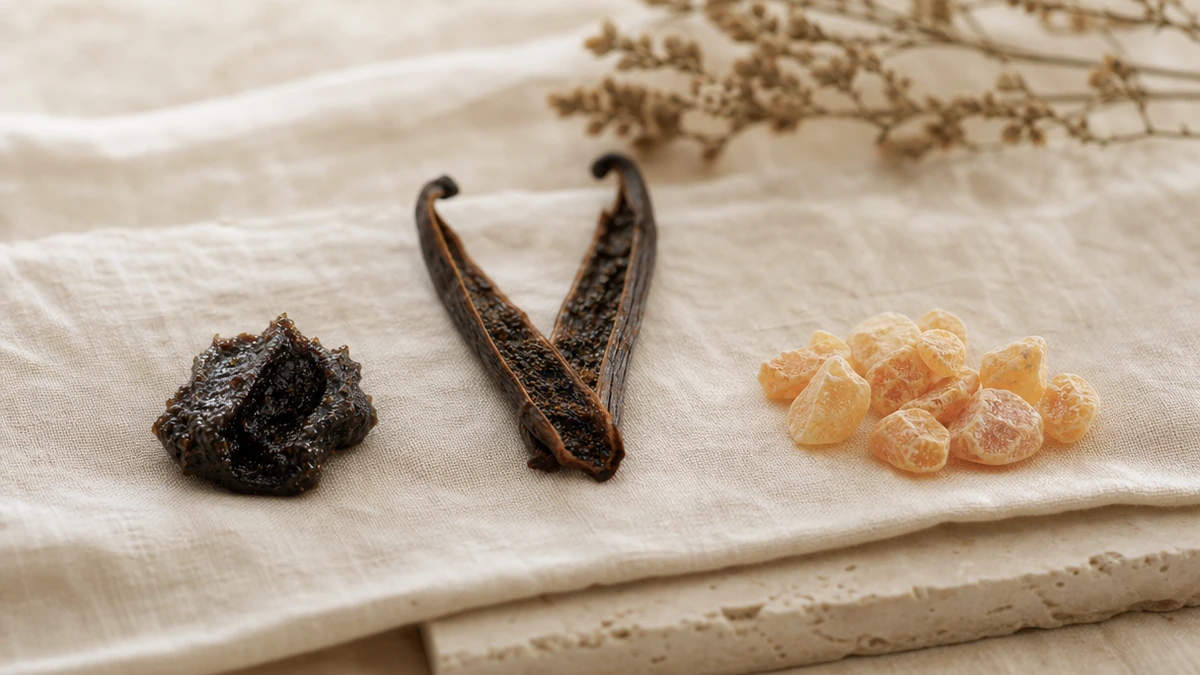
Here is the part most shoppers never hear. There is no single amber ingredient. Amber in perfume is an accord, a small group of materials blended so that together they smell like one thing. The Perfume Society lists the classic version as labdanum, benzoin and vanilla, sometimes with touches of tonka and Peru balsam. Every perfumer weights those pieces differently, which is why no two amber scents you smell are quite alike.
Labdanum is the backbone. It is a sticky brown resin gathered from rockrose shrubs that grow around the Mediterranean, and labdanum is the main ingredient used to build the scent of amber in perfumery. Its own smell is described as sweet, woody, powdery and leathery all at once, which is most of the amber profile in a single material. If you want to know why amber feels deep, labdanum is your answer.
Benzoin and vanilla bring the sweetness forward, so the result reads as golden rather than smoky. Tonka and Peru balsam turn up in some versions too. Change the proportions and you change the amber: more labdanum gives you something darker and more leathery, more vanilla gives you something closer to dessert.
Modern amber accords mix natural and synthetic materials, and that is normal practice rather than a shortcut. The Perfume Society calls amber a fantasy note, meaning it names an idea of a smell rather than one raw material sold by the bottle. When you see amber on a label, read it as a promise of warmth and sweetness, then let your own skin decide whether that version suits you.
Amber, Ambergris and Fossil Amber Are Three Different Things
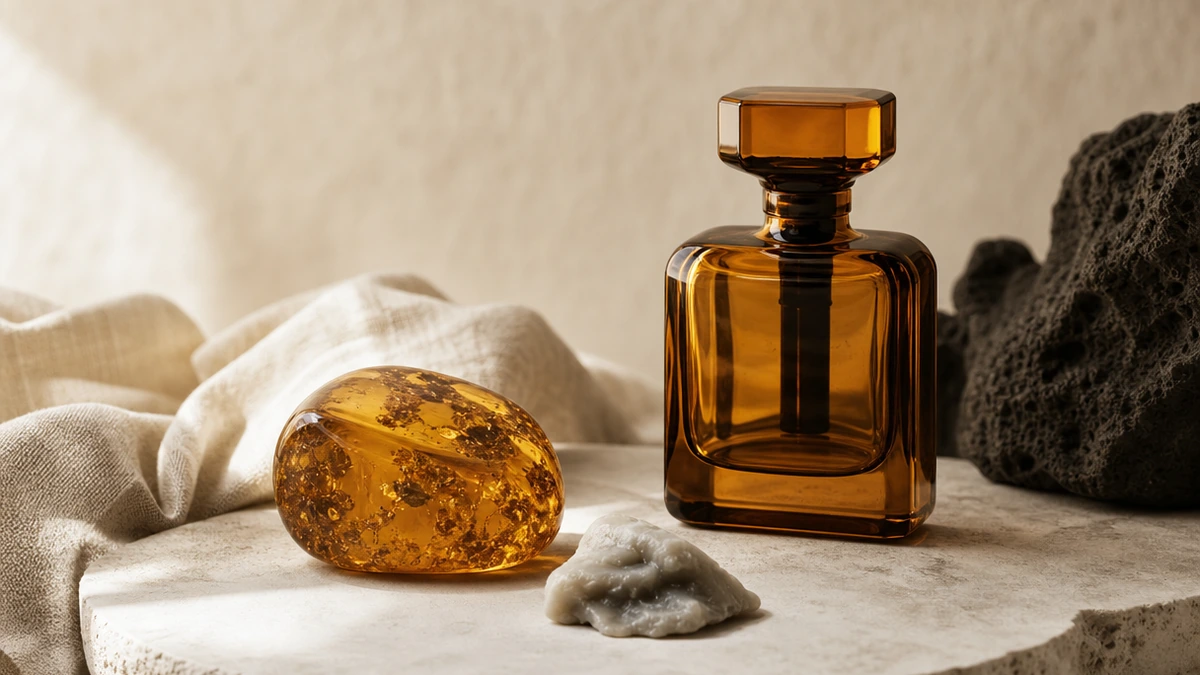
The word amber covers three unrelated things, and mixing them up is a common confusion you will meet at any perfume counter. Fossil amber is the golden gemstone, tree resin hardened by time. The amber in perfume does not come from it. The Perfume Society is plain on this point: the perfume ingredient does not come from that time-hardened resin at all.
Ambergris is the one with a story. It is a waxy substance produced in the digestive system of sperm whales. Fresh, it smells marine and unpleasant. Aged, it turns sweet and earthy, and perfumers once prized it as a fixative that helped a scent last longer. It has since been mostly replaced by a synthetic called ambroxide, so an ambergris note in a perfume you buy today is most likely made in a lab.
I read The Perfume Society’s amber entry and the encyclopedia entries on labdanum and ambergris before writing this, and together they draw a clean line between the amber in your bottle, the gemstone in a jewellery box and the substance a whale produces.
How to tell them apart
- Amber accord: warm, sweet and resinous, built from labdanum, benzoin and vanilla
- Ambergris note: sweet and earthy, today mostly built from synthetic ambroxide
- Fossil amber: the gemstone in a ring or pendant, and not the source of the perfume note
- Amber candles and room scents: labels borrowing the word for a warm, sweet profile, so smell before you trust the name
The practical lesson for you is simple. When a label says amber, expect warmth and sweetness. When it says ambergris, expect something earthier. And when someone tells you their amber perfume is made from ancient tree resin, you now know better.
How to Wear an Amber Fragrance So It Lasts
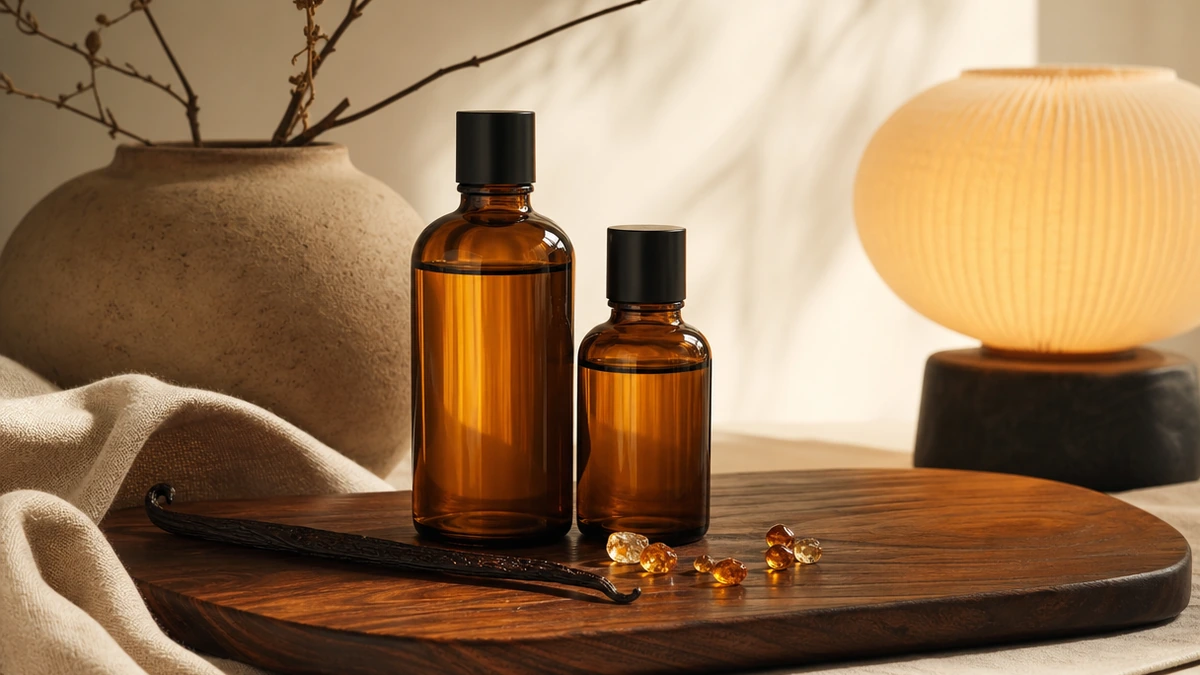
Amber is a base note, so it rewards patience. Give it a warm place to sit and it stays with you long after the lighter notes have gone. The inside of your wrists, the base of your throat and the crook of your elbow all run warm, and warmth is what brings an amber accord forward.
Getting more from an amber scent
- Apply to damp skin after a shower, when moisture helps the fragrance hold
- Press, do not rub, so the top notes survive long enough for the amber to arrive
- Wear it in the evening or in cooler months, when its sweetness feels welcome rather than heavy
- Pair it with a bergamot or citrus opening if you want brightness on top
- Give it a few minutes before you judge it, because amber shows itself last
Oil suits amber particularly well. A body oil sits close to your skin and releases slowly, so the warm base unfolds over hours instead of flashing off in the first minutes the way an alcohol spray does. We covered that difference in wearing oil as your perfume, and it matters most for a note that is meant to linger.
Our warmest blends are built around exactly this idea. Amber Veil Luxury Body Oil brings together bergamot, santal, cashmere and a gilded amber note. Golden Veil Radiant Body Oil carries its amber more quietly, under notes of sweet orange, mahogany, driftwood and vanilla. Both are $36, both are blended in Boston, and both are made with premium fragrance oils in a carrier you press straight onto your skin.
Our body oil ritual is the one amber wants: warm three or four drops between your palms and press them into your skin straight after a shower, while the air still holds the steam. If you prefer something more floral, Moonlight Descent leans toward neroli, gardenia, white musk and teakwood instead.
My honest opinion after years of wearing it: amber is the scent people forget they chose and remember they wore. It never announces itself in the first minute, and it rarely wins you over on a paper strip. Put it on your skin, give it an hour, and it becomes the reason someone leans closer and asks what you are wearing.
Amber Fragrance: Your Questions Answered
What does amber smell like in perfume?
Warm, sweet and resinous, with a powdery finish and a faint skin-like warmth underneath. Most amber accords lean on labdanum for depth and vanilla for sweetness, so you notice both a honeyed softness and a slightly leathery shadow as it settles on your skin.
Is amber perfume made from real amber?
No. Fossil amber, the gemstone, is not the source of the note. Amber in perfume is an accord built from materials such as labdanum, benzoin and vanilla, designed to smell the way you imagine warm golden amber should.
What is the difference between amber and ambergris?
Amber is a blended accord of resins and vanilla. Ambergris is a waxy substance produced by sperm whales that perfumers once valued as a fixative, and today it is mostly replaced by a synthetic called ambroxide. If you see both words on a label, expect amber to smell sweeter and ambergris to smell earthier.
Does amber smell like vanilla?
Partly. Vanilla is a common part of the amber accord, so you will notice a soft sweetness. The resin underneath gives amber more depth and a faint leathery edge, which is what separates it from a plain vanilla scent you might wear on its own.
Is amber a masculine or feminine scent?
Neither. Amber sits at the warm heart of fragrances worn by everyone, and how it reads on you depends on what surrounds it. Paired with florals it feels softer, and paired with woods it feels deeper, which is why it shows up in classic perfume and in oil-based cologne alike.
How do you make an amber fragrance last longer?
Apply it to damp skin at warm pulse points and press rather than rub. Wearing it as a body oil helps too, because oil releases slowly instead of evaporating like alcohol. Keep your bottle in a cool, dark drawer so the accord stays true between uses.
Wear the warmth
Choose an amber blend built for skin, press it on after your next shower, and notice how much of it is still with you by evening.
Want more of this in your Google feed? Tap here and Google shows you our articles first.