
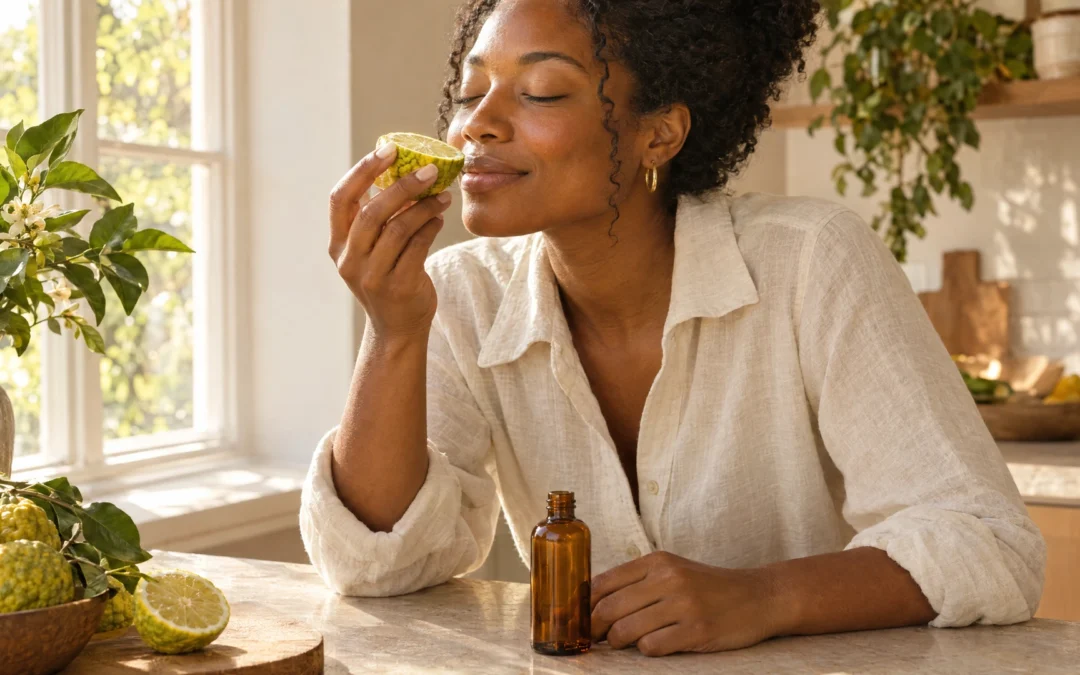
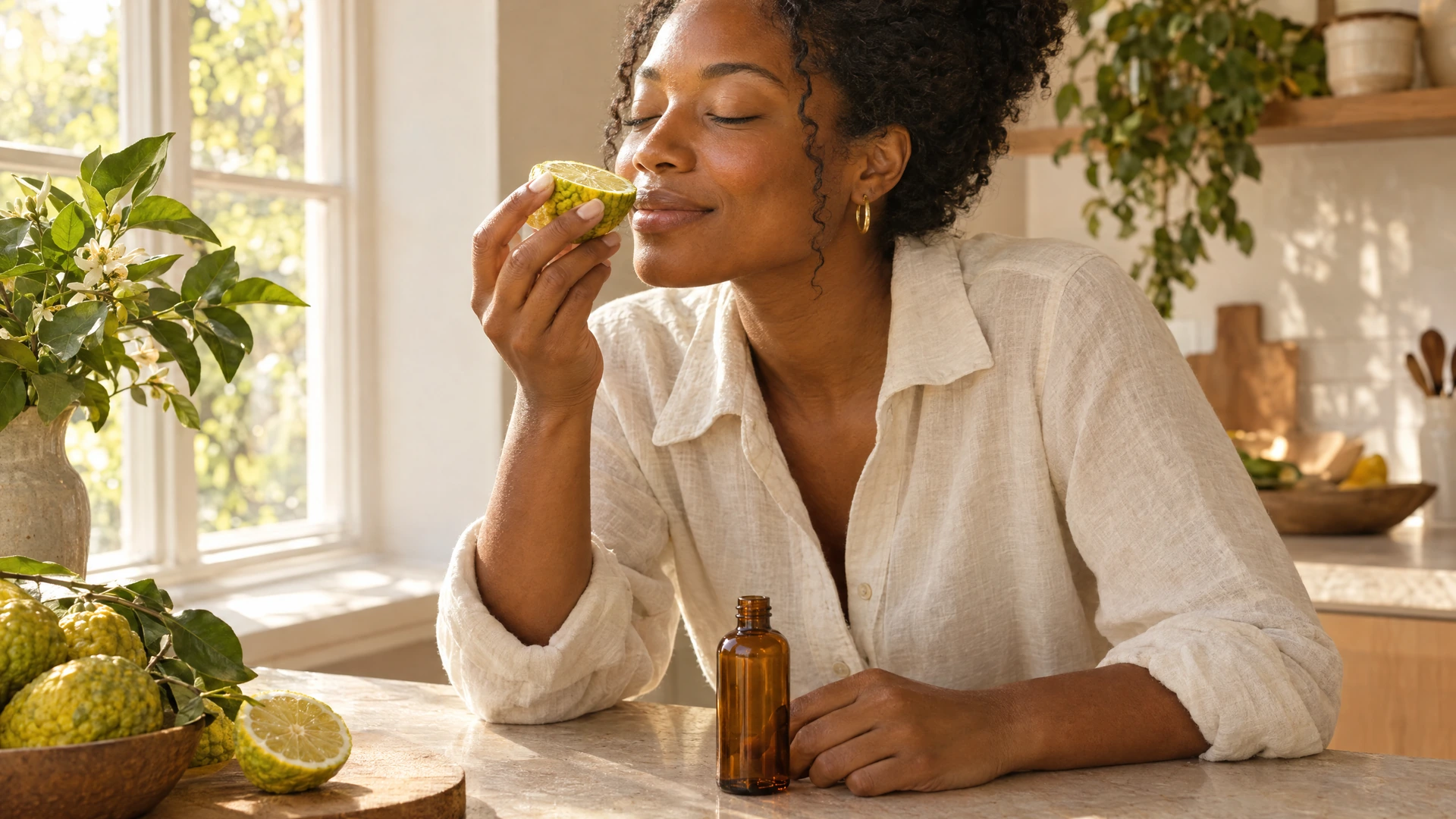

Bergamot smells like bright, juicy citrus with a soft floral edge and a faint bitter twist, sweeter than lemon and gentler than grapefruit. It is the note that flavors Earl Grey tea, it opens a huge share of the perfumes you own, and it fades fast unless something warmer sits underneath it on your skin.
You have smelled bergamot a thousand times. You have almost never smelled it alone.
Ask most people what bergamot smells like and they reach for a cup of tea. That instinct is right, and it is also the reason so few of you know the fruit itself. Bergamot hides inside other things: your breakfast tea, a crisp cologne, the bright first spray of a perfume you bought for its base notes. The citrus is there for a few minutes, then it steps aside.
This guide gives you the bergamot scent on its own terms. You will learn what it smells like, where it grows, why perfumers open so many fragrances with it, and how to wear it on your skin without a surprise from the sun. Then you will know exactly what you are reaching for the next time a label lists it first.
What Does Bergamot Smell Like?

Picture the moment you peel an orange and the oil sprays from the rind. Now make it greener, a touch more bitter, and lift it with a soft floral breath. That is bergamot. It reads as fresh and sunny like lemon, yet rounder and less sharp, and you will catch a faintly peppery, almost tea-like warmth underneath the sparkle.
The fruit itself explains the balance you smell. Wikipedia describes the bergamot orange as roughly the size of an orange, yellow or green like a lime depending on ripeness, with juice that tastes less sour than lemon but more bitter than grapefruit. Nobody eats it for pleasure. You grow it for the rind, because the rind is where the scent lives.
How bergamot reads next to other citrus
- Lemon: sharp, sour and clean, like a freshly scrubbed counter
- Sweet orange: round, sugary and familiar, like juice in the morning
- Grapefruit: tart and bitter with a faint sulfur edge
- Lime: green, zesty and sharp
- Bergamot: bright and green with a soft floral lift, the most elegant of the group
That floral lift is the part people miss when they call bergamot simply “citrus.” It is why the note works as well in a romantic evening fragrance as it does in a clean daytime cologne. Your nose reads it as light and polished rather than tart, and it makes whatever follows it smell more refined.
Where the Bergamot Scent Comes From

Bergamot, botanically Citrus bergamia, is a regional specialty with a global reach. A 2015 review in Frontiers in Pharmacology reports that more than 90 percent of world bergamot production comes from Calabria, and that the trees grow almost exclusively along the southern coast of that Italian region. When you smell real bergamot oil, you are smelling one small stretch of coastline.
The oil comes from the peel, not the flesh. The same review describes it as obtained by rasping and cold pressed extraction of the fruit peel, the same gentle method used for the sweet orange in your kitchen. No heat touches the oil, which is why good bergamot keeps its bright, living quality instead of smelling cooked.
The name has its own story, and it is not the one you might guess. Wikipedia traces the word to the Italian “bergamotta,” named for the city of Bergamo, and it notes that the bergamot orange is unrelated to the garden herb also called bergamot. If you see bee balm sold under that name at your garden center, you are looking at a different plant entirely.
I read the Frontiers review and the Wikipedia entry on the fruit before writing this, and both point you to the same place: the rind of one unusual citrus grown on one coast.
Why Bergamot Opens So Many Perfumes

Perfumers love bergamot as a top note, the first impression you get when a fragrance meets your skin. Wikipedia calls bergamot oil one of the most commonly used ingredients in perfumery, and the Frontiers review names it one of the main basic constituents for the manufacture of perfumes. If you own more than three fragrances, odds are bergamot opens at least one of them.
The chemistry tells you why it sparkles. The review lists limonene at 25 to 53 percent, linalyl acetate at 15 to 40 percent and linalool at 2 to 20 percent. Limonene gives you the bright citrus flash. Linalyl acetate and linalool carry the soft, almost lavender-like floral smoothness that separates bergamot from plain orange. Those last two are the reason your nose reads it as elegant.
The same freshness explains why bergamot fades quickly. Light citrus molecules leave your skin fast, so a fragrance built only on bergamot disappears within an hour. Perfumers solve that by setting it over warmer materials: woods, amber, musk and resins that hold the brightness in place a little longer. That pairing is also what makes Earl Grey work, since the review notes the tea is black tea flavored with bergamot oil.
What bergamot pairs with in a fragrance
- Amber and vanilla: warmth that keeps the citrus from vanishing
- Santal and teakwood: smooth woods that give the brightness a floor
- Neroli and gardenia: florals that echo bergamot’s soft side
- Musk: a clean, skin-like layer that softens the edges
- Black tea and spice: the classic Earl Grey accord
How to Wear Bergamot on Your Skin
One honest caution comes first, because it matters for your skin. Cold-pressed bergamot oil contains bergapten, a compound the Frontiers review flags as phototoxic. That means oil carrying it and strong sunlight on bare skin do not mix. The review also notes that a furocoumarin-free bergamot oil has been prepared for perfumery and cosmetic use, so if you buy a neat bergamot essential oil, read the label for “bergapten-free” or “FCF” and keep it diluted.
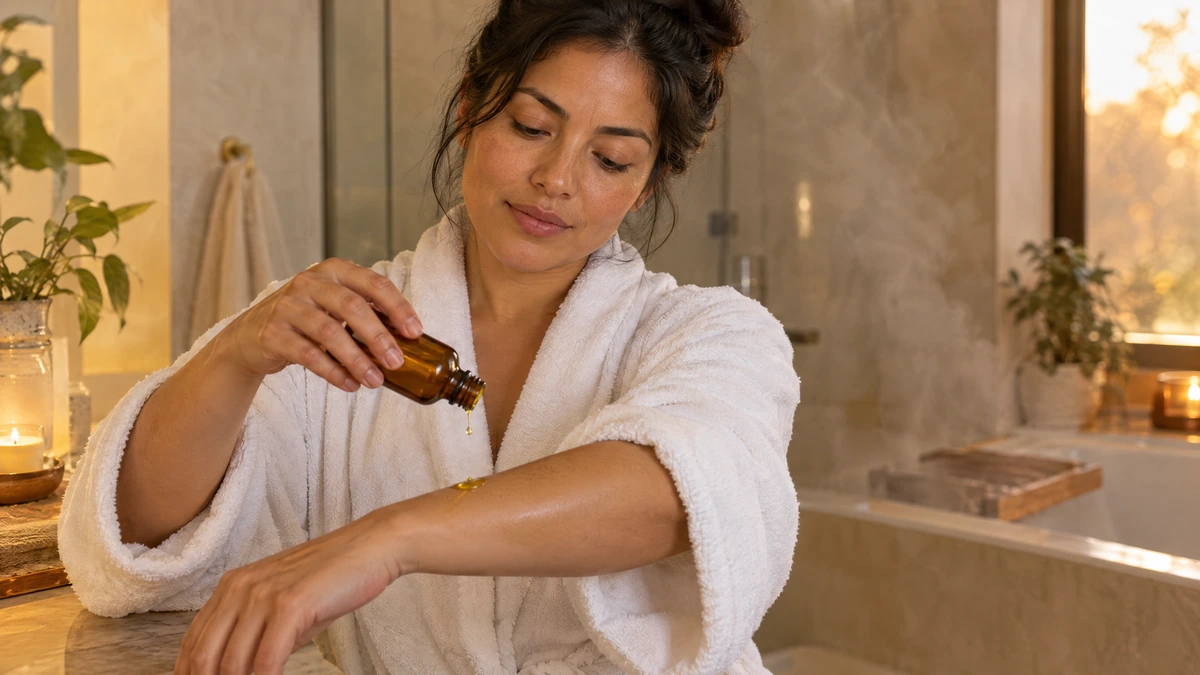
The easiest way for you to wear the note is inside a finished blend that already gives it a warm base. Two of our blends carry bergamot. Amber Veil Luxury Body Oil lists bergamot, santal, cashmere and gilded amber as its notes, so the citrus opens bright and settles into warmth. Moonlight Descent Luxury Body Oil uses bergamot in its blend under neroli, gardenia, white musk and teakwood. In both, the bergamot note comes from premium fragrance oil, not from cold-pressed peel oil. Both are $36.
The ritual for each body oil is the same, and it suits a citrus top note well: warm three or four drops between your palms and press them into your skin straight after a shower, while the air still holds the steam. Warm, damp skin carries the bright opening, and the woods and amber underneath keep you smelling of it long after the citrus would have faded on its own. If you want the amber side explained, read what amber smells like.
Bergamot also anchors many classic men’s fragrances, and our guide to wearing botanical oil as cologne shows you how to build a fresher, citrus-led blend. Store any citrus oil cool and dark once you own it, since bright top notes are the first to dull, and citrus oils turn faster than woods or resins.
My honest opinion: bergamot is the most generous note in perfumery. It makes everything around it smell more expensive, and it asks for almost nothing in return. If you think you dislike citrus fragrances, try bergamot over a warm amber base before you decide. You will likely change your mind.
Bergamot Scent: Your Questions Answered
What does bergamot smell like?
Bergamot smells like bright, green citrus with a soft floral lift and a faint bitter edge. It is sweeter and smoother than lemon, gentler than grapefruit, and you will often catch a light tea-like warmth underneath.
Is bergamot the same as Earl Grey?
Not quite. Earl Grey is black tea flavored with bergamot oil, so the tea is the most famous place you meet the note. The scent of the fruit alone is brighter and more floral than the tea you know.
Where does bergamot come from?
Almost all of the bergamot you smell comes from Calabria in southern Italy. A 2015 review reports that the region produces more than 90 percent of the world’s bergamot, with the trees growing along its southern coast.
Is bergamot the same as the herb bergamot?
No. The bergamot orange used in perfume is a citrus fruit. The garden herb sold under the same name, also called bee balm, is an unrelated plant, so check the botanical name Citrus bergamia when you shop.
Is bergamot oil safe in the sun?
Cold-pressed bergamot oil contains bergapten, which the research flags as phototoxic, so keep neat or strong bergamot oil off skin you plan to expose to sunlight. Look for “bergapten-free” or “FCF” on the label if you want to wear the essential oil on your skin.
Why does bergamot fade so fast?
Bergamot is a top note made of light citrus molecules that leave your skin quickly. Wear it inside a blend with woods, amber or musk underneath, and apply it to damp skin, to keep the brightness with you longer.
Bright on top, warm underneath
Choose a blend that opens with bergamot, press it into warm skin tonight, and let the amber carry it into the morning.
Like this article? Add Piton Noir Botanicals as a preferred source, and you are more likely to see our articles in Google’s Top Stories.