
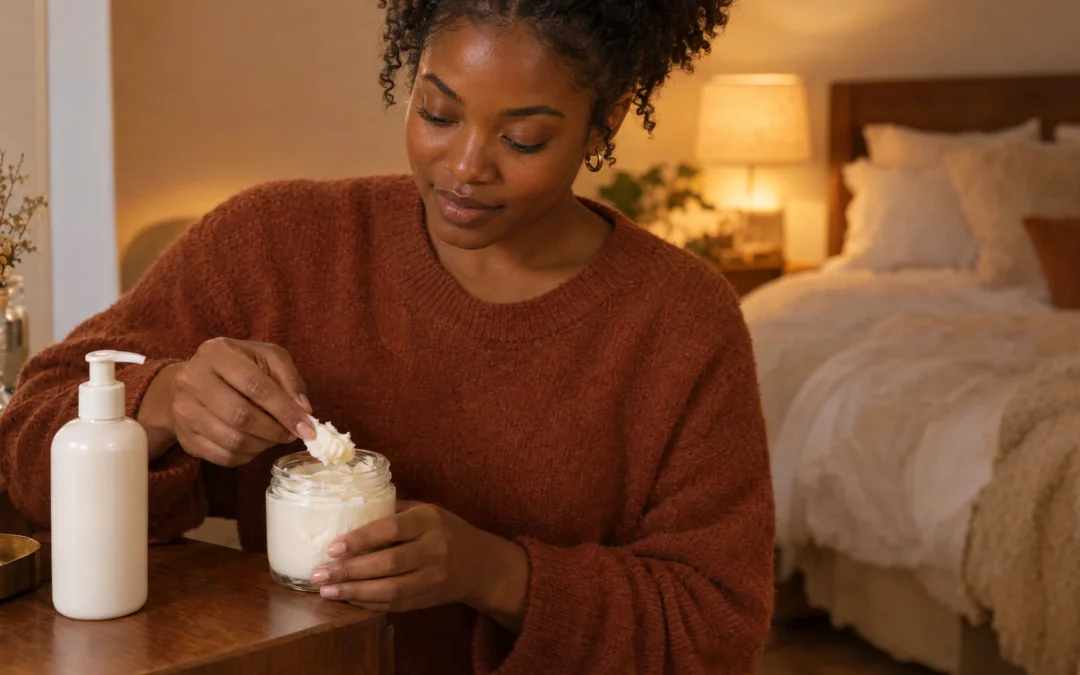
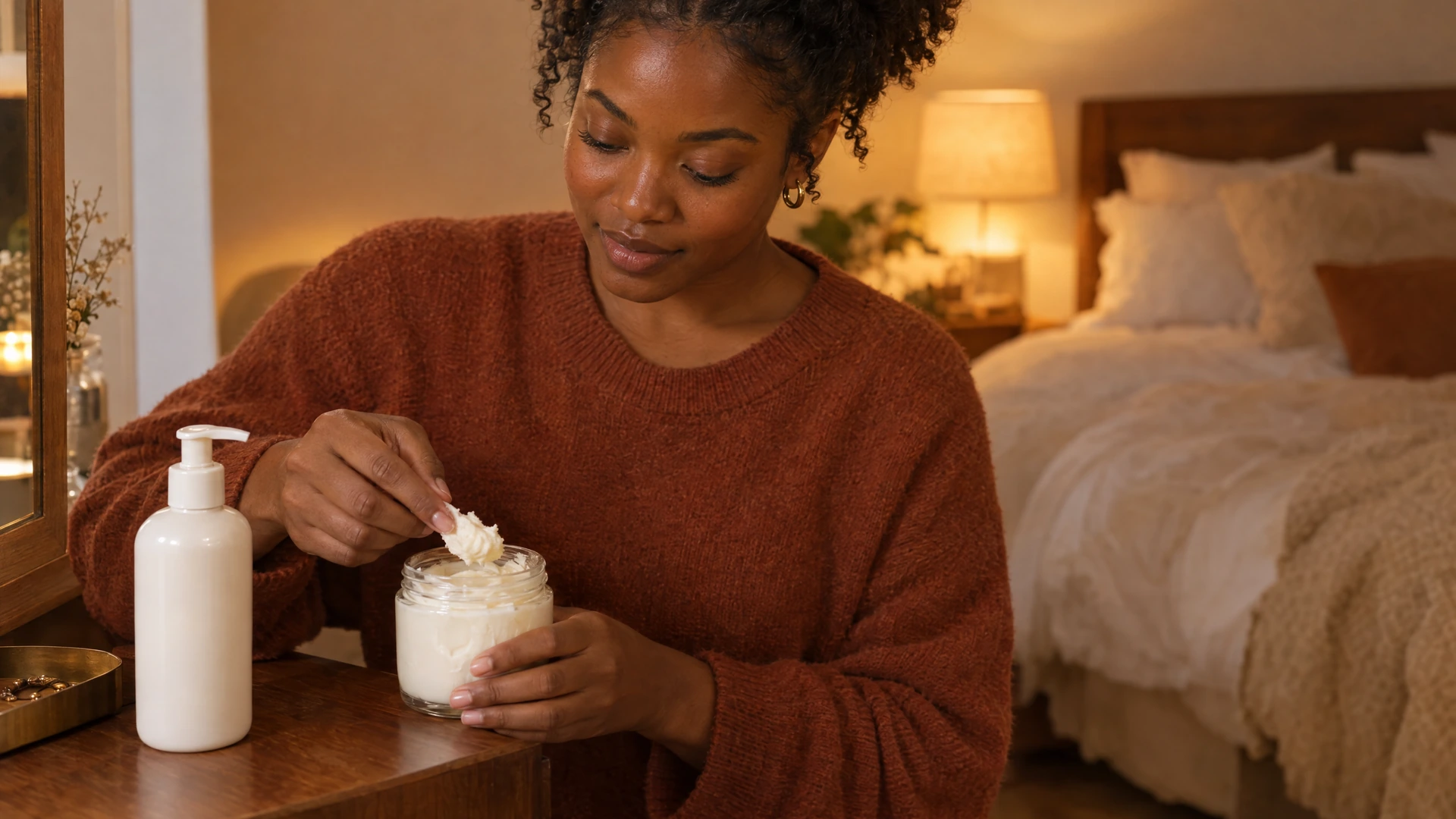

Body butter is thick, rich and made mostly of plant fats, while lotion is light and mostly water. Reach for lotion when you want quick, easy moisture under your clothes, and save body butter for the rough, dry places that want a heavier layer overnight. A body oil sits between the two, and on damp skin it gives you the softness of butter with the light feel of lotion.
One spreads like milk. One melts like ice cream left out on the counter. Your skin feels the difference before you read a single label.
You open the cabinet and find a pump bottle of lotion beside a heavy jar of body butter, and you wonder whether you need both. The labels make them sound interchangeable. They are not. Body butter vs lotion comes down to how much water you want on your skin, how much fat, and how long you want the feeling to last.
This guide shows you what goes into each one, how each feels on your skin, and where a body oil fits in between. By the end you will know which jar belongs on your nightstand and which bottle belongs in your gym bag.
Body Butter vs Lotion: What Goes Into Each
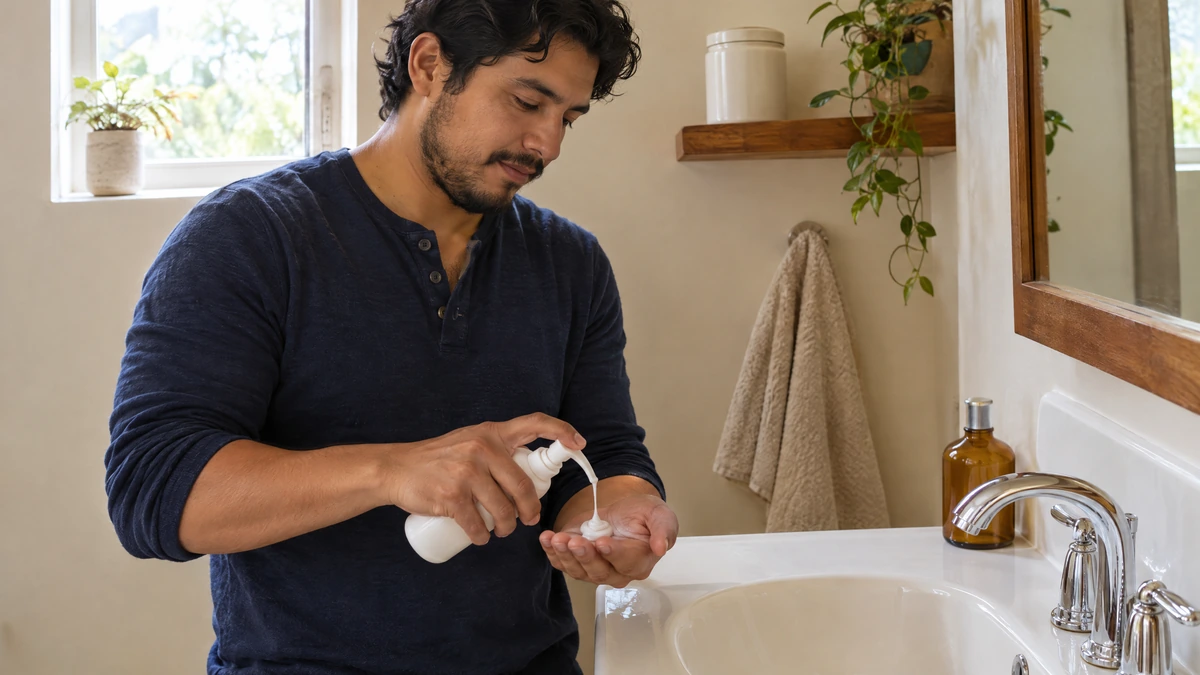
A lotion is a water-based emulsion. Water makes up most of the bottle, blended with a smaller share of oils and an emulsifier that keeps the two from separating. That high water content is why your lotion pours, pumps and spreads in seconds, and why it disappears into your skin almost as soon as you rub it in.
A body butter flips the ratio. Most body butters are built on plant butters such as shea butter and cocoa butter, fats that stay solid at room temperature and melt when they meet the warmth of your hands. Many formulas carry little or no water at all, which is why a body butter comes in a jar instead of a pump and feels dense when you scoop it.
Lotion
- Mostly water, with a smaller share of oil
- Pours or pumps easily
- Absorbs in seconds, light finish
- Best for daytime, humid weather, large areas
Body butter
- Mostly plant fats such as shea and cocoa butter
- Solid in the jar, melts on warm skin
- Slower to sink in, richer finish
- Best for night, dry winter air, elbows and heels
Neither one is better in every case. They do different jobs for your skin, and the right choice depends on the season, the time of day, and which part of you feels tight.
How Body Butter and Lotion Feel on Your Skin
Lotion feels cool and quick. It glides over your arms and legs, leaves almost no film, and lets you dress a minute later. The trade is staying power. Water evaporates, so a light lotion often feels gone by midday, and you reach for the bottle again.
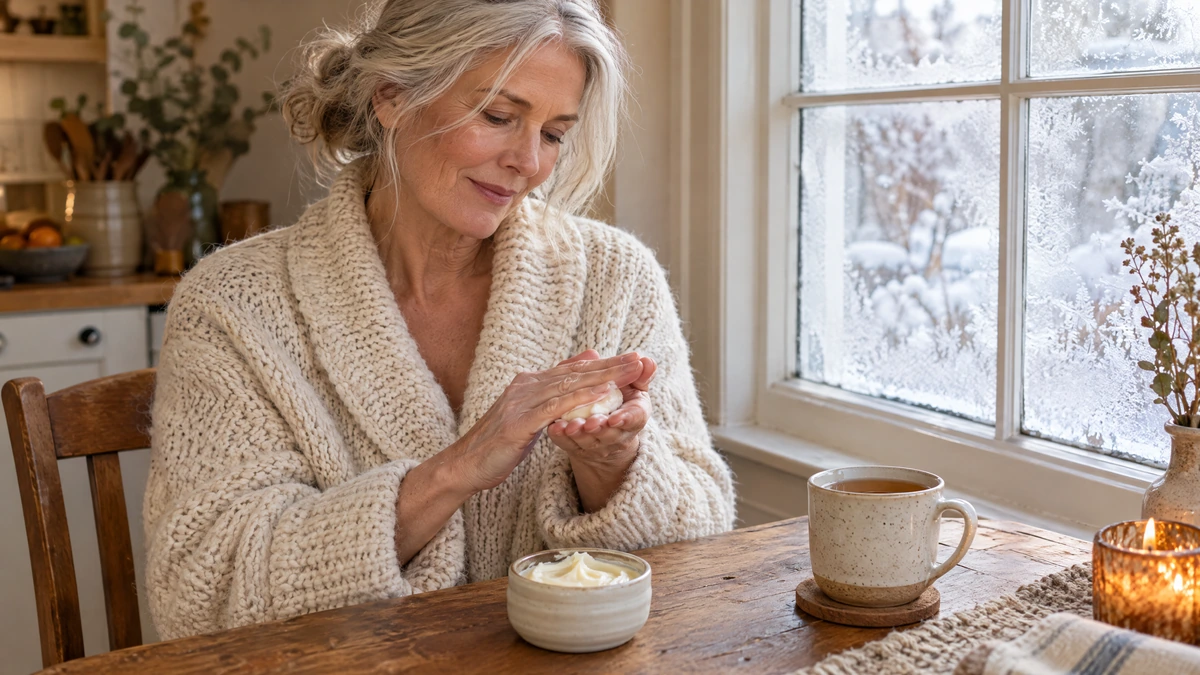
Body butter feels warm and slow. You soften a small amount between your palms, press it in, and it leaves a richer, more cushioned finish that you still notice hours later. The trade here is weight. A heavy layer takes longer to settle, and a dermatology review, Moisturizers: The Slippery Road, notes that creams and ointments transfer to surrounding surfaces more easily than lotions, which is why your sheets and sleeves sometimes notice the butter before you do.
The same review sorts moisturizing ingredients by job. An emollient is a lipid or oil that improves softness and smoothness, and an occlusive forms a water-repellent barrier over your skin. Body butter leans hard on both. Lotion leans on water and on a humectant such as glycerin, a compound that attracts water.
It also notes that the moisturizing action of emollients peaks between 30 minutes and an hour after you apply them and usually lasts around four hours. That number explains a lot for you. Whatever you choose, dry skin often wants a second, smaller application later in the day.
Where Body Oil Fits Between Butter and Lotion

A body oil borrows a trait from each side. Like body butter, it carries no water, so it works as an emollient and occlusive layer. Like lotion, it is liquid, so it spreads in seconds and leaves a light finish instead of a heavy one. For you, the comparison of body oil vs body butter comes down to texture: same job, much lighter feel.
The catch is water. Because a body oil brings none of its own, you give it water first. The American Academy of Dermatology advises you to apply moisturizer while your skin is still damp after a shower or bath, and it ranks creams and ointments above lotions for adding moisture. The same page lists jojoba oil and shea butter among the ingredients worth looking for.
That is exactly how our body oils are meant to be worn. The ritual reads: “Warm three or four drops between the palms and press into skin straight after a shower, while the air still holds the steam.” Moonlight Descent Luxury Body Oil is built on fractionated coconut oil and meadowfoam seed oil. Golden Veil Radiant Body Oil pairs jojoba with meadowfoam. Each is $36, and each gives your damp skin a soft finish without the weight of a butter.
Curious why those bases feel so light on your skin? Jojoba is a liquid wax rather than a true oil, which we explain in why jojoba acts like skin, and fractionated coconut oil stays clear and liquid for reasons covered in our guide to fractionated coconut oil.
How to Choose Between Body Butter, Lotion and Body Oil

A simple way to choose
- Busy morning, humid day, or a quick touch-up at the gym: lotion
- Elbows, knees, heels and hands that feel rough by evening: body butter, a thin layer at night
- Straight out of the shower, when you want a glow and a scent that lingers: body oil on damp skin
- Dry winter air or after a long flight: lotion first, then body oil over the top
- Skin that reacts to fragrance: an unscented lotion or butter, and patch test anything new
Most people end up owning two of the three, not one. A light lotion handles your everyday moisture. A small jar of body butter rescues the spots that stay rough. A body oil turns the minutes after your shower into a ritual you look forward to, and it carries scent in a way water-heavy lotion rarely does.
If you use more than one, the order matters. Water-based layers go under and oil-based layers go on top, which we walk through step by step in body oil or lotion first. For a side-by-side of the two lighter textures, read body oil vs lotion, and if your skin stays dry most of the year, start with body oil for dry skin.
I read the full dermatology review and the American Academy of Dermatology’s dry skin guidance before writing this, and neither one crowns a single winner. Both point you to the same idea: match the texture to the moment, and give your skin water before you seal it in.
My honest opinion: body butter is wonderful on your heels in January and miserable under your jeans in July. Keep a jar for the rough spots, keep a light lotion for busy days, and let a body oil handle the moment you step out of the shower.
Body Butter vs Lotion: Your Questions Answered
Is body butter better than lotion?
Not in every case. Body butter is richer and lasts longer on dry, rough areas, while lotion is lighter and absorbs faster for everyday use. Your choice depends on the season, the time of day and how dry your skin feels.
Can you use body butter and lotion together?
Yes. Apply lotion first and body butter second, because water-based layers go under and richer, fat-based layers go on top. Use only a thin layer of butter so your skin does not feel heavy.
Is body butter good for dry skin?
Many people with dry skin prefer it, because plant butters such as shea leave a richer layer that you still feel hours later. Apply a thin amount to slightly damp skin at night, when its weight bothers you least.
What is the difference between body oil and body butter?
Both carry little or no water, so both work as a softening, sealing layer for your skin. Body oil is liquid and sinks in quickly with a light finish, while body butter is solid in the jar and leaves a heavier, cushioned feel.
Does body butter clog pores?
Heavy butters feel too rich for some people, especially on the chest and back. If your skin breaks out easily, keep body butter to your elbows, knees, hands and heels, and choose a lighter lotion or body oil for larger areas.
When should you use body butter instead of lotion?
Reach for body butter at night, in dry winter air, and on rough spots like heels and elbows. Reach for lotion during the day, in humid weather, and anywhere you want to dress quickly afterwards.
Light like lotion, soft like butter
Step out of the shower, press a few drops of body oil into damp skin, and find the texture you were looking for all along.
Like this article? Add Piton Noir Botanicals as a preferred source, and you are more likely to see our articles in Google’s Top Stories.