
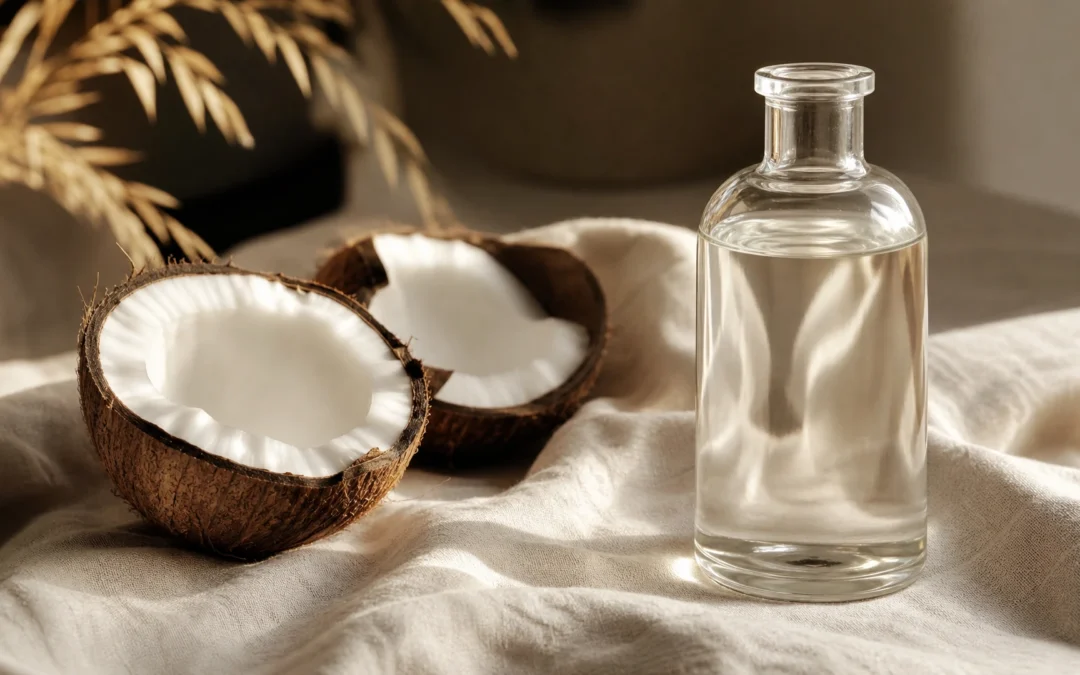
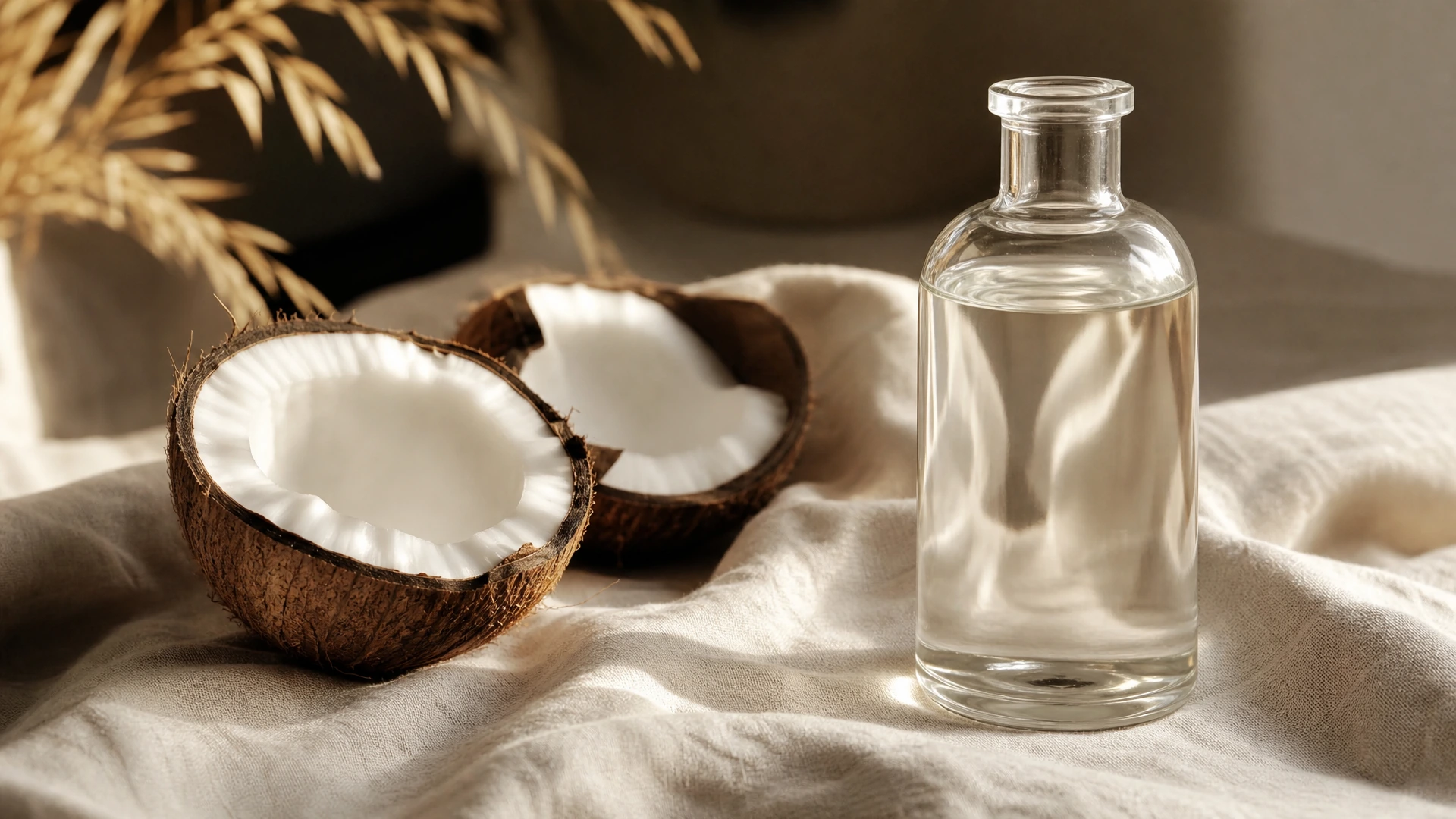

Fractionated coconut oil is ordinary coconut oil with the lauric acid taken out, leaving the lighter caprylic and capric triglycerides behind. What you get stays clear and pourable in a cold room, carries no scent of its own, and slips across your skin without a greasy film, which is why fragrance blends use it as a base.
The jar of coconut oil in your kitchen turns into a white block every winter. The oil in a good body oil never does, and the reason is one careful subtraction.
You have seen fractionated coconut oil near the top of ingredient lists and assumed it was the same thing you cook with. It started there. Then most of what makes kitchen coconut oil solid, heavy and unmistakably coconut-scented was taken out, and what remains behaves like a different ingredient altogether.
This guide explains what fractionation removes, how the result feels on your skin, where it outperforms the jar in your pantry, and where it falls short. If you are choosing a body oil, it tells you exactly what the first ingredient on the label is doing for you.
What Is Fractionated Coconut Oil?
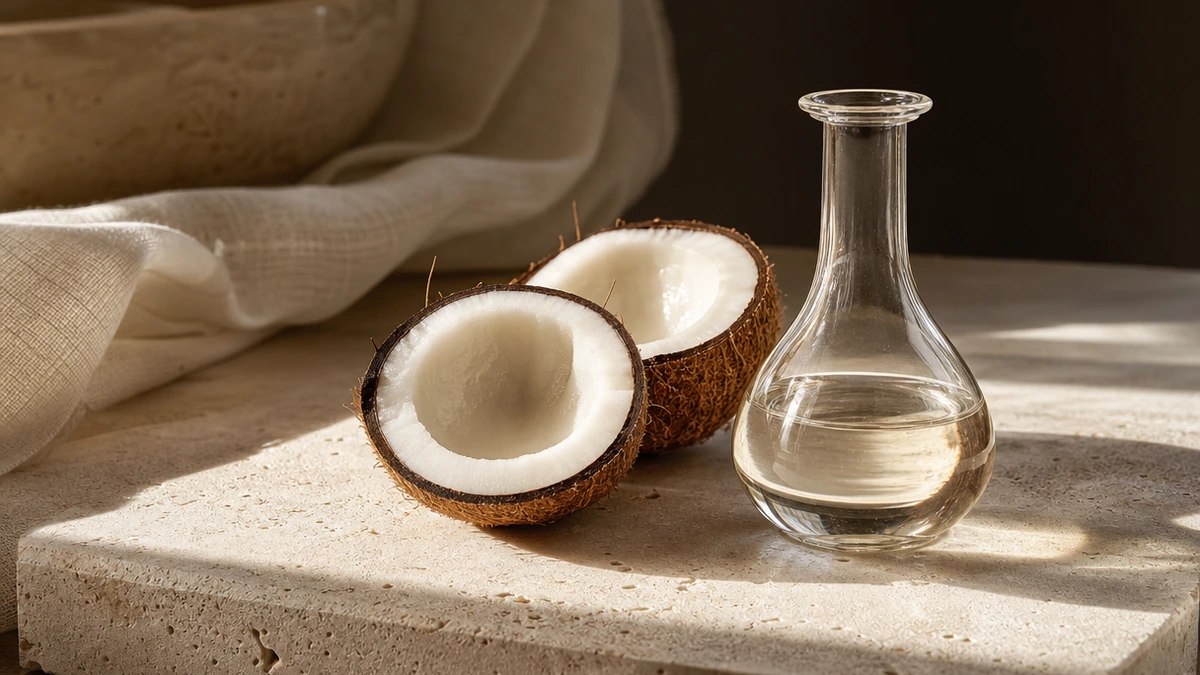
The coconut oil in your pantry is a blend of fats with carbon chains of different lengths, and fractionation pulls those chains apart. The whole point, as the formulator behind LisaLise explains, is to extract the lauric acid that ordinary coconut oil holds plenty of. Take that out along with the other long chains, and the character of the oil changes completely.
What stays behind is a medium-chain triglyceride built from eight-carbon caprylic acid and ten-carbon capric acid. On a cosmetic label you will usually see it written as caprylic/capric triglyceride. The Cosmetic Ingredient Review panel describes the process plainly: the ingredient is made by hydrolyzing coconut oil and separating the medium chain length fatty acids by fractional distillation.
I read the Cosmetic Ingredient Review panel’s triglyceride safety assessment before writing this, and its manufacturing section describes the same thing a formulator would tell you: take coconut oil apart and keep the medium chains. That single step explains everything you notice in the bottle.
Fractionated vs Virgin Coconut Oil: What Changes
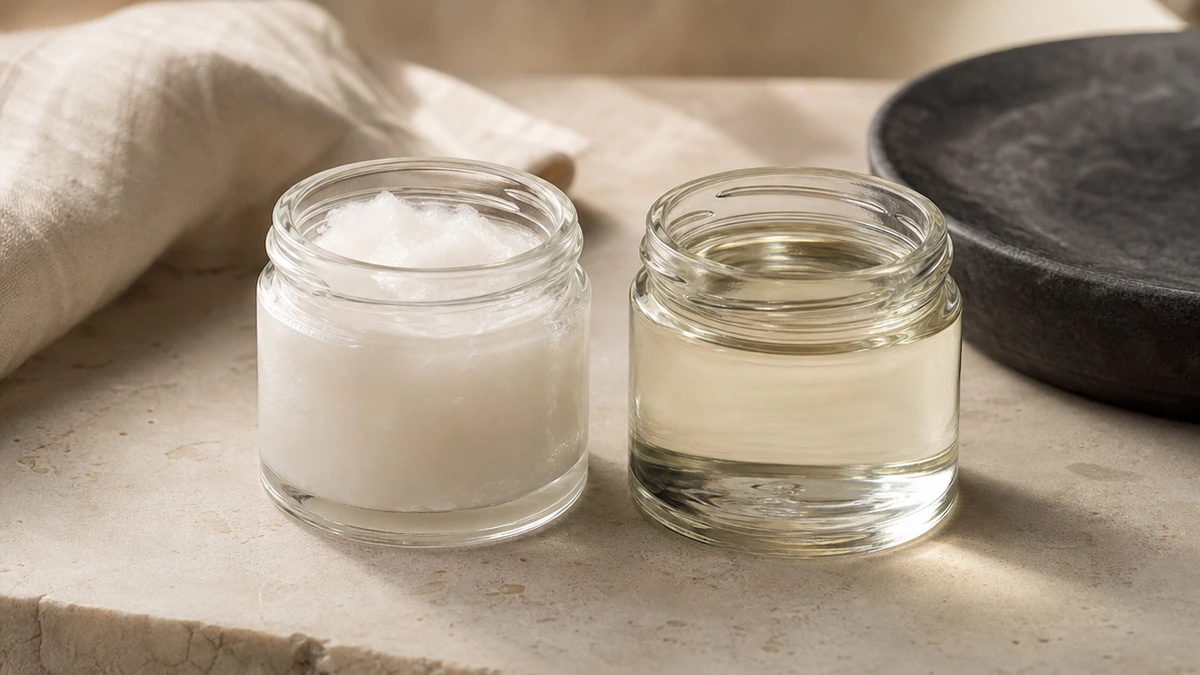
The difference shows up on the first cold morning. Leave a jar of virgin coconut oil on a cool windowsill and you will find a white, waxy block by breakfast, because its long-chain fats set as the temperature drops. Fractionated coconut oil keeps only the medium chains, so it stays clear and pourable in the same room. Lise describes it as completely colourless and crystal clear, with a consistency like slightly thick water, which is a fair description of what you see when you tip the bottle.
Virgin coconut oil
- Turns solid in a cool room
- Smells unmistakably of coconut
- Richer, heavier feel on the skin
- Keeps its lauric acid and other long-chain fats
- Suits the kitchen and solid balms
Fractionated coconut oil
- Stays clear and liquid at room temperature
- No discernible scent
- Thin, silky slip without grease
- Mostly caprylic and capric triglycerides
- Suits body oils and fragrance blends
Scent is the other big change, and it matters more than it sounds if you care about fragrance. Virgin coconut oil smells like coconut, which is lovely in a macaroon and a problem in a sandalwood blend. Fractionated coconut oil has no discernible scent at all, so it never argues with the notes layered on top of it. That neutrality means you never have to plan around the base, which is exactly what you want underneath a blend you chose for its notes.
How Fractionated Coconut Oil Feels on Your Skin
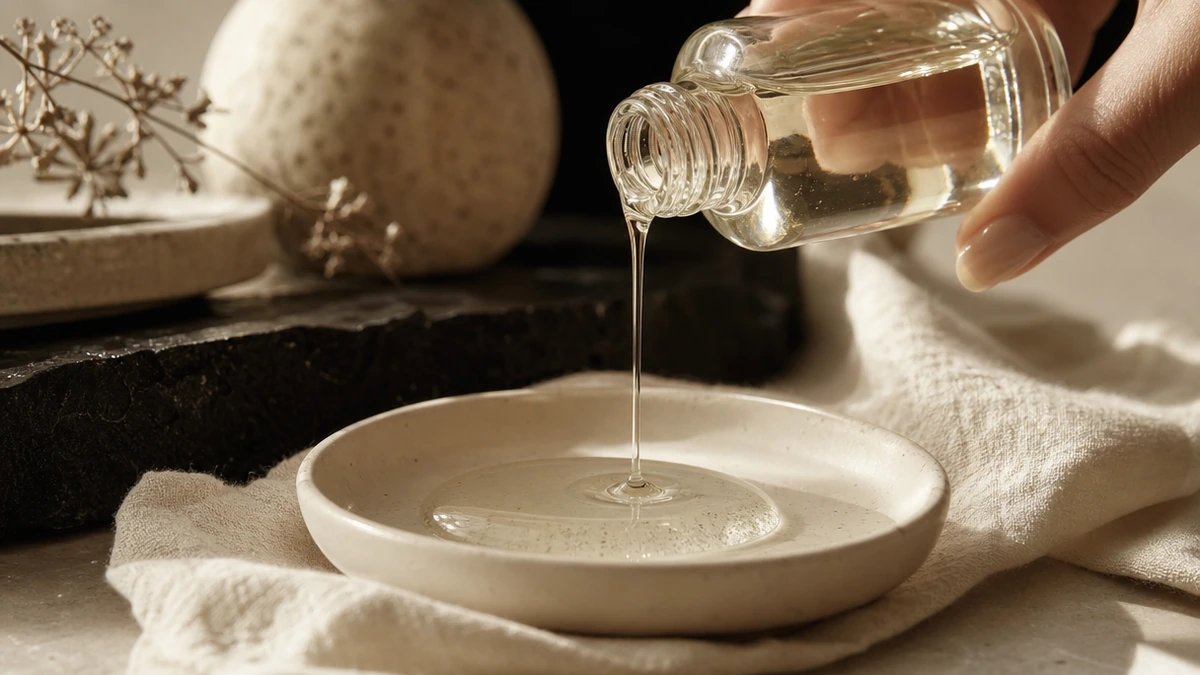
Texture is why makers love it, and it is the part you notice first. A few drops spread a long way, and the oil adds slip without greasiness, so your skin feels smooth rather than coated. The Cosmetic Ingredient Review panel lists triglycerides like this one as skin conditioning agents, occlusive or emollient, which is the technical way of saying they soften how your skin feels and slow the water leaving its surface.
What fractionated coconut oil does and does not do
- Softens how your skin feels and leaves a smooth, low-shine finish
- Stays liquid, clear and easy to pour at room temperature
- Carries fragrance without adding a scent of its own
- Keeps well, with a shelf life most suppliers label at two to three years
- Does not add the cushion of heavier oils and butters. It is a base, not a fix
Be honest with yourself about what it will not do. On its own it feels light, and very dry-looking skin often wants more cushion than a thin triglyceride gives, which is one reason blends pair it with something richer. It also marks fabric like any oil if it transfers before it settles, so give it a minute before you dress, the same habit we covered in keeping oil off your linens. And if your skin has reacted to coconut-derived ingredients before, patch test on your inner forearm first, because no one will promise how your skin responds.
Why Fragrance Blends Use It as a Carrier Oil
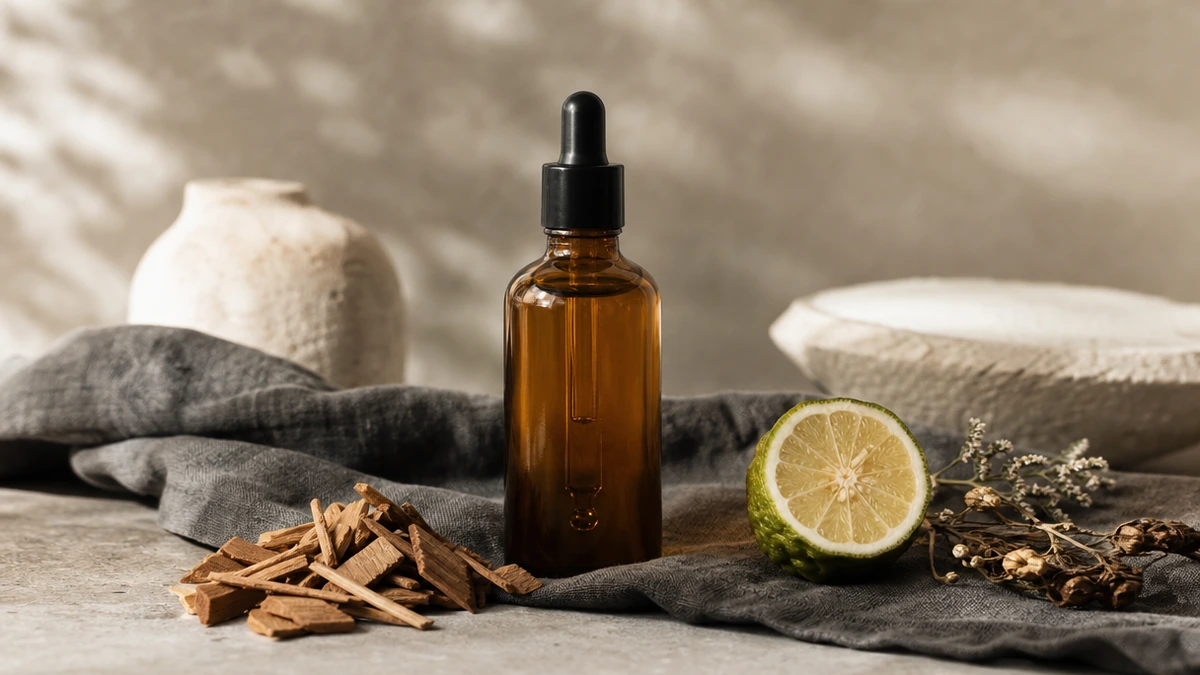
A carrier oil does one job in a body oil: it holds the fragrance and delivers it to your skin. The best carriers stay out of the way. Because fractionated coconut oil is clear, light and scent-neutral, the notes you chose are the notes you smell, from the first drop to the last. If you wear oil as your only fragrance, our guide to wearing scent in oil instead of alcohol shows why that base matters so much.
Two of the three body oils you will find in our shop start with it. Amber Veil Luxury Body Oil lists fractionated coconut oil first, then jojoba, meadowfoam seed oil and vitamin E, with premium fragrance oils carrying notes of bergamot, santal, cashmere and gilded amber. Moonlight Descent Luxury Body Oil opens with fractionated coconut oil and meadowfoam seed oil, then layers premium fragrance oils with sandalwood essential oil for notes of neroli, gardenia, white musk and teakwood. Both are $36 and blended in Boston.
If you would rather have a jojoba base, Golden Veil Radiant Body Oil is built on jojoba and meadowfoam seed oil instead. We went through why jojoba behaves so differently in our guide to jojoba as a wax rather than an oil. Jojoba is a wax ester. Fractionated coconut oil is a triglyceride. Both feel light on your skin, and they get there by different chemistry.
Whichever you pick, the ritual stays the same. Warm three or four drops between your palms and press them into damp skin straight after a shower, while the air still holds the steam. Give it a minute to settle before you dress, and wear the scent close to you for the rest of the evening.
My honest opinion after years of building blends: fractionated coconut oil is the ingredient nobody brags about and everybody relies on. It does not smell, it does not set, and it does not fight the fragrance you paid for. If you want your oil to smell like the notes on the label instead of like a kitchen, this is the base that makes that happen.
Fractionated Coconut Oil: Your Questions Answered
Is fractionated coconut oil the same as MCT oil?
They are close relatives. Both are made largely of medium-chain caprylic and capric triglycerides, and you will often see the names used side by side. For your skin, choose a bottle sold for cosmetic use and read the ingredient list, which usually says caprylic/capric triglyceride.
Does fractionated coconut oil smell like coconut?
No. Unlike virgin coconut oil, it has no discernible scent. That neutrality is exactly why it works under your fragrance instead of competing with it.
Does fractionated coconut oil go solid in the cold?
No. It stays clear and liquid at room temperature and in a cool bathroom. Virgin coconut oil sets because of its long-chain fats, and fractionation removes most of those, so your bottle pours the same in January as it does in July.
How long does fractionated coconut oil last?
It keeps well. Most suppliers label it for two to three years, and one formulator reports it keeping up to five. Store yours in amber glass, capped and away from heat, and read how long botanical oils keep for the storage habits that matter most.
Is fractionated coconut oil safe for your skin?
The Cosmetic Ingredient Review expert panel concluded the triglycerides in its review are safe in cosmetics at current levels of use, and caprylic/capric triglyceride is among them. Your own skin is its own case, so patch test a new blend on your inner forearm and wait a day before you use it widely.
Should you choose fractionated coconut oil or jojoba for your body?
Both feel light, for different reasons. Jojoba is a liquid wax that resembles the oils your skin makes, and fractionated coconut oil is a clear, scent-neutral triglyceride. Amber Veil uses both, so you do not always have to choose.
Clear, light, true to the notes
Choose a body oil built on a base that stays out of the way, and let the fragrance be the part you notice.
Want more of this in your Google feed? Tap here and Google shows you our articles first.