
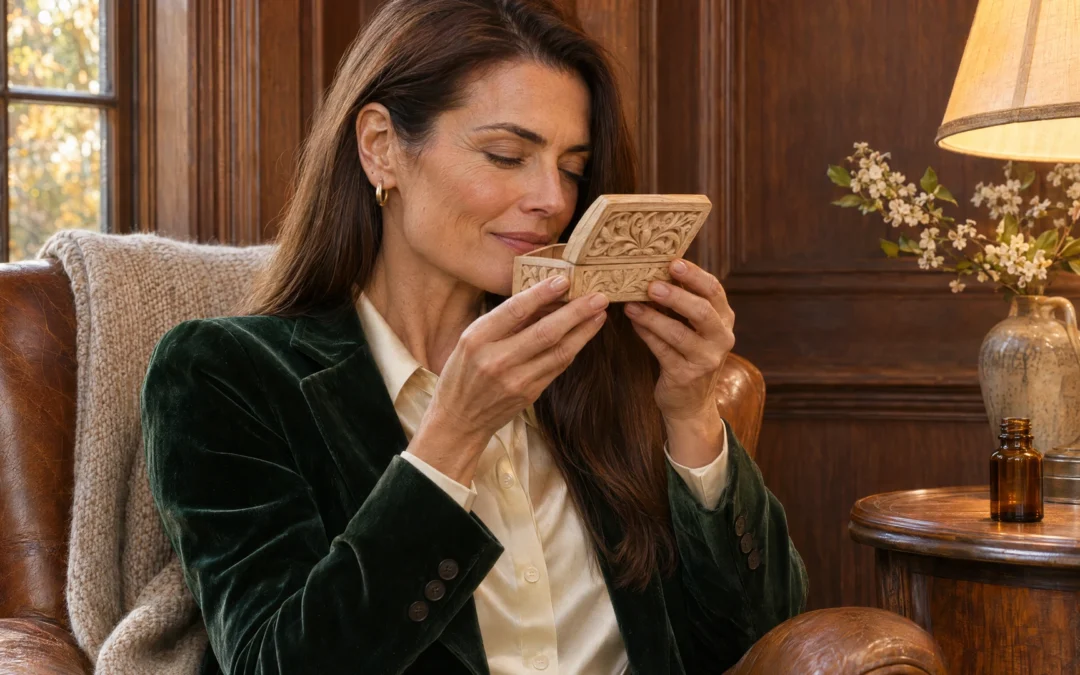
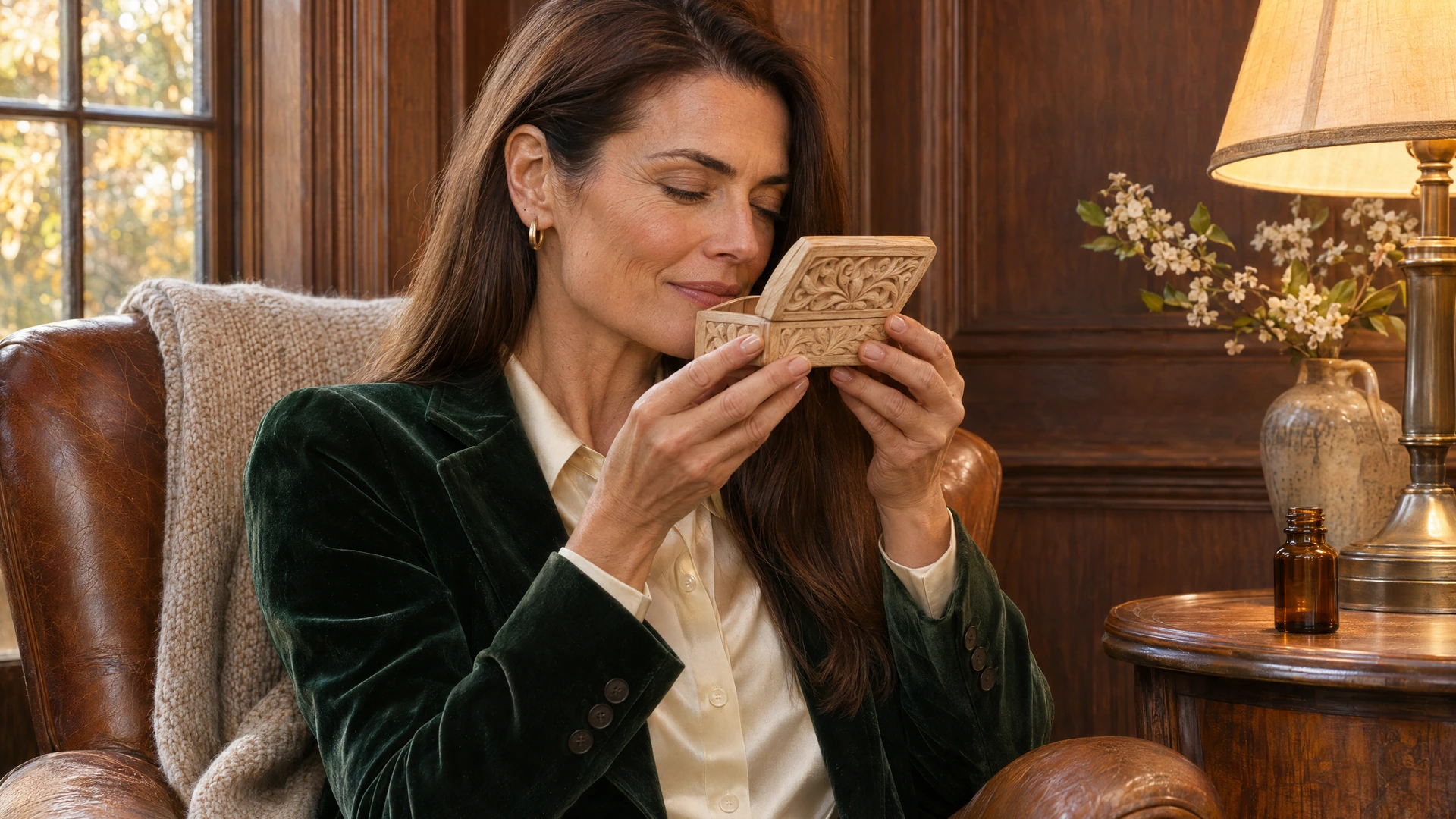

Santal is the French word for sandalwood, so a santal scent is a sandalwood scent: soft, warm, smooth, creamy and milky, with a precious-wood depth. Perfume labels borrow French freely, from eau de parfum to eau de toilette, and santal is simply the French name for the wood. In a fragrance, santal forms a long-lasting woody base, and it pairs beautifully with white flowers, citrus and amber on your skin.
Santal is sandalwood with a French accent. The word tells you what to expect, and the wood tells you why it lasts.
You see santal everywhere right now: on candles, on perfumes, on body oils, often with no explanation. If you have wondered whether santal is a different wood, a new molecule or a marketing word, you are in good company. The answer turns out to be simple, and it tells you exactly how a santal fragrance will smell on you.
This guide covers what santal means, what a santal scent smells like, where the wood comes from, why true sandalwood is so scarce, and how to wear santal so it shows off its creamy depth. Each fact links to its source, so you can read further whenever you like.
What Does Santal Mean?

In French, santal means sandalwood. Wiktionary’s entry for the French noun defines it as sandalwood, any of various trees in the genus Santalum and the aromatic wood of such trees. The word traveled a long way to reach your perfume label: from Medieval Latin santalum and sandalum, from Medieval Greek sántalon, from the Arabic ṣandal.
The English word sandalwood has even deeper roots. According to Wikipedia’s sandalwood entry, it ultimately comes from the Sanskrit chandana, meaning “wood for burning incense,” and it arrived in English via Late Greek, Medieval Latin and Old French in the 14th or 15th century. So when you choose a santal fragrance, you wear a word that has traveled through four languages and the incense trade.
Why do brands write santal instead of sandalwood? Perfume labels already use French terms such as eau de parfum and eau de toilette for strength, and santal signals a fragrance note rather than a block of wood. Read it the way you read the word amber on a label: a description of how the scent smells, built by a perfumer, not a promise of one single raw material.
What Does a Santal Scent Smell Like?

Sandalwood oil has a distinctive soft, warm, smooth, creamy and milky precious-wood scent. That list of words explains why santal has become a favorite for you if you love warm fragrances that never shout. It smells woody, but rounder and softer than cedar, with a creamy edge that sits close to your skin.
The quality and the exact scent profile depend on the age of the tree, where it grew and the skill of the distiller. Most of that character comes from santalol: the two isomers of santalol make up about 75 percent of sandalwood’s main components. Sandalwood woods are heavy, yellow and fine-grained, and unlike many other aromatic woods, they retain their fragrance for decades, which is why a carved sandalwood box still smells sweet to you long after it was made.
In a perfume, santal does structural work. It imparts a long-lasting, woody base to perfumes from the oriental, woody, fougère and chypre families, and it acts as a fixative for floral and citrus fragrances. In smaller amounts, it enhances the longevity of the more volatile materials around it. Our guide to perfume notes explains how a base like this holds a whole fragrance together for you.
Santal notes to smell for
- Creamy and milky, the first softness you notice
- Warm and smooth, never sharp
- Precious wood, rounder than cedar or pine
- A long, quiet finish that stays close to your skin
Where Santal Comes From
True sandalwoods grow in the genus Santalum, which holds more than 19 species. The main cultivated species, Santalum album, is an evergreen tree that grows between 4 and 9 meters tall, and its harvest becomes viable only after many years. Check the botanical name on an ingredient list when you want to know which sandalwood you are buying. Australian sandalwood, Santalum spicatum, comes from plantations in Australia and China, and perfumers use it too.
Scarcity shapes every santal you smell. S. album is a protected species, and demand for it cannot be met, so many plants are traded as sandalwood. One is West Indian sandalwood, Amyris balsamifera, from an unrelated plant family. Most woods from these alternative sources lose their aroma within a few months or years, and chemists have also created isobornyl cyclohexanol, a synthetic fragrance chemical produced as an alternative to the natural product.
That is why a santal note in a modern fragrance often blends natural and created materials. It is a perfumer’s portrait of sandalwood, built to give you the creamy wood scent while protecting a tree that takes years to mature. You will find amyris in our own Golden Veil Botanical Face Serum, where amyris essential oil sits alongside ylang ylang, sweet orange and vanilla.
How to Wear a Santal Scent

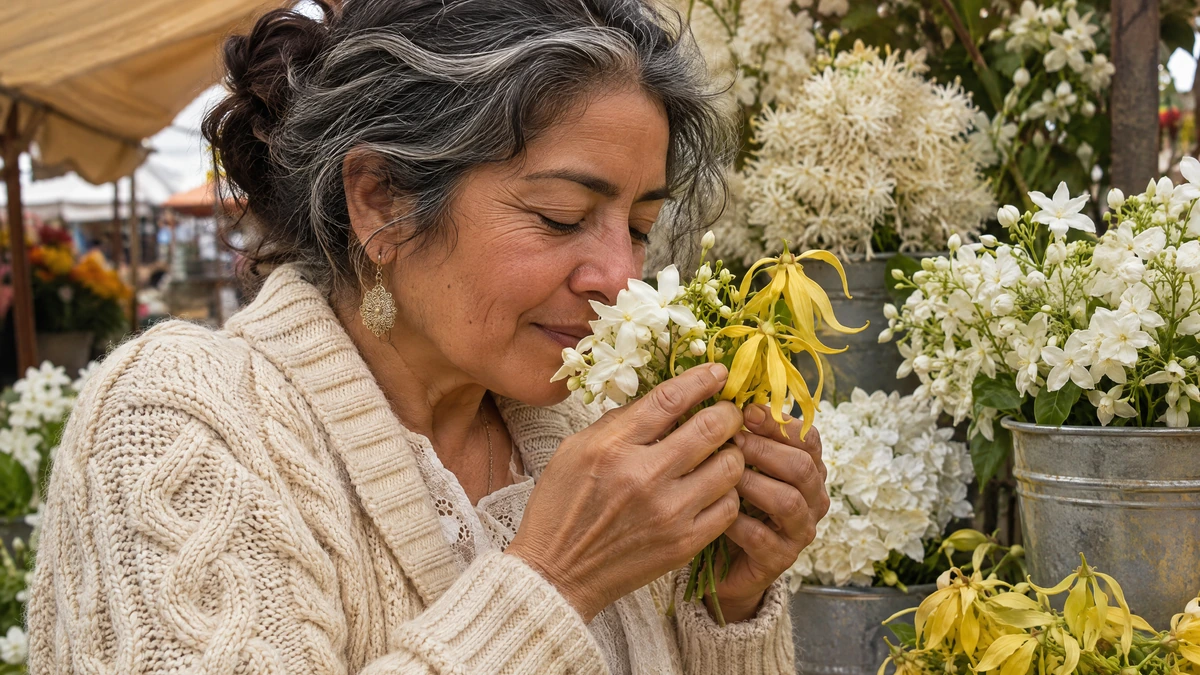
Pair santal with what it already loves. Sandalwood is a key ingredient in the floral and ambery fragrance family when it meets white flowers such as jasmine, ylang ylang, gardenia, orange blossom and tuberose, and it blends well with other woods such as patchouli and cedar. If you already wear a floral perfume, a santal body oil underneath gives your flowers a warm, creamy floor.
Our Amber Veil Luxury Body Oil lists Bergamot, Santal, Cashmere and Gilded Amber as its fragrance notes, so you get a bright citrus opening that settles into creamy wood and warm amber. Its santal note comes from a fragrance oil the label calls Santal Tropics, blended into fractionated coconut oil, jojoba oil, meadowfoam seed oil and vitamin E. Warm three or four drops between your palms and press them into your skin straight after a shower, while the air still holds the steam. Read our guides to cashmere scent and amber to understand the rest of that note list.
Apply it to warm skin and let it rest. Santal works as a base in a perfume, so it needs time and body heat to open. Give it twenty minutes before you judge it, and you will notice the creamy, milky side arrive after the bergamot fades.
I read the French Wiktionary entry for santal and the Wikipedia entries for sandalwood and Santalum album before writing this, so you get the real history behind the word on your label.
My honest opinion: santal is the easiest wood to love if you think woody scents smell harsh. Start with a santal paired with citrus or amber, wear it close to your skin, and you get warmth that feels like your favorite sweater.
Santal Scent: Your Questions Answered
What does “santal” mean?
Santal is the French word for sandalwood, the aromatic wood of trees in the genus Santalum. Perfume labels use it the same way they use French terms such as eau de parfum, so you read it as the name of a note.
What scent does santal smell like?
Santal smells soft, warm, smooth, creamy and milky, with a precious-wood depth. It reads rounder and softer than cedar, and it lasts a long time on your skin.
Is santal the same as sandalwood?
Yes, the word means sandalwood. In a modern fragrance, though, a santal note is often a perfumer’s blend that recreates the scent of sandalwood, because true Santalum album is protected and demand for it cannot be met. Either way, you smell the same creamy wood.
Why is sandalwood so expensive?
Sandalwood is often cited as one of the most expensive woods in the world. The trees grow slowly, the main species is protected, and some species have suffered over-harvesting, so genuine sandalwood oil stays scarce and you pay for that scarcity.
Does santal last long on your skin?
Yes. Sandalwood imparts a long-lasting woody base to perfume and acts as a fixative that enhances the longevity of lighter materials. Wear it on warm skin and you smell it for hours.
What are the 5 levels of perfume?
By concentration, the common five are parfum, eau de parfum, eau de toilette, eau de cologne and eau fraîche. A santal note shows up in all of them, and you smell it longest in the stronger ones.
Creamy wood, close to your skin
Press three or four drops of Amber Veil into damp skin tonight and smell the bergamot open into soft santal and warm amber.
Like this article? Add Piton Noir Botanicals as a preferred source, and you are more likely to see our articles in Google’s Top Stories.