
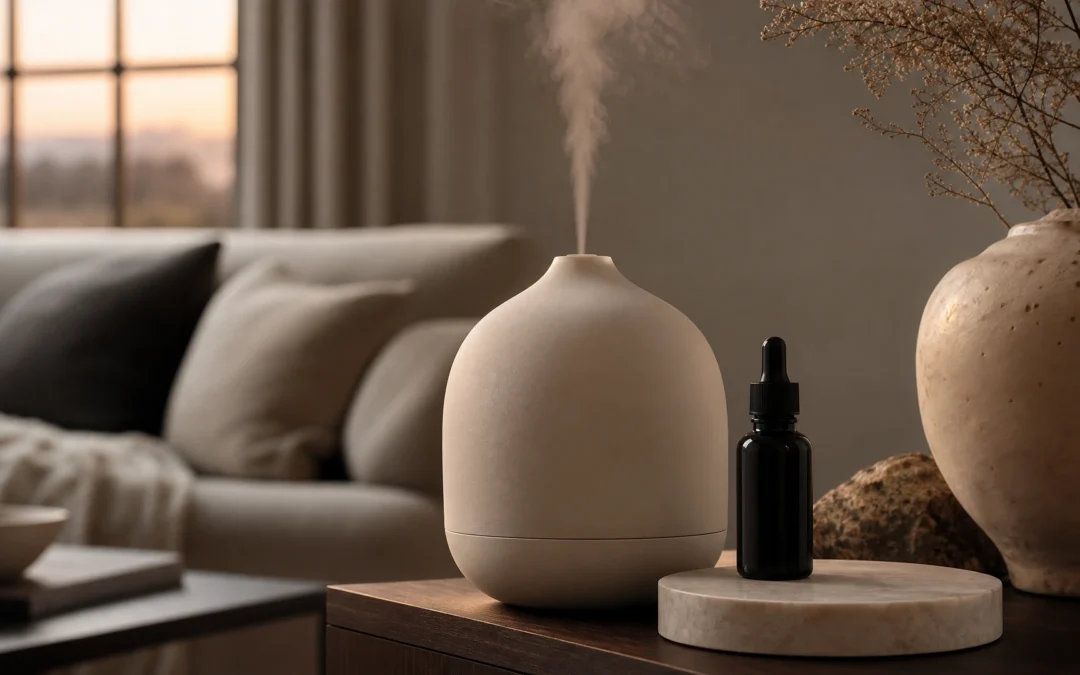
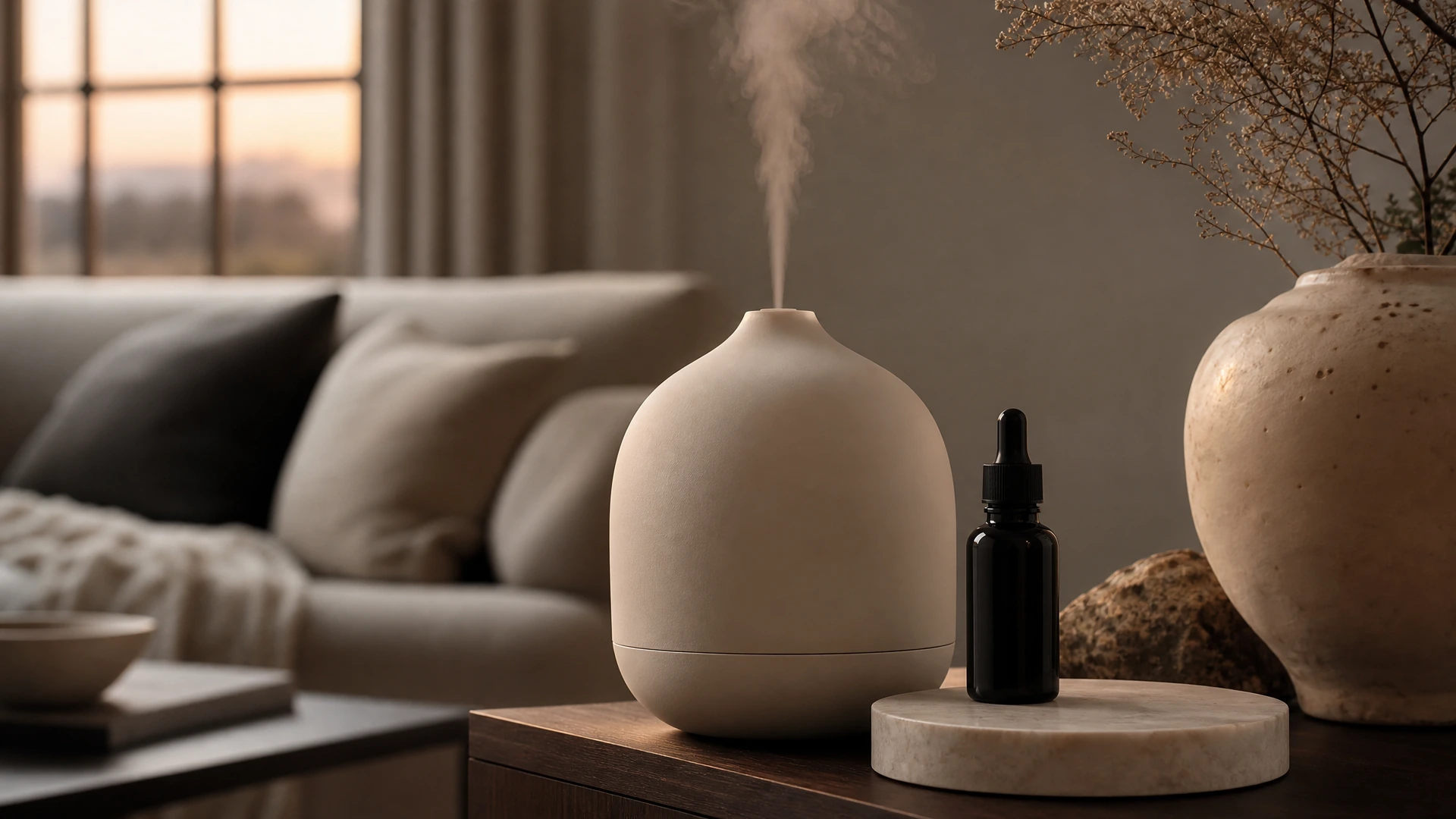

To use a diffuser, fill the reservoir with cool water to the line, add a few drops of oil, and run it in short sessions rather than all day. Thirty to sixty minutes on, then the same off, keeps your room pleasant without saturating it. Keep it where your pets cannot reach it, and clean it every few fills so the scent stays true.
A diffuser is not meant to fill a room. It is meant to change how the room feels when you walk back into it.
You bought the diffuser, filled it to the brim, tipped in half the bottle, and left it running from breakfast to bed. By lunch you smelled nothing at all, and by evening the whole house felt heavy. You did nothing unusual. You did what the box never told you not to do.
Knowing how to use a diffuser well comes down to four small habits: the right water line, a restrained number of drops, short sessions, and a clean reservoir. Get those right and your home fragrance reads as intentional rather than overwhelming. This guide walks you through each one.
How to Use a Diffuser, Step by Step
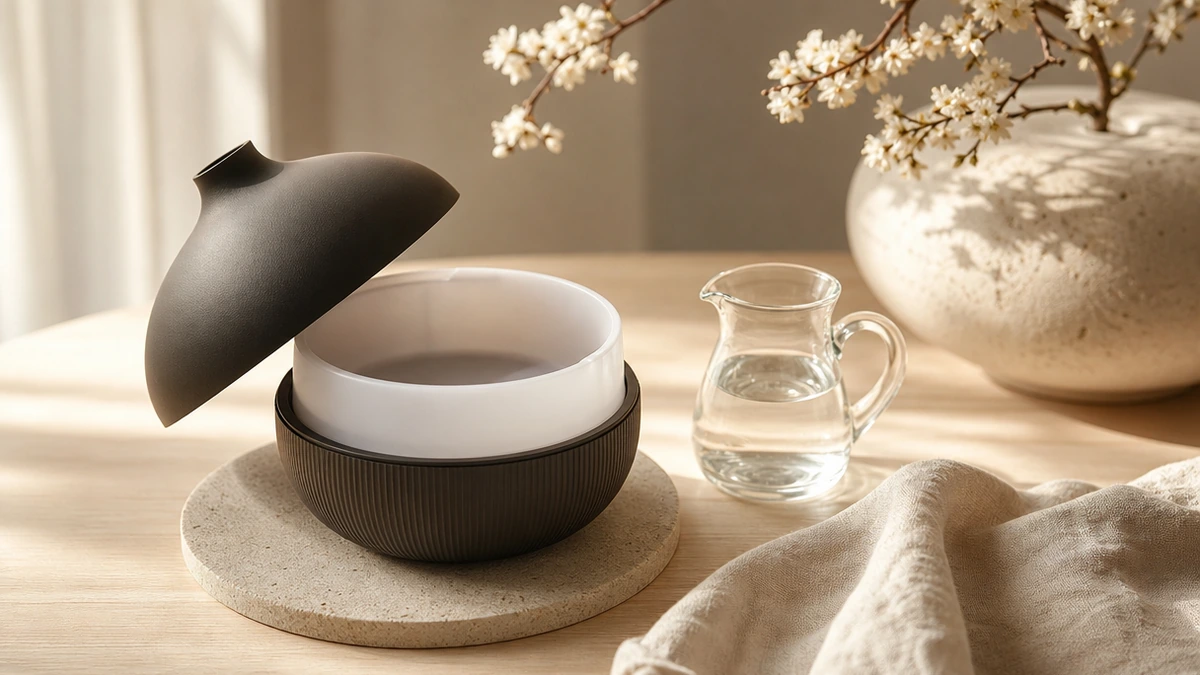
Most home diffusers are ultrasonic. A small plate vibrates under the water and throws a fine, cool mist into the air, and the oil you add rides out with that mist. That design is why the water level matters so much to you. Overfill it and the mist sputters. Underfill it and the unit cuts out early or runs hot and dry.
The routine that works every time
- Set the diffuser on a flat, stable surface at least a little above floor height, away from books, wood finishes and electronics the mist would settle on
- Fill the reservoir with cool or room-temperature tap water up to the marked water line, never above it
- Add your drops directly to the water, then replace the cover before you switch it on
- Choose a short timer or an intermittent setting if your model has one
- When the session ends, switch it off and let the room rest before you run it again
Tap water suits most ultrasonic models, but your manual has the final say, because some makers ask for filtered or distilled water in hard-water areas. Read it once. It takes two minutes and it saves you a plate crusted with white mineral scale six weeks from now.
How Many Drops of Oil Go in a Diffuser?
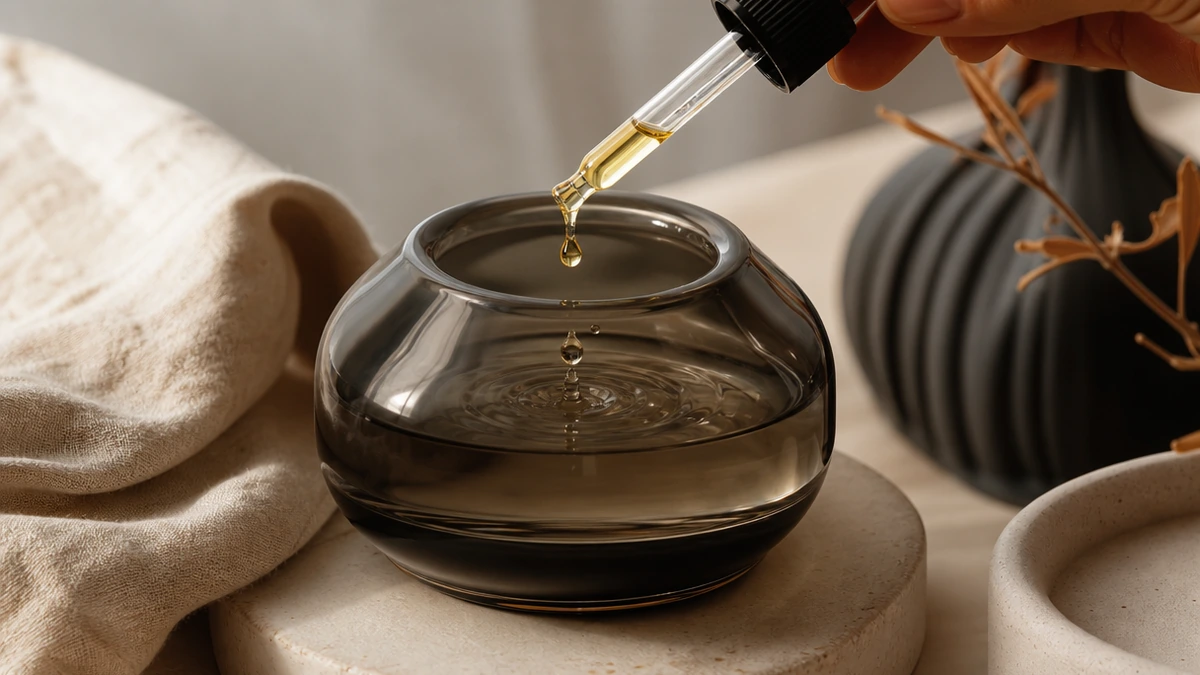
Fewer than you think. The question of how many drops belong in your diffuser has no single number, because reservoirs range from a small bedside cup to a large living-room tank. What does not change is the principle: start low, let it run for a full session, and add more next time only if you genuinely want the scent stronger.
Our own Guiding Light diffuser oil gives you a clear starting point in its ritual: fill to the line, add five to eight drops, and let it run while the room is still, with early evening as the best time. That is a useful benchmark for a standard reservoir. A smaller unit wants the low end of that range. A large one wants the high end, and still not a drop more.
Here is why restraint pays off for you. Your nose adapts to a steady smell within minutes, a process sometimes called nose blindness, so a room saturated at noon smells like nothing to you by two. The people walking in from outside notice it immediately. A lighter hand lets you keep noticing your own home, which is the whole point of scenting it.
My honest opinion after years of blending home fragrance: the best diffuser session is the one you only half notice. If you smell it clearly from the next room, you used too much. Scent should greet you at the door, not follow you into every conversation.
How Long to Run a Diffuser, and Where to Put It
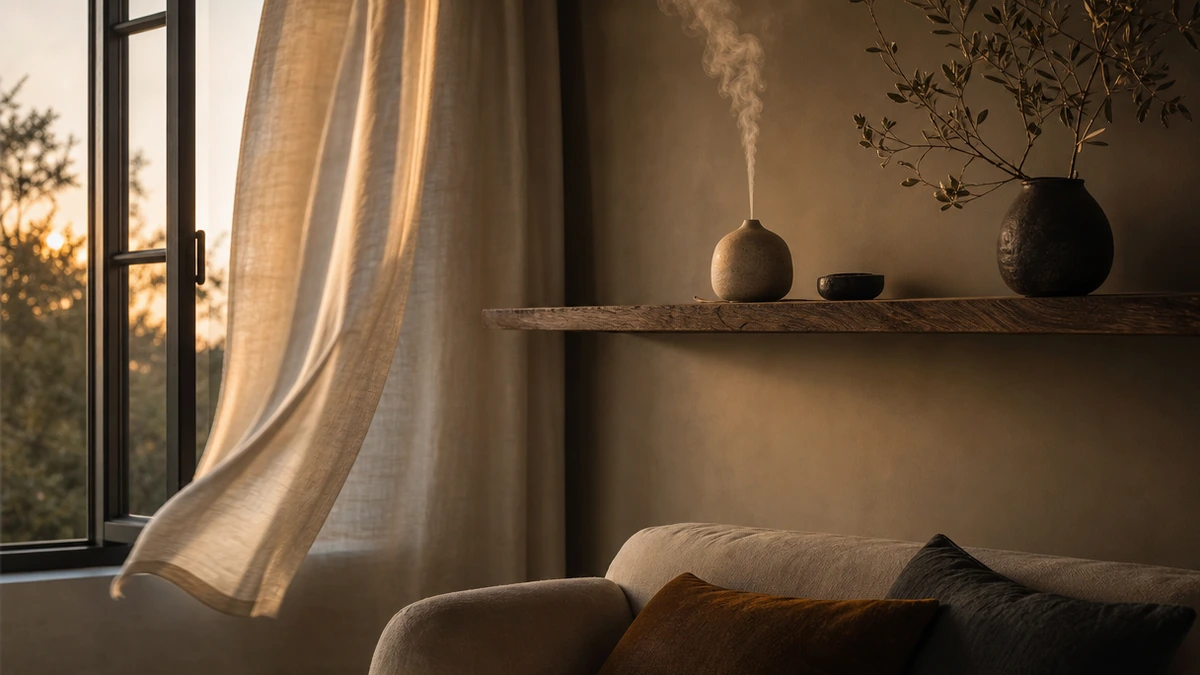
Run it in short sessions. I read the Tisserand Institute’s diffusion guidance and the ASPCA’s advice on pets before writing this, and both point you toward the same habit: short sessions in a room your animals can leave. The Tisserand Institute’s diffusion guidance describes intermittent use as 30 to 60 minutes on, then 30 to 60 minutes off. That rhythm keeps the air pleasant without building a heavy concentration, and it means you keep enjoying the scent instead of tuning it out.
Placement matters as much as timing. A spot near gentle airflow, such as a doorway or a window cracked open an inch, carries the mist around the room instead of letting it settle in one corner. Keep your unit off the floor and away from the edge of a table, where a sleeve, a toddler or a tail will send water across your hardwood.
If you share your home with animals, take this part seriously. The ASPCA notes that a short session in an area your dog or cat cannot access is not likely to be an issue, and it recommends avoiding diffusers altogether in homes with birds, whose respiratory systems are especially sensitive. Cats deserve extra care as well. Give your pets an open door to leave the room, keep the unit where it cannot be knocked over, and handle any scented oil you diffuse with the same caution.
How to clean a diffuser so it keeps smelling right
- Unplug the unit and empty any leftover water before you start
- Wipe the reservoir with a soft cloth to lift oil film from the walls
- Every few weeks, fill to the line with water and a small splash of white vinegar, run it briefly, then empty and rinse
- Clean the ultrasonic plate gently with a cotton swab, never anything abrasive
- Never submerge the base, and let everything dry before the next fill
Choosing a Diffuser Oil for Your Home
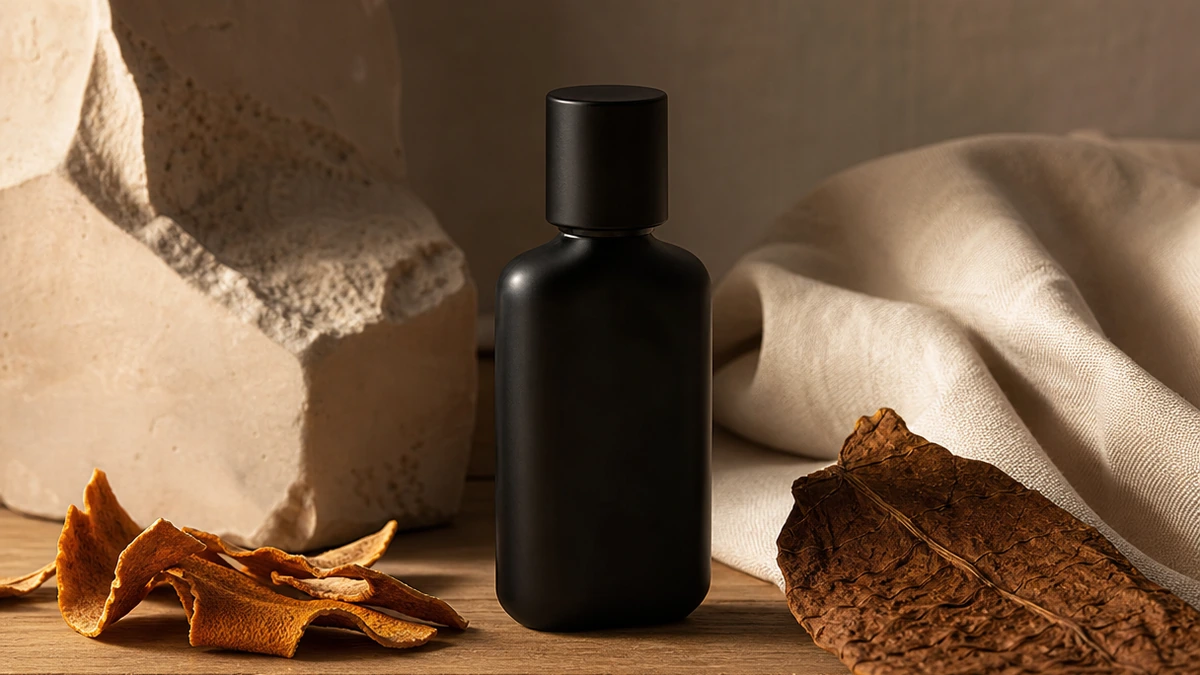
You have two broad choices when you shop. A single essential oil is a plant extract with one clear character, bright lemon or green rosemary. A blended fragrance oil is composed like a perfume, layering notes that no single plant delivers on its own, and it is built to hold a consistent character from the first minute of the session to the last.
Neither is automatically better for you. A single oil suits a simple, specific mood for a room. A composed blend suits a signature, the scent people start to associate with your home. Whichever you choose, buy oil made for water diffusers, keep the bottle capped and dark, and remember that oils change with age and light as surely in the hallway cupboard as on your dressing table.
Guiding Light is our answer to that question. It is a blend of premium fragrance oils built for water diffusers, with notes of soft citrus, clean linen, tobacco leaf and warm wood. It began with the stillness of Kentucky and carries into the open air of Saint Lucia, which is the story behind why place matters to us. At $32 a bottle, it is created not to fill a room but to shape how it feels when you come home.
Your home scent and your personal scent do not have to match, and there is a quiet pleasure in letting them sit side by side. If you want to carry fragrance on your skin as well, a warm amber body oil at $36 wears close and slow, and our guide to scenting your clothes and linens covers the fabric side without a single stain.
How to Use a Diffuser: Your Questions Answered
Should you use tap water or distilled water in a diffuser?
Most ultrasonic diffusers run happily on tap water, but check your manual, because some makers ask for filtered or distilled water in hard-water areas. Hard water leaves mineral scale on the plate over time, which weakens the mist and makes cleaning more of a chore.
How long should you run a diffuser at a time?
Short sessions work best. Thirty to sixty minutes on, followed by the same amount of time off, keeps your room pleasant without building a heavy concentration of scent, and it stops your nose from tuning the fragrance out.
Is it safe to leave a diffuser running overnight?
Running it continuously all night works against the short-session rhythm and saturates a closed bedroom. If you want scent at bedtime, run a session while you get ready, then switch it off before you sleep, or use a model with an automatic shut-off timer.
Are diffusers safe around cats, dogs and birds?
Take extra care. Keep sessions short, keep the unit where pets cannot reach or knock it over, and always leave them a way out of the room. Avoid diffusers entirely if you keep birds, and speak to your vet if any animal in your home has breathing problems.
How often should you clean a diffuser?
Wipe your reservoir every few fills, and give it a deeper clean with water and a splash of white vinegar every few weeks. Oil film and mineral scale build up quietly, and a dirty unit muddies the scent of even a beautiful blend.
Can you mix different oils in one diffuser session?
Yes, and blending is half the fun. Keep the total number of drops the same as a single-oil session, so the room smells layered rather than louder. A composed blend such as Guiding Light has done that balancing for you already.
Five to eight drops, early evening
Fill it to the line, run it while the room is still, and let your home smell like somewhere you want to return to.
Want more of this in your Google feed? Tap here and Google shows you our articles first.